
Methodological study on simultaneous determination of anti-inflammatory and analgesic alkaloids in Panlong Seven Tablets
Panlong Seven Tablets is a compound preparation composed of 29 traditional Chinese medicines, derived from the secret recipe presented by Wang Jiacheng, a renowned family of bone injury practitioners in traditional Chinese medicine. Clinically, it is mainly used to treat pain, swelling, and other conditions caused by rheumatism, lumbar muscle strain, and soft tissue injury. Research has shown that alkaloids are one of the main components of Panlong Seven Tablets, which exert anti-inflammatory and analgesic effects by downregulating inflammatory factors, regulating macrophage polarization, and other pathways. The results of modern pharmacology show that some alkaloids are both active and toxic components, which can lead to serious adverse reactions if used improperly. At present, the quality control standard of Panlongqi Tablets (National traditional Chinese patent medicines and simple preparations Product Standard WS3-B-3998-98-1) does not determine the content of alkaloids. Therefore, in order to improve the quality control level of Panlong Seven Tablets and ensure their clinical safety and effectiveness, this study used UPLC-Q-TOF-MS/MS to characterize the alkaloid components with anti-inflammatory and analgesic effects in Panlong Seven Tablets, and then established a quantitative method for simultaneous determination of their content, providing a data basis for improving the quality control level of Panlong Seven Tablets.
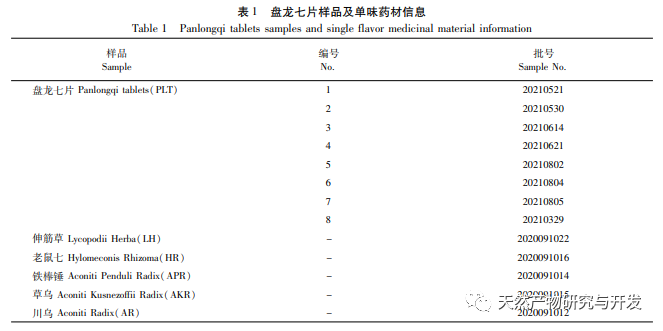
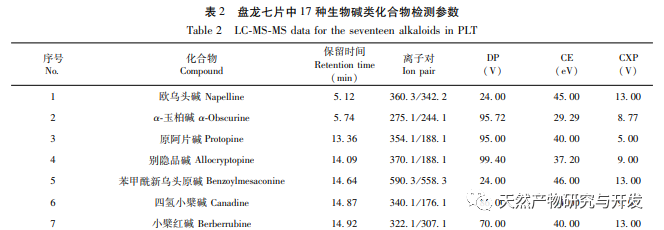
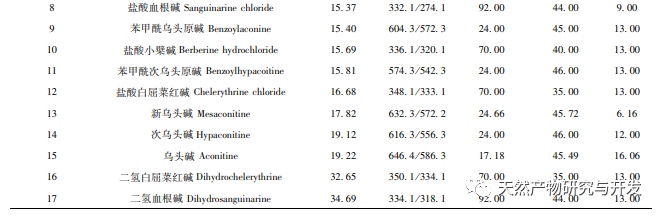
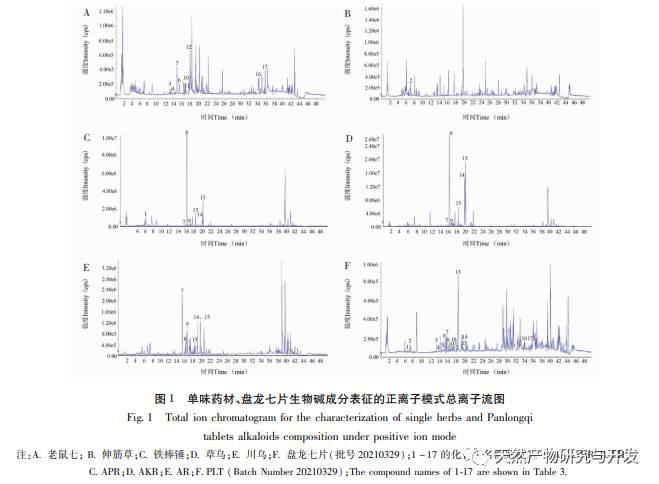
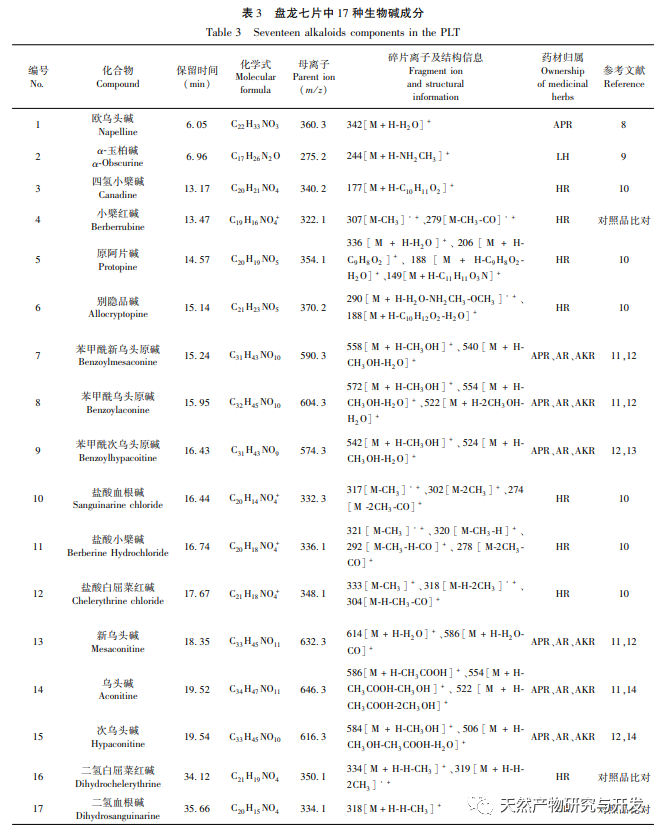
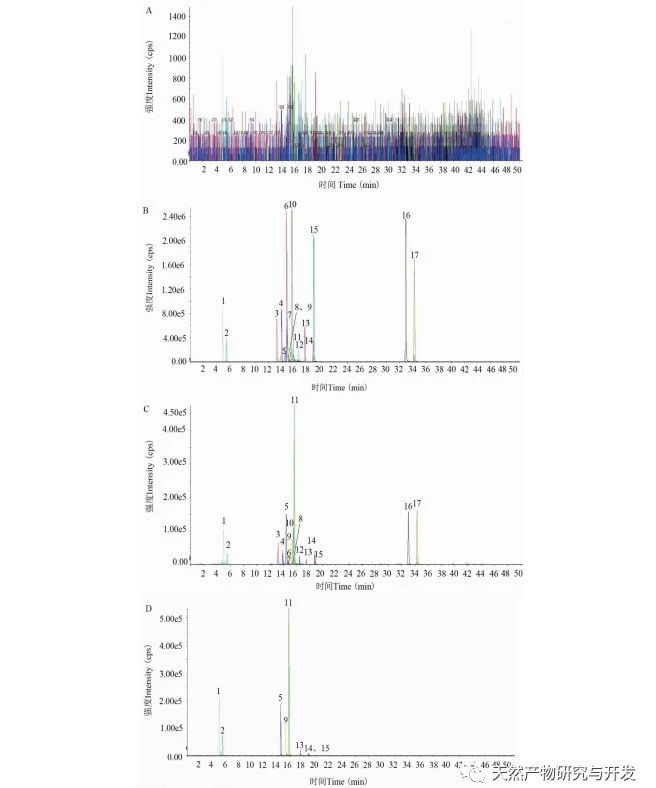
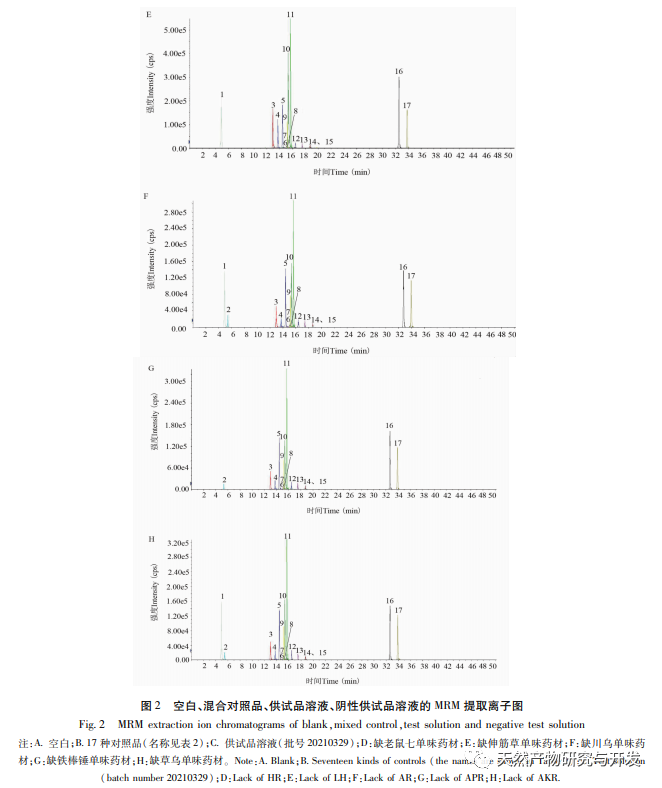
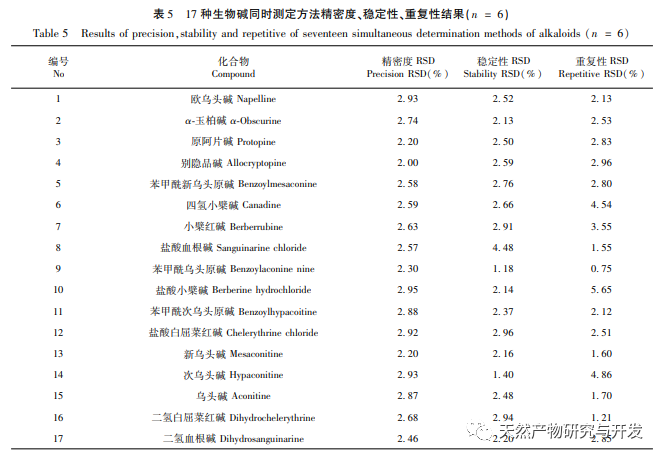
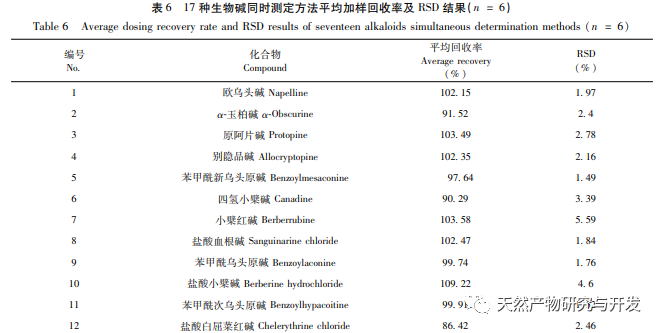

Selection of testing conditions and preparation methods for test solution. Taking into account the structural and polar characteristics of alkaloid components, MRM scanning mode is adopted, with positive and negative ion modes detected separately. Positive ion mode is selected for detection based on response values and the number of chromatographic peaks. The effects of extraction methods (ultrasound, heating reflux) and extraction solvents (anhydrous ethanol, 70% methanol, 100% methanol) on the extraction of alkaloids from Panlong Seven Tablets were investigated. Based on the comprehensive chromatographic peak shapes and response values, methanol ultrasound extraction for 25 minutes was selected as the extraction method for alkaloids in Panlong Seven Tablets in this study.
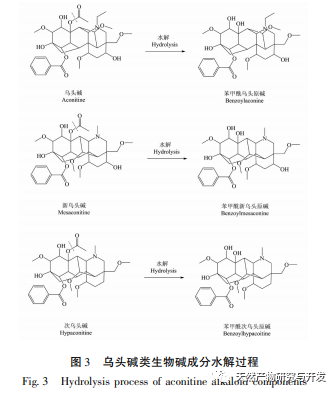
Screening of potential quality control component indicators. Alkaloids are one of the important components of Panlong Seven Tablets that exert anti-inflammatory and analgesic effects. Among them, the high content monoester alkaloids benzoyl aconitine, benzoyl neoaconitine, and benzoyl hypaconitine are hydrolyzed from the diester alkaloids aconitine, neoaconitine, and hypaconitine. While retaining their pharmacological effects such as anti-inflammatory, anti rheumatic, and arthritis treatment, their toxicity is greatly reduced. Based on the relevant research on alkaloid indicator components, this article selects benzoyl aconitine, benzoyl neoaconitine, and benzoyl aconitine as potential quality indicator components. The hydrolysis mode of aconitine alkaloids is shown in Figure 3.
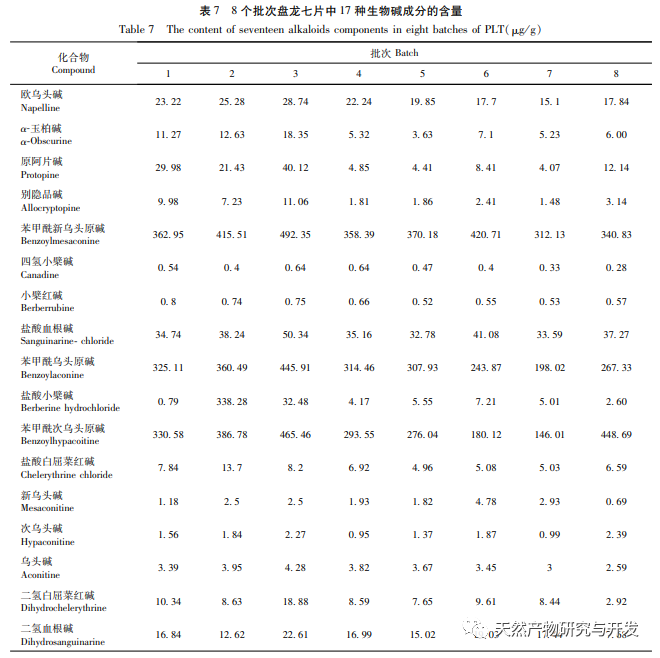
Differences in the content of isoquinoline alkaloids. By comparing the differences in the content of isoquinoline alkaloids in 8 batches of samples, it was found that the content of berberine hydrochloride, dihydroberberine hydrochloride, berberine hydrochloride, dihydroquercetin hydrochloride, berberine hydrochloride, berberine hydrochloride, berberine hydrochloride, berberine hydrochloride, berberine hydrochloride, berberine hydrochloride, berberine hydrochloride, berberine hydrochloride, berberine hydrochloride, berberine hydrochloride, berberine hydrochloride, berberine hydrochloride, berberine hydrochloride, berberine hydrochloride, berberine hydrochloride, berberine hydrochloride, berberine hydrochloride, berberine hydrochloride, berberine hydrochloride, berberine hydrochloride, berberine hydrochloride, berberine hydrochloride, berberine hydrochloride, berberine hydrochloride, berberine hydrochloride, berberine hydrochloride, berberine hydrochloride, berberine hydrochloride, berberine hydrochloride, berberine hydrochloride, berberine. The possible reason for this may be that berberine is a quaternary ammonium alkaloid, which decomposes into berberine in a free state due to thermal instability. It combines with acidic components such as flavonoids in Panlong Seven Tablets to form salts, resulting in changes in the content of berberine hydrochloride.
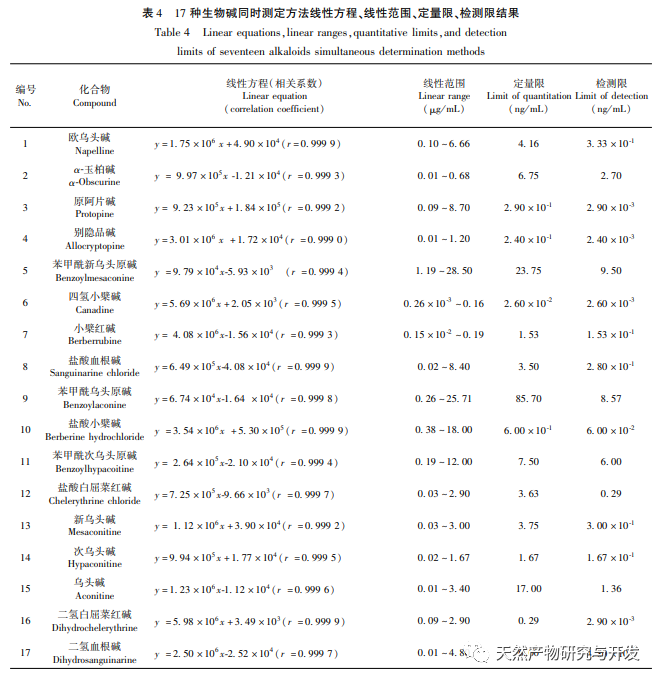
Panlong Seven Tablets is an important drug for treating rheumatic and bone pain diseases in clinical practice. Due to its toxic alkaloid components, the safety of the drug should be given more attention. Therefore, based on the characterization of 17 alkaloid components in Panlong Seven Tablets using UPLC-Q-TOF-MS technology, this paper established a liquid chromatography-mass spectrometry method for simultaneous determination of alkaloid components in Panlong Seven Tablets. The established method is accurate and reliable, and can provide a basis for improving the quality control level of Panlong Seven Tablets.

 English
  Danish
  German
  Hungarian
  French
  Russian
  Spanish
  Turkish