
Analysis of Nutritional Components in Leaves of Peach Holly in Different Seasons
Ilex vomitoria, belonging to the holly family and genus Ilex, is an evergreen shrub rich in caffeine and antioxidants. It is native to the southeastern United States and its leaves and tender branches are traditionally used to make healthy drinks. Caffeine is an active substance contained in tea and other beverage plants. Finding new caffeine rich plant resources to replace conventional beverage plants such as tea is an important way to protect and reduce the pressure on raw plant materials. Due to its unique active substance caffeine, substitute tea holly has become a star substitute for “tea” in recent years, with huge economic and social benefits, and broad prospects for development and utilization. At present, domestic and foreign scholars’ research on substitute tea holly mainly focuses on the chemical composition of its leaves, and there are few reports on the nutritional content and changes during its annual growth cycle. Therefore, this article takes fresh leaves of substitute tea holly in different seasons as the research object, and uses freeze-drying method to determine and analyze the content of mineral elements and main organic nutrients, in order to provide scientific basis for the industrial development and utilization of substitute tea holly.

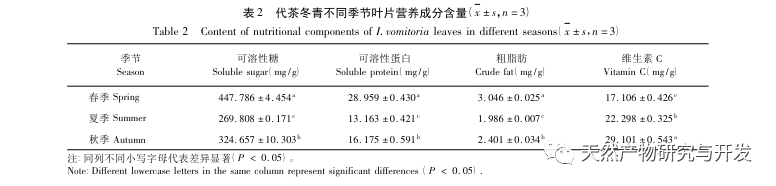
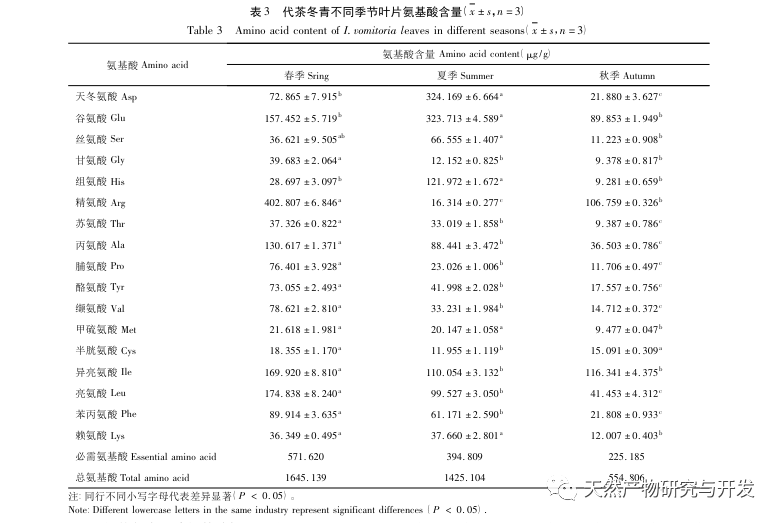


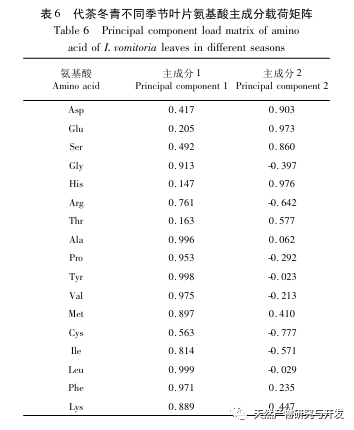
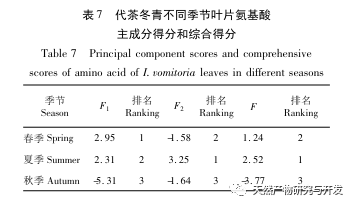
The content of various biochemical components in the leaves of “tea” as a beverage is greatly influenced by the variety, season, and natural environment of the “tea” tree. There are significant differences and certain patterns of variation in the biochemical components of “tea” leaves in different seasons. Our analysis of various biochemical components in the leaves of substitute tea holly shows that the content of N, P, Fe, and Mn in mineral elements is highest in spring, because spring is the period of leaf growth, the nutritional status is good, and the nutrient elements are transferred to new leaves; Although the content of K element gradually decreases during the growth period, the magnitude of the change is small, indicating that the K element in the leaves of substitute tea holly is not greatly affected by the season; Secondly, data analysis shows that the content of Zn and Cu in the leaves of tea holly in spring and autumn is high. Zn and Cu are components of protein, which may be related to the high protein content in both spring and autumn. There are significant differences in the content of soluble sugars, amino acids, etc. between different seasons, with soluble sugars and soluble proteins being highest in spring and lowest in summer, which is consistent with the results of Huang et al.’s study. This may be because plants require more nutrients to flow to the tender leaves when they first start to recover and grow. In summer, the metabolism of plants accelerates, nutrients are consumed, and sugars and proteins are broken down and transformed, resulting in a decrease in the content of soluble sugars and soluble proteins. Metabolism weakens in autumn, substances begin to accumulate, and soluble protein content increases. At the same time, the amino acid content is highest in spring, which is consistent with previous research on the composition of “golden tea”. The reason may be that the spring temperature is moderate, Zhejiang has abundant rainfall, and tea trees have undergone a long period of rest and recuperation in autumn and winter, resulting in rich internal components and content, especially amino acid content. In addition, some studies suggest that high amino acid content and a certain amount of caffeine are suitable characteristics for making green tea varieties. Amino acids are one of the main chemical components of tea, and their content is positively correlated with the quality of green tea. In addition, the buds and leaves in spring are green in color and have a strong aroma. It can be said that the substitute tea holly is the highest quality tea harvested in spring, while the amino acid content in autumn is lower than that in spring and summer. This is consistent with the research results of Zhou et al. on the biochemical composition of tea, which may be due to the lack of nutrients in the body of tea trees harvested in spring and summer in autumn. Therefore, when developing substitute tea holly for tea use, spring harvesting is the most suitable season for development and utilization.
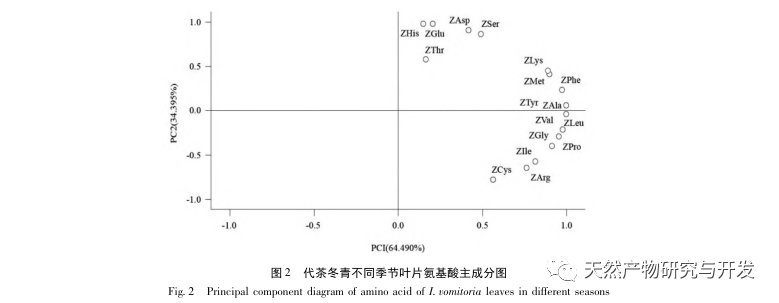
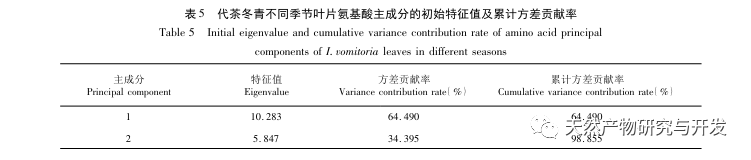
This article measures and analyzes the nutritional components of the leaves of substitute tea holly, and the research results show that the leaves of Ming Dynasty tea during the winter and youth seasons contain high levels of mineral elements, soluble sugars, soluble proteins, and crude fats. Using principal component analysis to analyze the amino acids in the leaves of three seasons of substitute tea holly, two principal components were obtained. Using variance contribution rate as the weight, a comprehensive evaluation model is established based on the scores of each principal component and variance contribution rate to obtain the comprehensive scores of leaf amino acid content in different seasons. The ranking of the comprehensive evaluation scores of amino acid content is summer>spring>autumn. In summary, spring has the highest nutrient content, summer leaves are more abundant in amino acids, and autumn substitute tea holly leaves contain higher levels of vitamin C. Therefore, in actual production, different seasons of substitute tea holly leaves can be selected according to demand to develop various products.

 English
  Danish
  German
  Hungarian
  French
  Russian
  Spanish
  Turkish