
Exploring the mechanism of action of Guanggancao Ding in treating castration resistant prostate cancer based on network pharmacology and experimental verification
Prostate cancer (PCa) is the most common malignant tumor in the reproductive system of elderly men. Many early treatments for androgen deprivation are effective, but most eventually progress from hormone sensitive prostate cancer to castration resistant prostate cancer (CRPC). CRPC is a highly lethal and invasive prostate cancer. More than 84% of CRPC patients will experience metastasis, with a median survival of only 20 months. Although new chemotherapy drugs and endocrine drugs have emerged in recent years, these chemotherapy drugs have many side effects, and endocrine drugs have resistance problems, which shorten the drug’s action time. Therefore, finding new drugs is of great significance for delaying the process of castration resistance and treating CRPC.
Glabridin is an flavonoid compound extracted from licorice, which has a wide range of biological activities such as anti-inflammatory, antioxidant, anti-tumor, neuroprotective, and anti osteoporosis. It is reported that glycyrrhizin has a good effect of inhibiting tumor cell proliferation and inducing apoptosis in breast cancer, liver cancer, gastric cancer and cervical cancer. However, the molecular mechanism of glycyrrhizin on CRPC is not fully understood. Network pharmacology is a combination of pharmacology, computer science, and information networks based on systems biology, providing new ideas for drug discovery and selection in complex diseases. To further investigate the mechanism of action of Guanggancao Ding on CRPC, we used network pharmacology, molecular docking, and cell experiments to explore its mechanism of action, providing reference for future drug basic research and clinical applications.
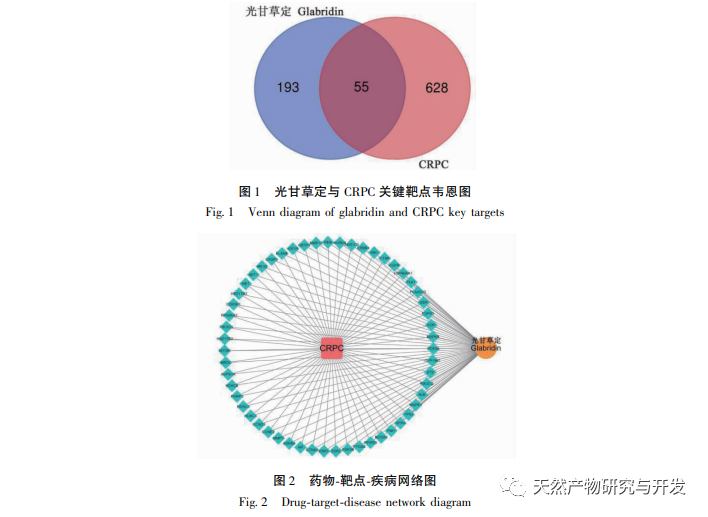
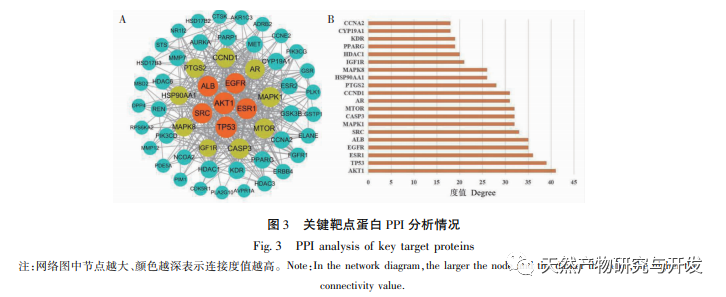
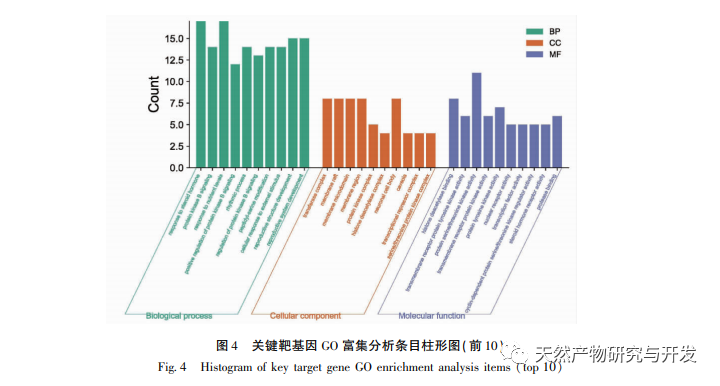
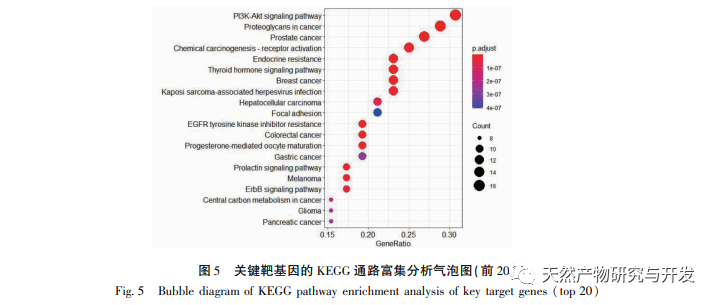
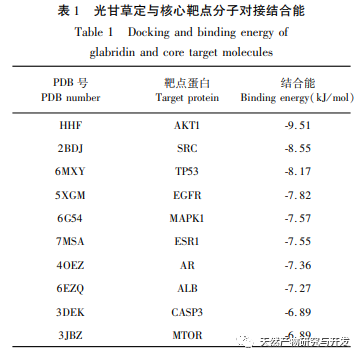
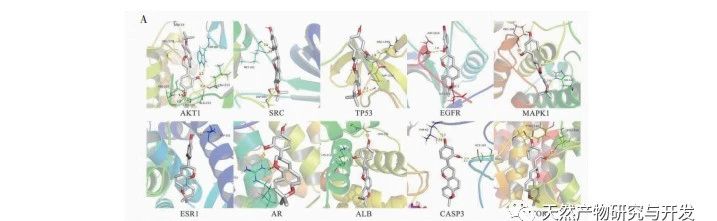
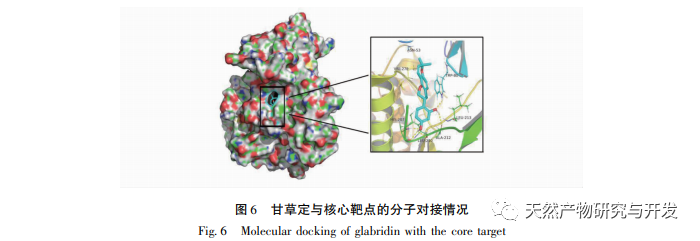
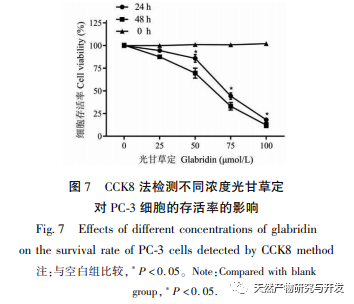
In recent years, significant progress has been made in the treatment of prostate cancer with traditional Chinese medicine, especially in CRPC. The combination of traditional Chinese medicine with surgery or chemotherapy has the effects of reducing tumor size, lowering PSA, reducing recurrence, and prolonging survival time. Many research reports suggest that the active ingredients in licorice have a significant anti-tumor effect on CRPC. Gioti et al. found that licorice extract (GGE) alone or in combination with doxorubicin has anti proliferative effects on androgen independent prostate cancer cells (PC-3 cells) and can promote the expression of autophagy related genes such as LC3A, ULK1, and AMBRA1. Zhang et al. found that isoliquiritigenin can inhibit the proliferation of prostate cancer cells (PC-3 and 22RV1), induce apoptosis, block the G2/M cell cycle, and inhibit the growth of PC-3 xenografts through in vivo animal experiments. Licorice exhibits excellent anti CRPC activity, and glycyrrhizin in licorice is one of the many flavonoids that has attracted much attention and has good anti-tumor activity. The mechanism of action of CRPC is worth further exploration.
Compared with traditional pharmacology, network pharmacology provides a new perspective for new drug development. In order to better understand the mechanism of action of glycyrrhizin on CRPC, we used network pharmacology methods to collect 683 targets of glycyrrhizin through databases such as TCMIO, TCMSP, and PharmMapper. We obtained 55 key targets of glycyrrhizin for castration resistant prostate cancer using Venn diagram tools, and identified 10 core targets such as AKT1, TP53, ESR1, EGFR, and ALB through PPI protein interaction network analysis. GO enrichment analysis showed that glycyrrhizin mainly regulates cell metabolism and apoptosis by regulating protein phosphorylation, oxidation reactions, and cell cycle. Molecular docking further showed that glycyrrhizin has good docking activity with 10 core targets. It is predicted that glycyrrhizin may achieve anti-tumor effects by regulating the expression of these core target proteins. Among these core targets, AKT1 protein has the highest docking activity. AKT1 is one of the important regulatory factors in the PI3K/AKT signaling pathway, involved in various biological processes of tumors. In prostate cancer, genetic variations and gene expression dysregulation of PI3K/AKT pathway components were detected in up to 42% of primary prostate cancer and 100% of metastatic prostate cancer samples based on genome and transcriptome profiles. In early studies, it was suggested that AKT subtypes (AKT1, AKT2) may promote the transition from androgen sensitive stage to hormone refractory stage in prostate cancer. On the basis of basic research on the treatment of CRPC patients, studies have reported that knockout of AKT1/2 in castration resistant prostate cancer animal models has significantly reduced in vivo and in vitro metastases. It can be seen that inhibiting the expression of AKT1 may improve the survival prognosis of CRPC patients, and AKT1 inhibitors may be a potential treatment for CRPC patients. Our study theoretically suggests that glycyrrhizin may be an AKT1 inhibitor, but whether glycyrrhizin can become an effective AKT1 inhibitor for CRPC patients still needs further experimental verification in the future.
The KEGG pathway enrichment results showed that the PI3K/AKT signaling pathway and proteoglycans were involved in 105 related signaling pathways, including cancer, prostate cancer, chemokine receptor activation, endocrine resistance, and resistance to epidermal growth factor receptor tyrosine kinase inhibitors (P<0.01). Among them, the most concerning is the phosphatidyl-3-kinase (PI3K)/serine threonine protein kinase (AKT) signaling pathway. The PI3K/AKT signaling pathway is involved in regulating cellular metabolism, growth, proliferation, differentiation, and protein synthesis. Mutations in the PI3K/AKT signaling pathway have been detected in many human tumors. Research data shows that up to 70% to 100% of advanced prostate cancer patients experience dysregulation of the PI3K pathway. And it was found that the PI3K/AKT signaling pathway plays an important role in the progression of hormone sensitive prostate cancer to castration resistant prostate cancer, and its mechanism of action may be related to the regulation of the androgen receptor (AR) signaling pathway, which can serve as a potential biomarker for CRPC. At present, inhibitors related to the PI3K/AKT signaling pathway, such as AZD5363, have entered the clinical trial stage and achieved significant therapeutic effects. Studying inhibitors related to this pathway has significant value in the treatment of CRPC.
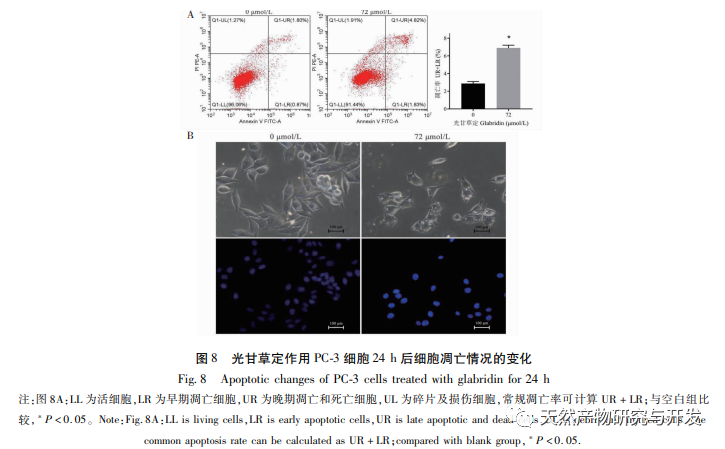
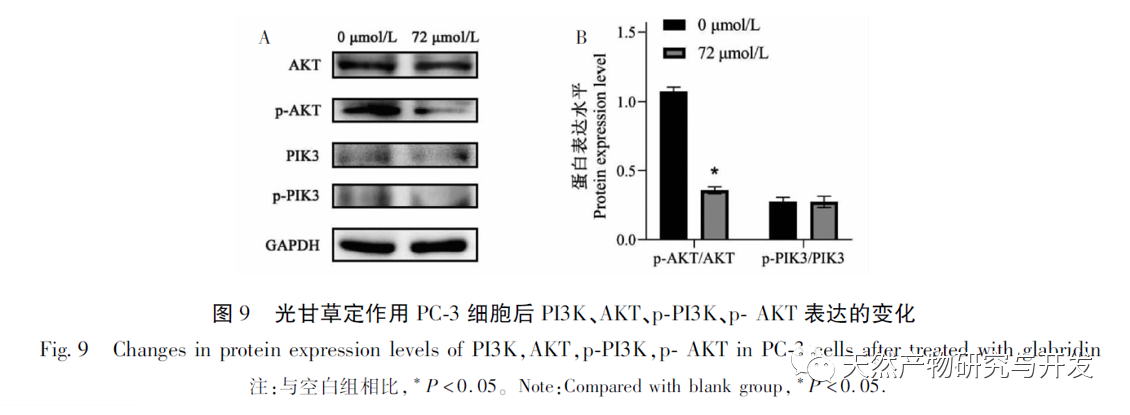
We further found through CCK8 method that glycyrrhizin can significantly inhibit the proliferation of PC-3 cells. Flow cytometry and DAPI staining experiments showed that it can induce cell apoptosis, and a decrease in cell number and morphological shrinkage were observed under the microscope. For the screening of anti-tumor drug concentrations, we found that their IC50 was slightly higher, which is related to the semi flexible docking method used for molecular docking. Compared with flexible docking, the binding energy calculated by semi flexible docking is lower. Furthermore, as a natural antioxidant, glycyrrhizin has strong antioxidant effects. However, low-dose natural antioxidants did not show good anti-tumor activity in anti-tumor experiments, while high-dose natural antioxidants have toxic effects on cells, and its specific mechanism needs further exploration. Based on the KEGG signaling pathway predicted by network pharmacology, we predict that the inhibitory effect of glycyrrhizin on PC-3 cells may be mainly related to the PI3K/AKT signaling pathway. Further Western blot experiments were conducted to investigate the effect of glycyrrhizin on the expression of proteins related to the PI3K/AKT signaling pathway in PC-3 cells. The results showed that glycyrrhizin can significantly inhibit the phosphorylation process of AKT proteins. In our experiment, it was observed that glycyrrhizin can significantly inhibit the expression of phosphorylated AKT protein, but the inhibitory effect on the expression of phosphorylated PI3K protein was not as expected. After repeatedly adjusting the protein loading concentration and ratio and strictly standardizing the operation, the protein still did not show significant effects. It is considered that the reason may be related to the quality problem of p-PI3K protein itself, which has low potency. However, due to limited funding for this study, we did not replace the proteins of other products. In future experiments, we will analyze more related proteins of this pathway to verify our hypothesis.
In summary, this study analyzed and predicted the potential mechanism of action of glycyrrhizin on castration resistant prostate cancer through network pharmacology, and further verified it through molecular docking and in vitro cell experiments. The results showed that glycyrrhizin can inhibit the proliferation and induce apoptosis of PC-3 cells, and its mechanism is related to the phosphorylation process of AKT protein. Therefore, we speculate that its anti CRPC mechanism may mainly be through regulating the phosphorylation of proteins related to the PI3K/AKT signaling pathway. This study not only provides research ideas for exploring the molecular mechanism of Guanggancao Ding in treating castration resistant prostate cancer, but also provides an effective method for the development and clinical application of anti-tumor drugs containing flavonoids in licorice.
 English
  Danish
  German
  Hungarian
  French
  Russian
  Spanish
  Turkish