
Isolation and identification of endophytic fungus X-396 from fennel and analysis of lipid soluble components in its fermented product
Plant endophytic fungi refer to fungi that are commonly present in healthy plant tissues but generally do not cause plant diseases. They co evolve with host plants to form stable ecological relationships and can produce bioactive substances that are the same or different from those of the host plant. Research has shown that almost all studied plants contain endophytic fungi, including medicinal plants. Endophytic fungi in medicinal plants are an extremely abundant and emerging microbial resource, with a large number and wide distribution. There are many types of host plants, and their relationship with them is extremely complex. They can produce various active products and have broad prospects for development and application. In the context of slow natural regeneration of medicinal plants, low extraction rates of active ingredients, and reduced biodiversity caused by excessive human intervention, in-depth research on endophytic fungi and their metabolites in medicinal plants is one of the effective ways to protect rare medicinal plants and achieve large-scale production of medicinal ingredients. In recent years, researchers have isolated many structurally novel and highly active monomeric compounds from the secondary metabolites of endophytic fungi. Natural products obtained through fungal metabolism have significant advantages in yield, economy, and environmental protection compared to medicinal plants.
Tibetan medicinal plants, due to their growth in high-altitude areas with large temperature differences, low precipitation, long light exposure, and strong radiation, contain unique active ingredients and biological activities, making them an important source of natural medicines or lead compounds. The Tibetan medicine Hypecoum leptocarpum Hook. f. et Thoms. is a dried whole plant of the genus Hypecoum in the Papaveraceae family. The Tibetan medicine is called “Balbada”, which has a bitter taste and a cold nature. It has the effects of clearing heat, detoxifying, anti-inflammatory, and analgesic. It is mainly used to treat flu, pneumonia cough, joint pain, sore throat, relieve food poisoning, and is suitable for various infectious diseases causing fever. At present, research on this medicinal plant mainly focuses on plant resources, chemical composition, and biological activity, with little attention paid to its endophytic fungi. Therefore, mining active compounds from it has great research value and scientific significance. This study isolated and purified an endophytic fungus X-396 from fennel, and identified it. The lipid soluble components of its fermentation product were analyzed by GC-MS technology, and its anti-tumor activity was studied by CCK-8 method. It is expected to provide a certain data basis and reference value for the effective utilization of fennel endophytic fungal resources and the development of new anti-tumor active lead compounds in the future.
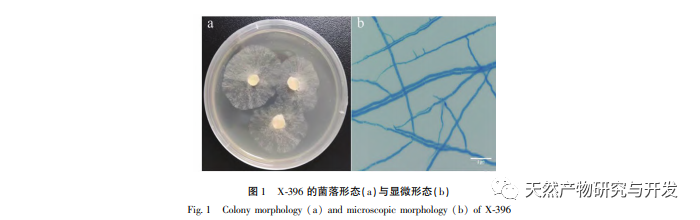
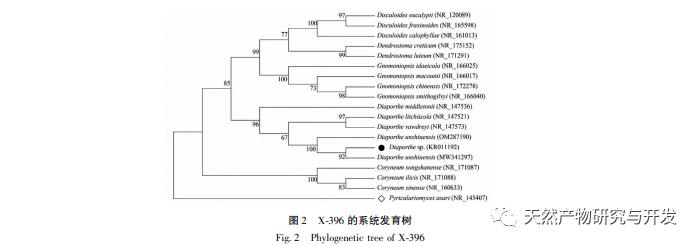
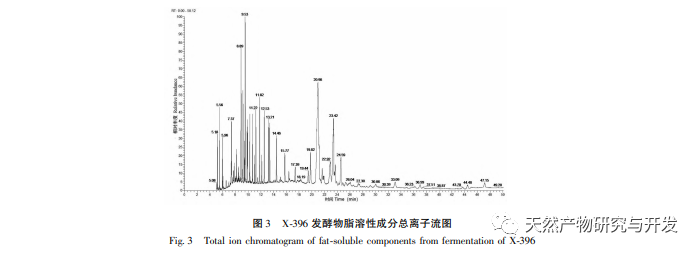
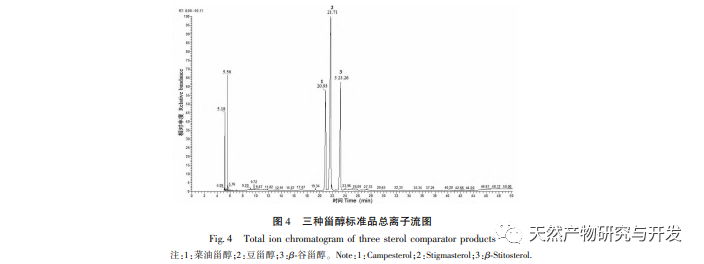
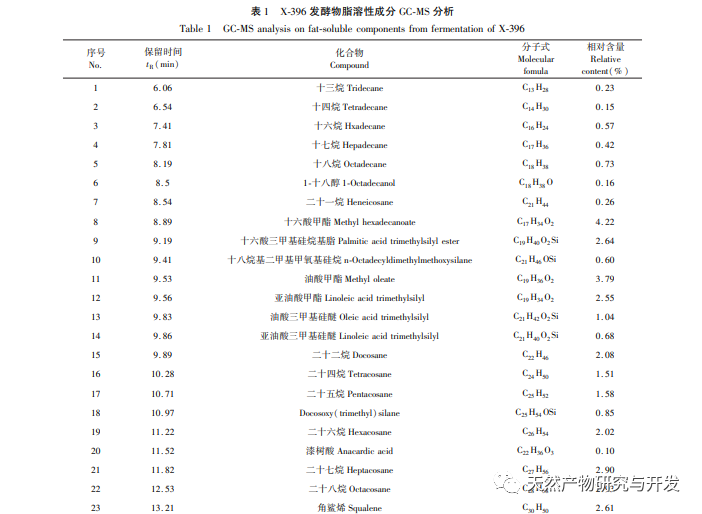
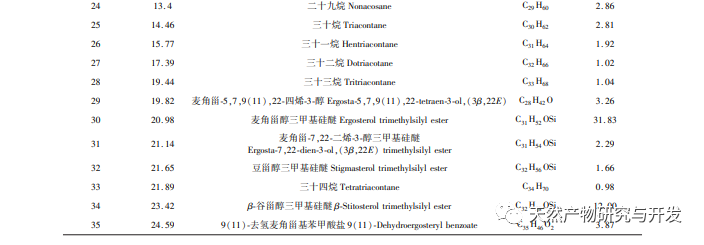
This study analyzed the lipid soluble components of the fermented product of endophytic fungus X-396 in Fennel by GC-MS. To increase the volatility of its lipophilic components and the separation of similar components, this study conducted derivatization treatment before GC-MS analysis. The GC-MS analysis results showed that compared to the 17 lipid soluble components identified in the host plant fennel, the bioactive components of the lipid soluble components in the fermented product of endophytic fungus X-396 were more diverse and contained a large amount of sterol compounds. Due to the similar structure of plant sterols, it is difficult to accurately identify their types. In this study, three standard samples of brassinosteroids, stigmasterol, and β – sitosterol were selected for derivatization and GC-MS detection, and the sterol types in the lipid soluble components of X-396 fermentation product were ultimately determined. The relative contents of ergosterol and β – sitosterol were 31.83% and 12.00%, respectively. Ergosterol is an important component of fungal cell membranes. Due to its stable structure and strong specificity, its content can be used as an indicator of fungal biomass, promoting the absorption of calcium and phosphorus by the human body. It is one of the good sources of exogenous vitamin D2 for the human body. β – sitosterol is a safe, natural, green, and effective human nutritional supplement that does not produce genetic or cellular toxicity. Clinical trials and studies in model animals have confirmed that β – sitosterol has various biological activities such as cholesterol lowering, blood glucose lowering, antioxidant, anti-inflammatory, antibacterial, and anticancer properties.
Through GC-MS analysis, active ingredients such as methyl hexadecanoate, lacquer tree acid, and squalene were identified from the X-396 fermentation product. Among them, methyl hexadecanoate is a mite killing compound that can inhibit phagocytic activity and immune response. There are also literature reports that it has anti-inflammatory effects. Lacquer tree acid has anti-inflammatory and anti angiogenic effects. Squalene, as a precursor substance for steroid synthesis, participates in metabolism and plays an important role in the synthesis pathways of β – carotene, coenzyme Q10, vitamin D, vitamin E, and vitamin K1. Therefore, squalene can play important roles in anti-inflammatory, antioxidant, skin and cardiovascular protection.
In terms of in vitro activity screening, the lipid soluble components of X-396 fermentation have better anti-tumor activity against HepG cells. This study enriches the research on the composition of endophytic fungal fermentation products of fennel, providing certain data reference and scientific basis for the subsequent activity research of endophytic fungal fermentation products of fennel.
 English
  Danish
  German
  Hungarian
  French
  Russian
  Spanish
  Turkish