
Prediction and analysis of volatile component quality markers in Atractylodes macrocephala based on GC-MS fingerprint and network pharmacology
Traditional Chinese medicine commonly has complex conditions such as multiple origins and multiple production sites, with significant differences in quality. It is urgent to establish a scientific and reasonable quality assurance system for traditional Chinese medicine. At present, most of the quality control indicators for Chinese medicinal materials are selected based on the chemical components they contain, but their correlation with drug efficacy is insufficient. Based on this, Academician Liu Changxiao proposed the concept of using “traditional Chinese medicine quality markers”. Chinese medicine quality markers are chemical substances closely related to the functional properties of Chinese medicine, reflecting the development direction of Chinese medicine quality control. Therefore, studying the quality markers of traditional Chinese medicine is an important means to improve the quality control level of traditional Chinese medicine in China and provide safe and effective traditional Chinese medicine products for clinical use.
Atractylodes macrocephala is a commonly used traditional Chinese medicine, which has the effects of strengthening the spleen, drying dampness, promoting diuresis, and stopping sweating. It is widely used in clinical practice of traditional Chinese medicine. However, there is currently no industry recognized quality marker for Atractylodes macrocephala, which will affect its quality improvement and further development and utilization. Current research indicates that volatile oils and polysaccharides are the main active ingredients of Atractylodes macrocephala. Due to their unique structure, polysaccharides are currently difficult to use as quality markers or quality control components. Research has shown that the volatile oil of Atractylodes macrocephala has pharmacological effects such as regulating the gastrointestinal tract, repairing gastric mucosa, inhibiting bacteria, and protecting the liver, which are similar to those of Atractylodes macrocephala. Qualitative and quantitative detection can be achieved using techniques such as GC-MS. Therefore, screening quality markers of Atractylodes macrocephala from its volatile oil is a feasible and effective approach. However, the volatile oil of Atractylodes macrocephala is affected by factors such as origin, soil, climate, and harvesting, resulting in significant differences in chemical composition. Therefore, it is necessary to establish a GC-MS fingerprint of Atractylodes macrocephala volatile oil to identify its common chemical characteristics and preliminarily determine candidate quality markers. Network pharmacology has the characteristics of systematicity and holism, and is an emerging research method based on systems biology and network biology. It has been widely applied in the material basis and multi-target mechanism prediction of single drug and compound drug treatments for diseases. The method of combining fingerprint spectrum with network pharmacology to search for quality markers of traditional Chinese medicine has been successfully applied to predict the quality markers of traditional Chinese medicine such as Fructus Aurantii, Forsythia suspensa, Hedyotis diffusa, and Lonicera japonica. However, there is still no method combining GC-MS fingerprint spectrum with network pharmacology for predicting and analyzing the quality markers of volatile oil in Atractylodes macrocephala. Therefore, in this study, GC-MS was used to analyze the components of the volatile oil of Atractylodes macrocephala and establish a fingerprint spectrum. Combined with network pharmacology methods, the components, targets, and pathways of the volatile oil of Atractylodes macrocephala were systematically analyzed, and potential quality markers of the volatile oil of Atractylodes macrocephala were predicted. The aim is to provide scientific basis and theoretical reference for the comprehensive control and evaluation of the quality of Atractylodes macrocephala tablets.
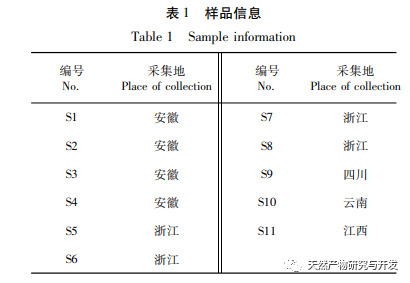
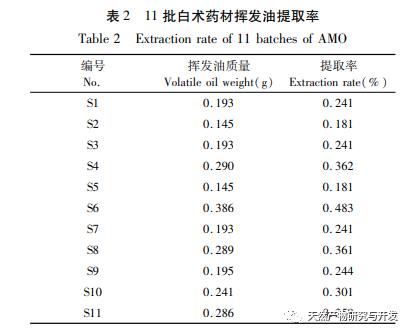


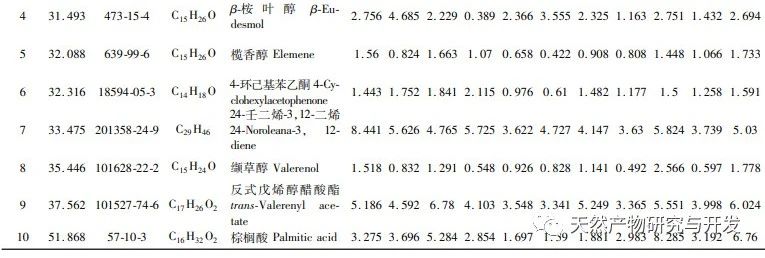


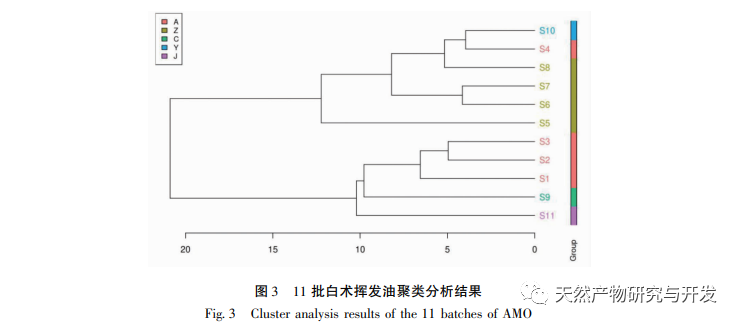
This study established fingerprint spectra of volatile oil components in 11 batches of Atractylodes macrocephala from different origins using GC-MS method, and identified 10 common peaks. The total content of common components accounted for over 85% of the total volatile oil content. The results of PCA analysis of common components showed that there was a significant difference between the volatile oil of Atractylodes macrocephala produced in Zhejiang and Anhui, and the distribution of Atractylodes macrocephala produced in Zhejiang was more concentrated; Cluster analysis shows that when the classification distance is 15, four batches of Zhejiang Atractylodes macrocephala can be grouped together, indicating that compared with Anhui Atractylodes macrocephala, the volatile oil chemical composition of Zhejiang Atractylodes macrocephala is more similar and stable. However, due to the single batch of Atractylodes macrocephala in Sichuan, Yunnan, and Jiangxi production areas, its overall distribution and differences from Zhejiang and Anhui Atractylodes macrocephala cannot be determined temporarily.
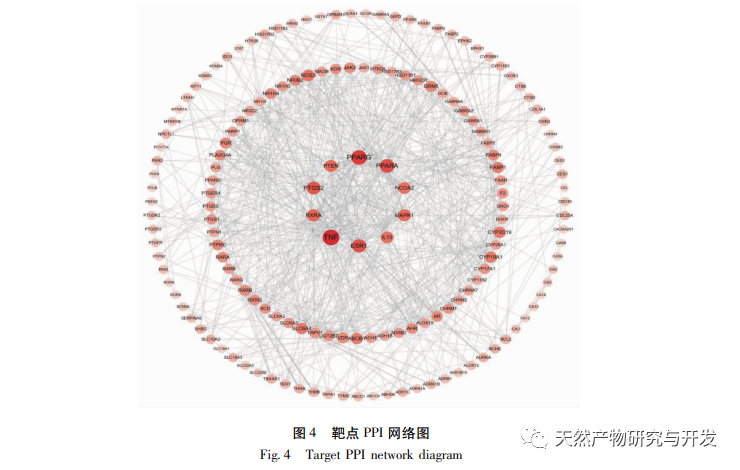
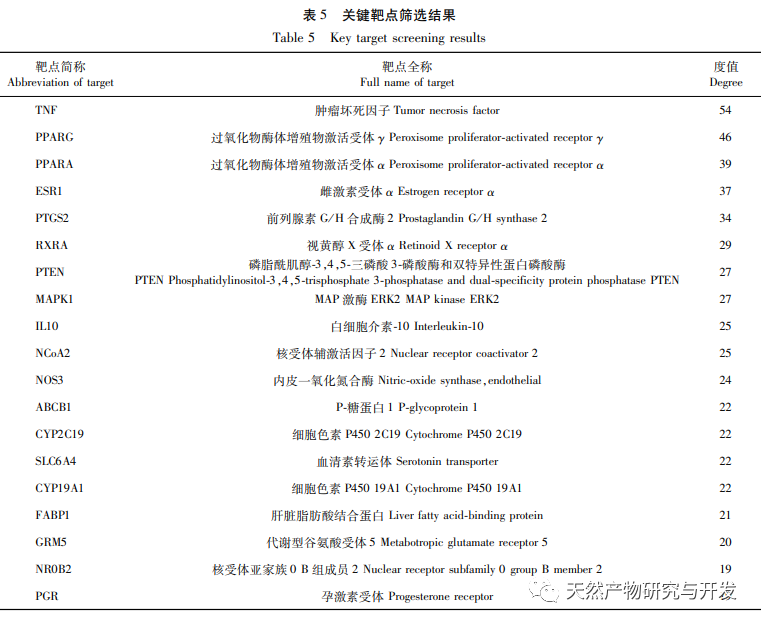
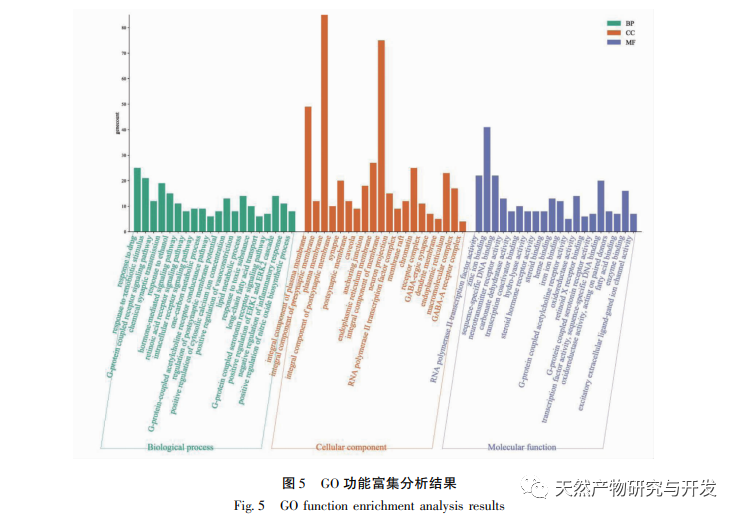
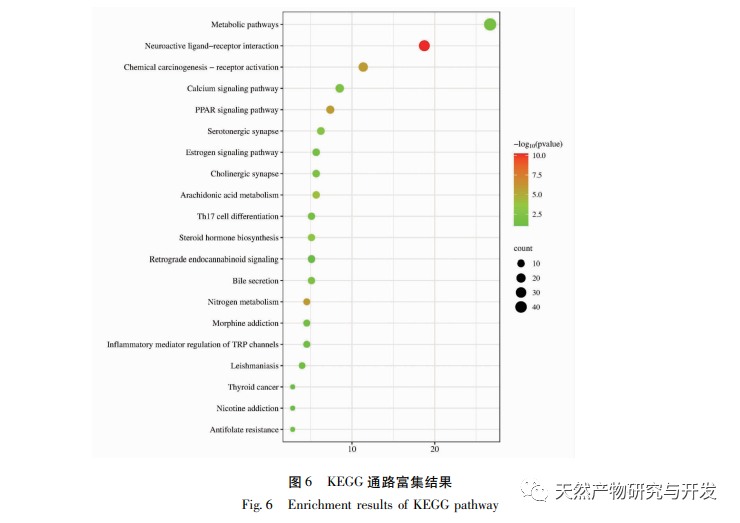
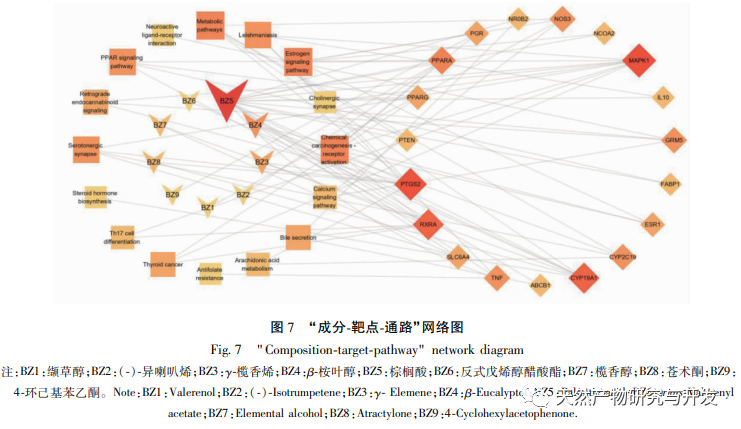
In addition, this study takes the common components of volatile oil in 11 batches of Atractylodes macrocephala decoction pieces as the starting point, and combines network pharmacology analysis methods to construct a “component target pathway” action network of Atractylodes macrocephala volatile oil, predicting the main action pathways and targets of Atractylodes macrocephala volatile oil. The results of network pharmacology showed that palmitic acid, β – eucalyptol, γ – elemene, elemene, and Atractylodes macrocephala ketone may be potential quality markers for the volatile oil of Atractylodes macrocephala. The volatile oil of Atractylodes macrocephala has functions such as regulating the gastrointestinal tract, repairing gastric mucosa, inhibiting bacteria, and protecting the liver. Modern research has shown that components such as palmitic acid, β – eucalyptol, γ – elemene, elemene, and Atractylodes macrocephala have pharmacological effects such as antibacterial, sedative, analgesic, regulating gastrointestinal motility, lowering blood pressure, liver protection, anti-inflammatory, antiviral, and anti infective properties. They are similar to the volatile oil of Atractylodes macrocephala, so these components may be the main material basis for the pharmacological effects of Atractylodes macrocephala volatile oil and are closely related to the functional properties of traditional Chinese medicine. The results of constructing the “component target pathway” network showed that MAPK1, PTGS2, RXRA, CYP19A1, PPARA, NOS3, TNF, CYP2C19 and metabolic pathways, chemical carcinogenesis receptor activation, PPAR signaling pathway, serotonergic synapse, and estrogen signaling pathway may be key targets and signaling pathways for the action of Atractylodes macrocephala volatile oil.
In summary, our research found that the volatile oil components of Atractylodes macrocephala slices from different origins include Atractylodes macrocephala ketone, (-) – isopentene, γ – elemene, β – eucalyptol, palmitic acid trans-valerenyl acetate、 Elephantol and 4-cyclohexylacetophenone are the main compounds, but their contents vary. GC-MS fingerprinting combined with network pharmacology identified palmitic acid, β – eucalyptol, γ – elemene, elemene, and Atractylodes macrocephala as potential quality markers for the volatile oil of Atractylodes macrocephala. This study further improved the quality control system of Atractylodes macrocephala, providing a theoretical basis for the quality control of Atractylodes macrocephala, and also providing a theoretical reference for the study of quality markers of other similar traditional Chinese medicinal materials.
 English
  Danish
  German
  Hungarian
  French
  Russian
  Spanish
  Turkish