
Research progress on natural product serotonin ketone
Serotonin (see Figure 1), chemically named indole [2,1-b] quinazolin-6,12-dione (molecular formula C15H8N2O2), appears as yellow needle shaped crystals at room temperature. Serotonin belongs to the indole quinazoline alkaloid class and is one of the main components of traditional antiviral Chinese medicine Radix Isatidis and antipyretic Chinese medicine Indigo Naturae, as well as medicinal plants such as indigo, woad, and polygonum. It can also be detected in the metabolites of certain microorganisms. Modern pharmacological studies have shown that serotonin has various pharmacological activities such as anti-tumor, antibacterial, anti-inflammatory, antiviral, and cardiovascular protection. Serotonin has shown high medicinal value in the treatment of tumors, bacterial infections, inflammatory damage, viral invasion, and other fields, making it a focus of attention for many scholars. Both cytotoxicity tests and mouse toxicity tests have confirmed its good safety. This review systematically reviews the relevant literature on serotonin, comprehensively analyzes the research progress on the sources, pharmacological effects, pharmacokinetic characteristics, toxicity, and other aspects of serotonin. The aim is to provide more up-to-date and comprehensive information for the in-depth study of the mechanism of action of serotonin, and ultimately provide new ideas for the development of serotonin drugs in clinical practice.

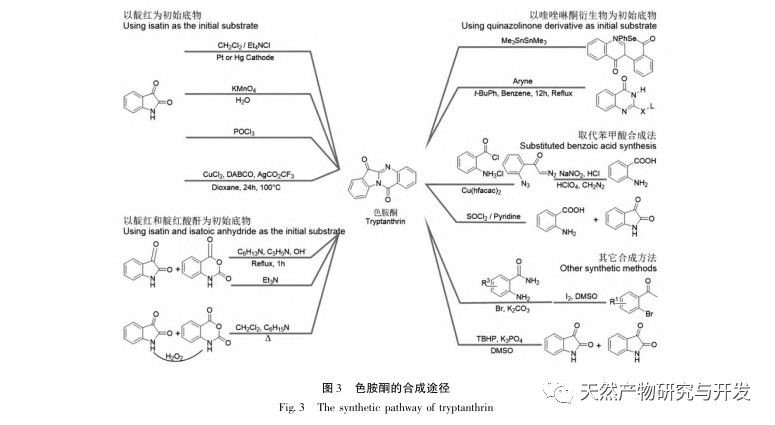
Serotonin has a wide range of natural sources and can be isolated from medicinal plants such as indigo, woad, and polygonum. It has been confirmed that serotonin is a post matured product and its synthesis process is non enzymatic. Serotonin is also a secondary metabolite of certain microorganisms such as Candida lipolytica, Schizophyllum, and marine Streptomyces. However, the content of serotonin ketone in nature is very low, and there are problems such as cumbersome extraction processes, time-consuming separation processes, and low extraction rates. Therefore, the chemical synthesis of serotonin is currently a hot research topic, and indigo carmine and indigo carmine acid glycoside are commonly used synthetic materials. Compared with directly extracting serotonin from plants, artificial synthesis has increased the yield of serotonin, but the synthesis route is more complicated and the reaction conditions are more demanding, which is only suitable for small-scale synthesis in the laboratory. If large-scale production is desired, it is necessary to explore more simple and low-cost artificial synthesis methods and processes. The biomimetic synthesis of serotonin ketone can be a future research direction.
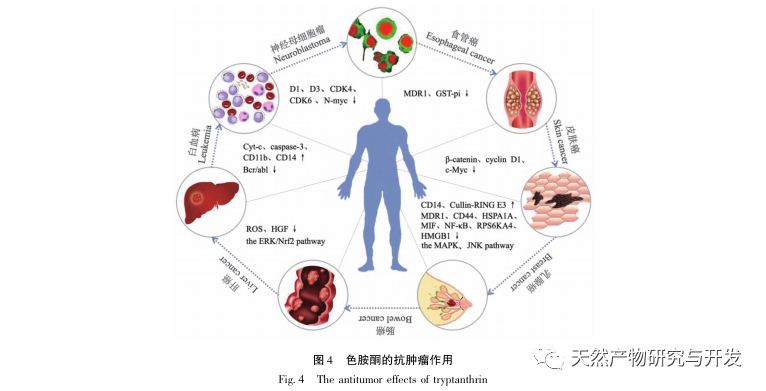
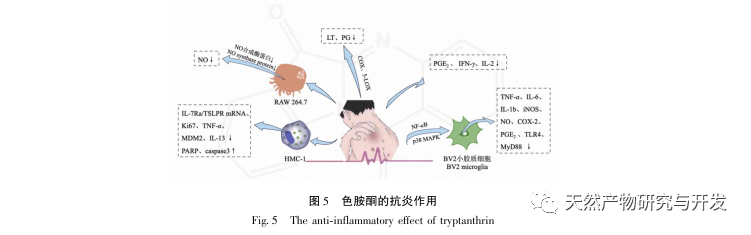
Numerous pharmacological experiments have shown that serotonin has good biological activities such as anti-inflammatory, antibacterial, anti-tumor, antiviral, etc., and has low toxicity and side effects. The pharmacological effects of serotonin and its easy absorption in the intestine make it have broad application prospects in the prevention and treatment of diseases. However, current reports on serotonin ketone are limited to in vitro or animal experiments, which have limitations. In the future, sufficient clinical trial data is needed as strong support. How to fully utilize and develop serotonin ketone compound products with market value will be the focus of future research.
 English
  Danish
  German
  Hungarian
  French
  Russian
  Spanish
  Turkish