
Analysis of the complete components of red pepper order from different origins
Sichuan pepper is an important economic crop native to China, with records of its application dating back to the early Western Zhou Dynasty. At present, the countries that cultivate Sichuan pepper plants in the world are mainly China, Japan, and South Korea, with China having the largest cultivation area and highest yield. Green peppers are best grown in Yunnan, Sichuan, and other regions, while red peppers are mainly produced in provinces such as Sichuan, Gansu, Shaanxi, and Shandong. In long-term cultivation practice, people have cultivated a series of excellent varieties such as Hanyuan Gongjiao, Hancheng Dahongpao, Wudu Dahongpao, Jinyang Sichuan pepper, etc. Sichuan pepper is not only an important seasoning, but also an important traditional Chinese medicine. At present, the production and processing of Sichuan peppercorns in China mainly rely on the skin of Sichuan peppercorns, most of which are used as seasonings. Its main products include dried Sichuan peppercorns, Sichuan peppercorns powder, Sichuan peppercorns oil, preserved Sichuan peppercorns, Sichuan peppercorns sesame extract, Sichuan peppercorns essential oil, etc. At the same time, modern technology and processes are also used in the fields of medicine and daily chemical products, and a small number of high value-added products have been developed. However, in the development of China’s Sichuan pepper industry, there has always been a prominent problem that needs to be solved urgently, which is that the peppers, which account for more than half of the Sichuan pepper production, have not been reasonably and effectively utilized for a long time.
Jiaomu, also known as Sichuan pepper seeds, is the main byproduct of the Sichuan pepper industry, accounting for about 60% of its total mass, with a thousand grain weight of 12.5-22.0g. Some of it is used for seed cultivation and oil extraction, while the majority is discarded as fertilizer or waste, seriously affecting the healthy and sustainable development of the Sichuan pepper industry. At present, the area of Sichuan pepper in China has increased significantly. According to data collected by the Red Meal Industry Research Institute from the Forestry Bureau and other public sources, the production of dried Sichuan pepper in China has remained above 300000 tons since 2012. In 2020, China’s Sichuan pepper production exceeded 450000 tons for the first time, with an annual output of 456000 tons. The above data indicates that nearly 300000 tons of peppers are underutilized each year, resulting in significant resource waste and environmental pollution. According to reports, bell peppers are rich in various nutrients and bioactive components, and are currently a hot research topic. The full and rational utilization of pepper resources can not only directly and significantly improve the planting efficiency of Sichuan pepper, but also extend the Sichuan pepper industry chain, which is of great significance for promoting the prosperity of mountainous economies, expanding export earnings, helping farmers lift themselves out of poverty and become prosperous, and improving the economic benefits of enterprises.
Up to now, there have been more reports on the research of pepper oil, namely Sichuan pepper seed oil, and a large amount of research has also been conducted on the extraction process and application of seed oil. At present, both domestically and internationally, whole seed crushing and extraction are commonly used to directly obtain Sichuan pepper seed oil. Due to interference from other components, the resulting seed oil has a very poor taste, greatly hindering its practical application. Analyzing the composition of seed oil can help improve the refining process in the later stage. Secondly, there are relatively few reports on the non-volatile components of the pepper plant. Wang et al. isolated and identified four compounds from the ethyl acetate extract of the pepper plant, including epicatechin, quercetin, 24 ene bradyaldosterone, and succinic acid; Six compounds were isolated and identified from the 95% ethanol extract of Platycodon grandiflorus, including aminoformate A, isoeugenol, isoanisin, stearic acid, β – sitosterol, and carotenoids. In addition, there are relatively few studies specifically targeting other active ingredients of the pepper order. The extraction and development of active ingredients from pepper will become a research hotspot. Therefore, this article selects the red pepper order from three production areas, Jinyang, Hanyuan, and Wudu, as the research object, and combines gas chromatography-mass spectrometry (GC-MS) and ultra-high performance liquid chromatography-time-of-flight mass spectrometry (UPLC-QTOF-MS) techniques to identify the chemical components of pepper order and reveal the natural product composition of pepper order. Through analysis, in order to provide ideas for improving the quality of Sichuan pepper seed oil, and to provide suggestions for the rational utilization of Sichuan pepper seed residue and the development of other active ingredients. In addition, by comparing the differences in the composition of red pepper from different origins, reference can be provided for the qualitative quality and standardized production of pepper.

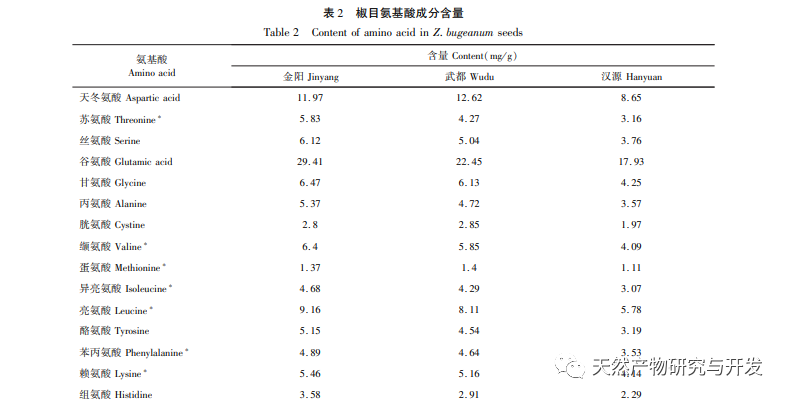

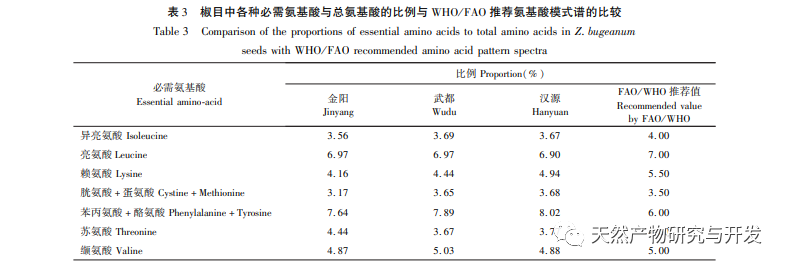
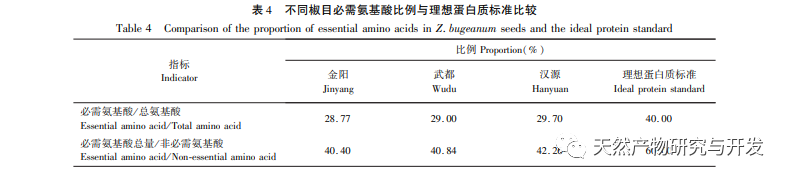
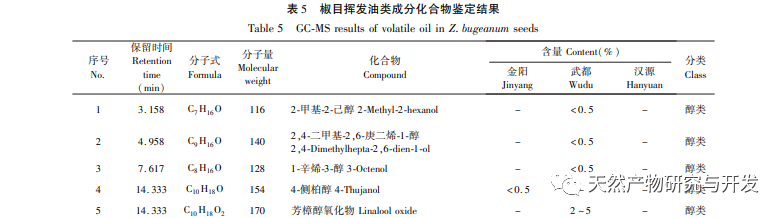
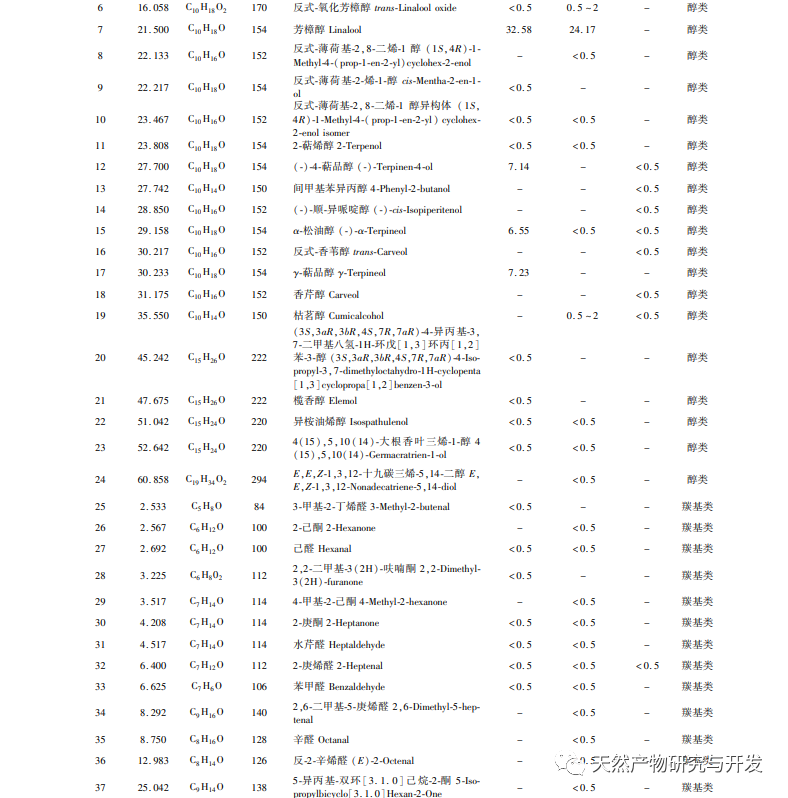
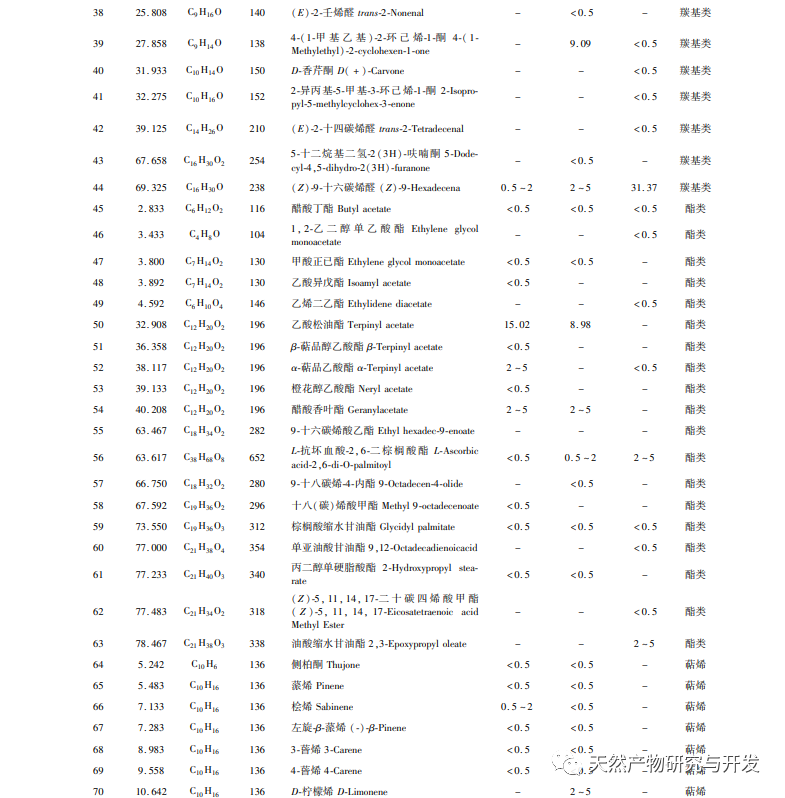
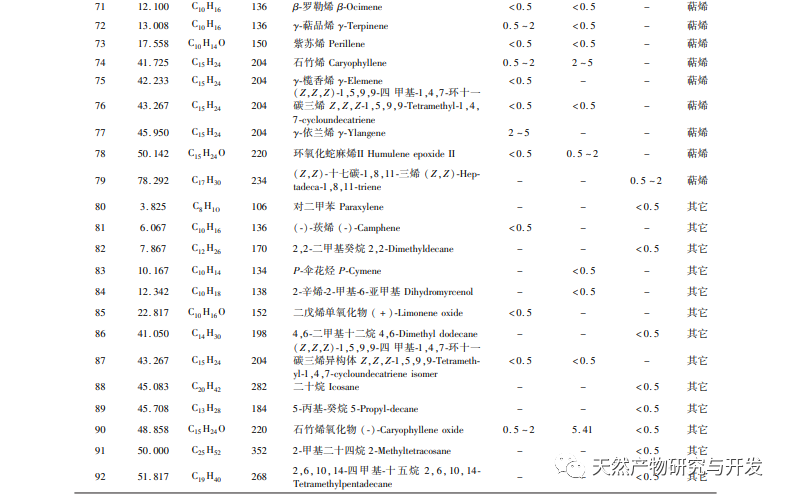
 The level of content is one of the important indicators for measuring the nutritional value of food. Therefore, this article first determined the content of total sugar, total oil, amino acids and other nutrients in three production areas of pepper, with total sugar content ranging from 2.45% to 4.3%, total oil content ranging from 22.04% to 33.31%, and total amino acid content ranging from 83.8 to 131.3 mg/g. According to the survey, more than 90% of the fatty acids in pepper oil are unsaturated fatty acids, while the essential fatty acids that the human body cannot synthesize (linoleic acid, linolenic acid) account for more than 45%. Therefore, Sichuan pepper seed oil should be an ideal edible vegetable oil. The highest oil content of Hanyuan Red is 33%, which can be used as one of the preferred raw materials for extracting pepper oil in the later stage. Secondly, according to the recommended model of FAO/WHO, the composition of amino acids in the pepper order is relatively reasonable, making it a good feed protein raw material. The comprehensive and systematic study of amino acids in the pepper order has guiding significance for the development and application of proteins in the later stage. The total sugar content is relatively low in the peppers from the three production areas. From the perspective of content, it is not recommended to develop.
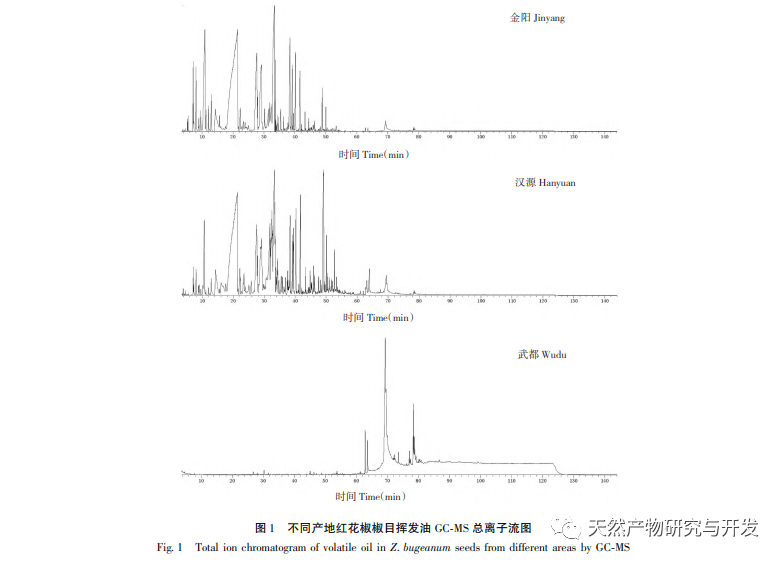
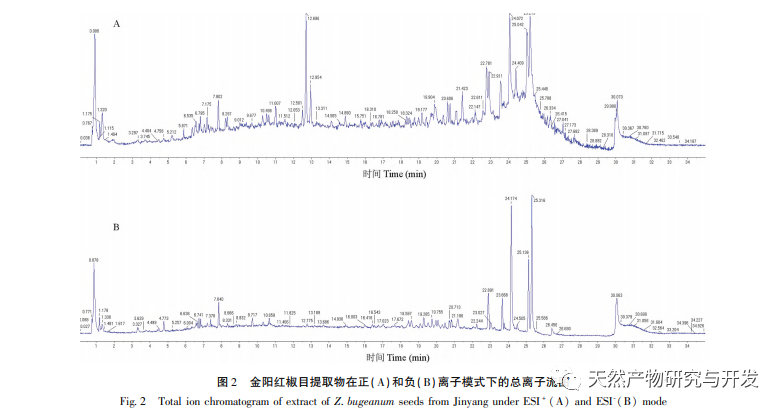
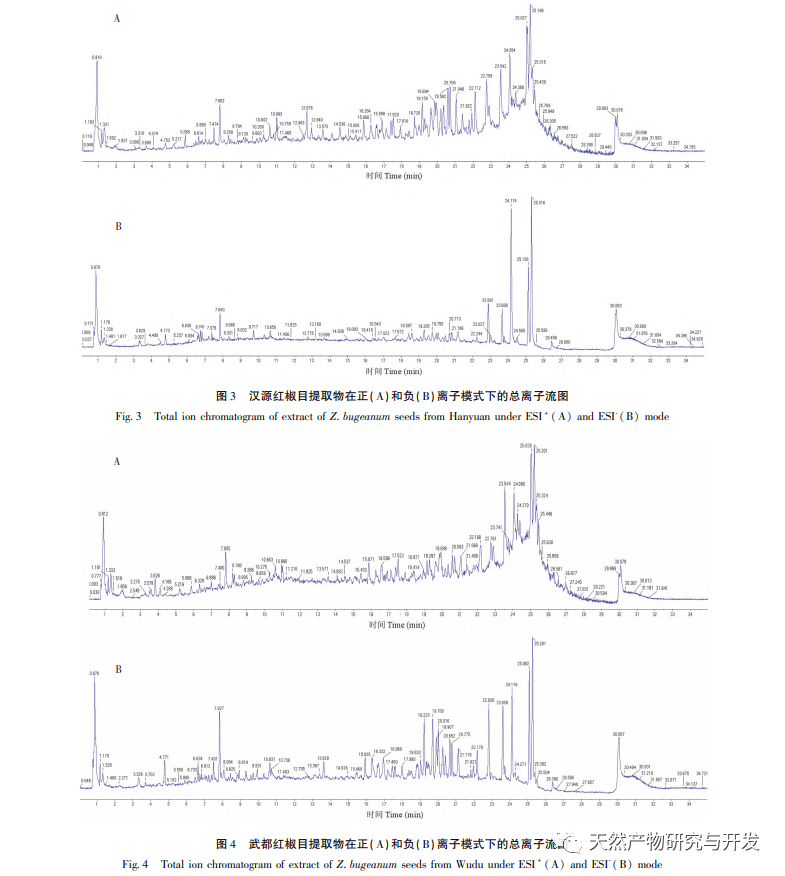
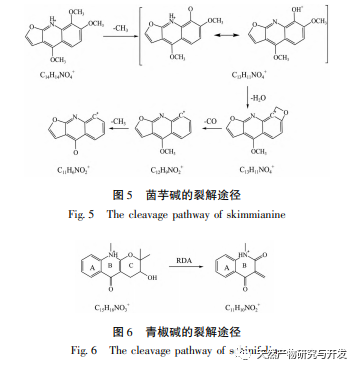
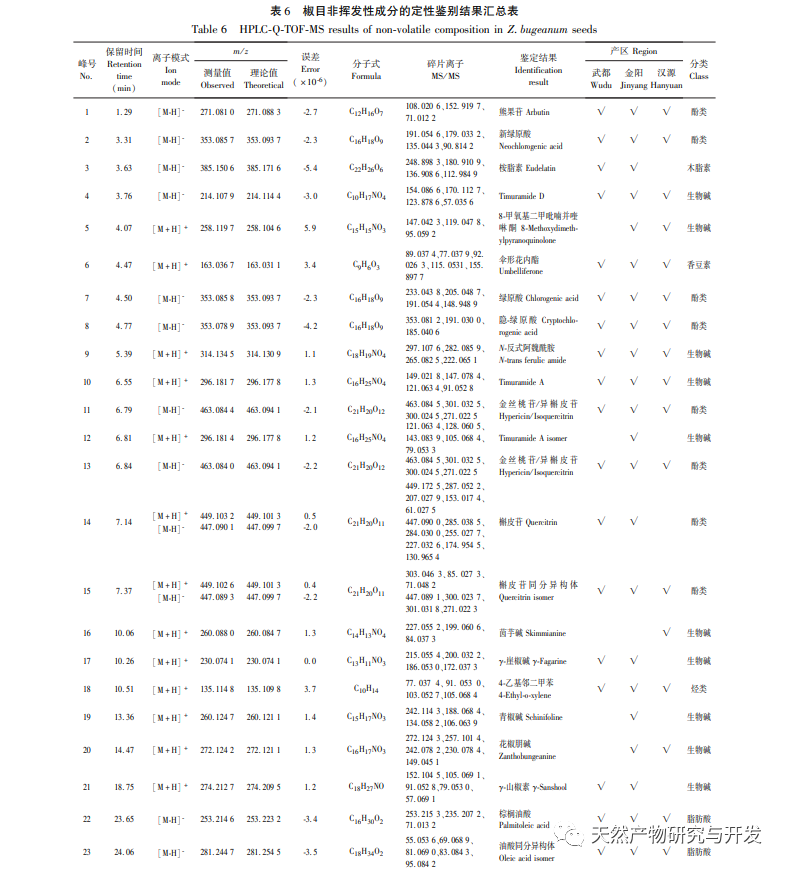
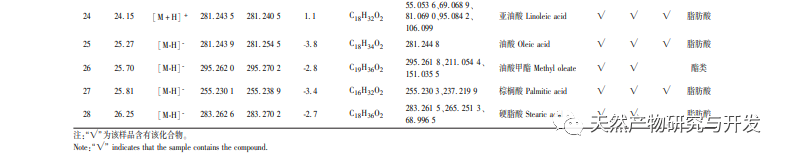
In addition, GC-MS and UPLC-QTOF-MS techniques were used to isolate and identify the chemical components in the pepper order. The pepper order is rich in chemical components and has a wide variety of types, among which volatile compounds, flavonoids, and alkaloids are the material basis for its pharmacological effects. At present, more than 90 volatile compounds, mainly terpenes such as linalool, terpenes, and iridene, have been detected in three production areas of pepper. The types of volatile components in Jinyanghong and Hanyuanhong are more similar, and the main component of the volatile oil in both pepper orders is linalool; Wudu Hong is significantly different from the other two production areas, as the main component of its volatile oil is (Z) -9-hexadecenal. The main components and contents of volatile oils in peppers from different origins may vary, which may be related to environmental factors such as terrain, soil, climate, water quality, and the subsequent extraction process of Sichuan pepper seed oil. Linalool is the most abundant volatile oil component in the Jinyang and Hanyuan pepper orders. It is a linear monoterpene and is widely used in various fields such as medicine, food, and daily chemical products. It is an important intermediate for the synthesis of vitamin E and vitamin A; In addition, it has analgesic, anti anxiety, sedative hypnotic, anti-inflammatory, anti-tumor, antibacterial, and antioxidant effects, and natural linalool has more medical value due to its optical rotation. Linalyl acetate is also one of the important components of the volatile components of Zanthoxylum. It is an indispensable spice for the preparation of advanced essence, and plays a very important role in the daily chemical, tobacco, and food industries. Linalyl acetate has the elegant fragrance similar to the essential oils such as lily of the valley and lavender, which makes people relaxed and happy. It has also been proved to have the pharmacological effect of sedation and hypnosis. There is little difference in the composition of non-volatile components, with 18 substances shared by three pepper orders from different regions. This result indicates that although there are some differences in the secondary metabolites produced by different production areas, the main active ingredients of the pepper order have a high degree of commonality in their understanding. Secondly, N-trans ferulamide and 4-ethylo-xylene are reported for the first time from plants of the Sichuan pepper genus.
As the main byproduct in the production of Sichuan pepper peel, the yield of pepper is 20% higher than that of Sichuan pepper peel. A large amount of chili peppers are used as fertilizer in the fields or discarded as waste in the production area. With the annual increase in Sichuan pepper production, the development and utilization of this abundant and inexpensive resource will have important practical significance. Through the systematic research in this article, the material basis of the pepper order has been elucidated. This not only provides a material basis for distinguishing the production areas, improving quality, developing products, and controlling quality of pepper orders in the later market, but also provides theoretical support for further developing the medicinal and edible value of pepper orders.
 English
  Danish
  German
  Hungarian
  French
  Russian
  Spanish
  Turkish