
Marine traditional Chinese medicine is an important component of traditional Chinese medicine and has a long history of clinical application, showing unique therapeutic advantages. The basic research and transformation and application of the results, represented by marine traditional Chinese medicine seaweeds and so on, have produced significant economic and social benefits and provided a demonstration for the comprehensive development and utilization of marine traditional Chinese medicine resources.
The current situation of the development and utilization of marine traditional Chinese medicine resources is systematically discussed, and strategies and methods for the comprehensive development and utilization of marine traditional Chinese medicine resources are proposed. By building a full-value industrial chain of marine traditional Chinese medicine resources, applying new technologies and new methods, and combining the synergistic innovation between industry, academia, and research, it helps to improve the utilization rate of marine traditional Chinese medicine resources, and then enhance the level of innovation of the marine biomedicine industry, accelerate the implementation of the strategy of strengthening the country by the sea, and drive the development of China’s marine The ocean is the cradle of life.
The ocean is the cradle of life, rich in medicinal biological resources, known as the “blue pharmacy”, marine medicine is the valuable wealth of the ocean to mankind. China is a big ocean country, with a coastline of about 1.8×10⁴ km and a sea area of about 4.7×10⁶ km2. 2 million species of plants and animals live in the ocean, and the resources of marine drugs are extremely rich [1]. Since the 1940s, international research on marine drugs has achieved a series of results, discovering more than 35,000 compounds of marine origin, and more than 10 innovative drugs of marine origin have been developed and marketed successfully. innovative drugs.
China began to conduct modern marine drug research from the 1970s, and has carried out modern pharmacological and chemical research on 1667 kinds of marine medicinal plants and animals and 18 kinds of marine minerals, and achieved a series of research results. Marine traditional Chinese medicine is a marine drug resource applied under the guidance of traditional Chinese medicine theory, and is an important part of traditional Chinese medicine.
In recent years, in the process of development and utilization of marine traditional Chinese medicine, due to over-collection and fishing, changes in the marine environment and other reasons, the amount of marine traditional Chinese medicine resources has decreased significantly, and some of them are in serious decline or even on the verge of depletion. Therefore, it is of great practical significance to carry out research on the comprehensive development and utilization of marine traditional Chinese medicine resources, to improve the level of resource utilization, and to build a system of comprehensive development and utilization of marine traditional Chinese medicine resources.
The concept of marine traditional Chinese medicine and the types of resources
The concept of marine traditional Chinese medicine is divided into broad and narrow sense. Broadly speaking, marine traditional Chinese medicine refers to the medicines originated from the ocean (including the seawater body of water itself, as well as the seashore beaches, wetlands and salty soil and other areas affected by seawater) which are used for the prevention, diagnosis and treatment of diseases under the guidance of the theory of TCM; narrowly speaking, marine traditional Chinese medicine refers to the medicines originated from the ocean (seawater body of water itself) which are used for the prevention, diagnosis and treatment of diseases under the guidance of the theory of TCM [1]. water itself) medicines [2].
The clinical application of marine traditional Chinese medicine has a long history, as early as in the 3rd century BC, “Huang Di Nei Jing” has “squid bone as a pill, drink abalone juice to cure blood wither” records.
China’s earliest pharmacological monograph, “Shennong’s Classic of Materia Medica” contains 13 kinds of marine traditional Chinese medicines, including common marine traditional Chinese medicines such as oysters, seaweeds, squid bones and clams. The Compendium of Materia Medica, written by Li Shizhen in the Ming Dynasty, contains 111 kinds of marine traditional Chinese medicines, plus 40 kinds of local medicines, totaling 151 kinds.
The Chinese Materia Medica, edited and published by Nanjing University of Traditional Chinese Medicine, contains 612 species of marine medicines.In 2014, Ocean University of China and Shandong University of Traditional Chinese Medicine released a survey of marine Chinese herbal medicine species in China[3], which showed that there are 78 species of marine Chinese herbal medicines circulating in the Chinese herbal medicine market, of which 50 species are common and 18 species are in large quantities.
The 2015 edition of the Chinese Pharmacopoeia included a total of 1,502 varieties of proprietary preparations, of which there were 145 marine pharmaceutical preparations containing 14 species of marine Chinese medicines. The marine traditional Chinese medicines that are more frequently used in the formulated preparations include oyster, cuttlebone, stonecrop, seaweed, kombu, and clamshell, etc.[4].
Current status of comprehensive development and utilization of marine traditional Chinese medicine resources
2.1 Health food research and development
There are a variety of medicinal and food-like medicinal varieties in marine traditional Chinese medicine, such as seaweed, kombu, oyster and so on. Therefore, the development of functional health food using marine traditional Chinese medicine resources is the main way to develop and utilize marine traditional Chinese medicine. By introducing various new food processing technologies to better preserve or improve the nutrient content of the products, the added value of the products can be increased. In recent years, domestic and foreign research on the comprehensive development and utilization of marine traditional Chinese medicine species such as seaweed, squid and oyster has been carried out, resulting in the formation of several series of health foods.
2.1.1 Research and Development of Food Products Made of Seaweeds
China is very rich in seaweed resources, with an annual output of 1.6×10⁶ t, accounting for the first place in the world. Traditional Chinese medicine seaweed has the effect of softening and dispersing knots, eliminating phlegm and inducing diuresis, and contains essential proteins, fatty acids, carbohydrates, trace elements and minerals.
Seaweed contains a variety of active substances with cardiovascular protection, anti-tumor, anti-aging, anti-virus and other pharmacological activities. In recent years, domestic and foreign experts have carried out comprehensive development and utilization of seaweeds on the basis of in-depth study of seaweed nutrients, forming a number of series of food or food additives and large-scale industrial applications, such as dietary fiber, algal polysaccharide, alginate propylene dibasic ester, sodium alginate, seaweed oil and so on [5], and further R & D to form new products such as seaweed noodles, tofu, ice cream, condiments and so on, forming a more complete seaweed health food industry chain.
2.1.2 Research and development of squid-based food products
The marine mollusc squid was first published in “Shennong’s Classic of the Materia Medica”, which has the efficacy of dispelling wind and removing dampness, nourishing and tonifying the lymphatic system.
Squid meat is edible and has been developed into peptide functional products or therapeutic products; squid bone is traditional marine traditional Chinese medicine cuttlebone, which has the effects of anti-tumor, astringent sores and stopping bleeding, and has been widely used in the development of functional health food; squid viscera are rich in polyunsaturated fatty acids, proteins, amino acids, and other components, which have good anti-inflammatory effects; squid ink sacs contain peptidoglycan, amino acids and other components, which have certain anti-tumor effects [1]. have certain anti-tumor effects [6].
Therefore, carrying out the comprehensive development and utilization of squid meat, squid bone, squid ink and internal organs can significantly increase the utilization rate and added value of squid resources, and has significant economic and social benefits.
2.1.3 Research and development of foodstuffs using oysters as raw materials
As the world’s No.1 farmed shellfish, oyster is not only rich in nutrition, but also has unique medicinal value. Oysters were first listed in Shennong’s Classic of the Materia Medica, which was classified as the top grade, with the effects of curing weakness, quenching dan toxicity, and quenching thirst [7].
Modern research shows that oysters have pharmacological activities such as hypoglycemia, antioxidant, anti-fatigue, etc. Adopting modern extraction, separation and purification technology, purifying and refining the polysaccharides, nucleosides, proteins and peptides in oysters and other effective parts, and developing a new type of functional health food, has a broad market prospect.
With the deepening of the research on comprehensive development and utilization of oysters, in addition to the traditional dried oysters, oyster oil and canned oysters, a series of leisure foods such as honey tea oysters and bread oysters, as well as special seasonings such as oyster fresh flavors and oyster sauces have been developed. There are also studies on preparing active calcium from oyster shells and further chelating it with L-aspartic acid to form amino acid chelated calcium, which can be developed into functional health food [8].
2.2 Drug Candidate Development
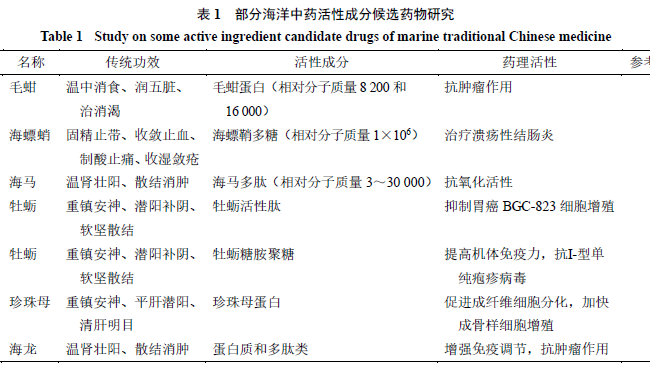
Marine traditional Chinese medicine is an important source of candidate drug development, due to the special environment of high salt, high pressure and lack of oxygen in the marine environment, the plants and animals growing therein contain complex chemical compositions and generally have a variety of pharmacological activities.
Since the 1980s, when China successfully developed the first modern marine drug, dibasic sodium alginate (PSS), more than 10 types of marine drugs have been developed and marketed, including glycopyrrolate, doenkang, mannitol nicotinate and danlu capsule.
In addition, in recent years, it has been found that common marine traditional Chinese medicines contain a variety of active ingredients, and it is expected that new drug candidates can be obtained from marine traditional Chinese medicines through further screening and validation of efficacy and pharmacokinetic studies. Some of the active ingredients of marine traditional Chinese medicine drug candidates are shown in Table 1.
2.3 Research and development of cosmetic products
Extracts of marine herbal seaweeds have been widely used in various types of moisturizing and whitening daily chemical products, with the main effects of improving skin dullness and melanin disorders, etc., and the main active ingredients are polysaccharides, polyphenols, carotenoids and terpenoids [16].
Currently, there are a variety of seaweed daily chemical products with skin whitening efficacy on the market, such as seaweed masks, seaweed cleansers and toners containing seaweed ingredients.
Shimoda et al [17] found that fucoxanthin isolated from kelp could reduce the melanin content in B16F10 melanoma cells, improve the medium-wave UV-induced skin pigmentation in mice, and also absorb UV rays and play a role in skin care, which is expected to be developed into a special-purpose cosmetic product with skin whitening and blemish removal functions.
Collagen, peptides, polysaccharides and other ingredients extracted from marine animal herbs often have a certain whitening effect, such as squid ink polysaccharides have a certain inhibitory effect on tyrosinase activity and melanin synthesis, and show a certain amount of effect relationship [18], can be developed into whitening daily products.
2.4 Research and development of new materials
Marine traditional Chinese medicine in the process of development and utilization, in order to achieve the maximization of resource utilization, a variety of physical and chemical methods can be used, physical and chemical transformation or modification, which can be developed to form a variety of new materials, expanding the application of marine traditional Chinese medicine resources, such as the development of medicinal excipients, biomedical materials and environmental protection materials, etc., which has a broad market outlook.
2.4.1 Pharmaceutical excipients
Pharmaceutical excipients are excipients and additives used in the production and prescription of drugs, which not only act as carriers and improve stability, but also have the functions of solubilizing, solubilizing, slow and controlled release, etc. In recent years, pharmaceutical excipients extracted from seaweed have been widely used in the production and prescription of drugs.
In recent years, fucoidan, carrageenan, agar and derivatives obtained from seaweeds have shown unique advantages as pharmaceutical excipients. These medicinal excipients from marine herbal medicines have good mechanical strength and a wide pH range, and the permeability can be adjusted; they also have good film-forming properties and slow release.
A study was conducted to prepare the medicinal excipient microcrystalline cellulose by hydrochloric acid hydrolysis using waste kelp residue generated from kelp processing as the raw material, and the microcrystalline cellulose obtained had good performance, which provided a demonstration of the comprehensive utilization of the resources of marine traditional Chinese medicine [19].
2.4.2 Biomedical materials
Biomedical materials are materials used to diagnose, treat, repair or replace diseased tissues and organs of organisms or enhance their functions.
Cuttlebone, the main component of which is calcium carbonate, also contains a variety of trace elements, belongs to the natural biomaterials, has a certain affinity with the natural bone tissue and can promote bone healing, which can be used as a graft substitution material for repairing bone defects; however, it is brittle and has low strength, so in order to improve its toughness and linear processing performance, it can be modified to make composite materials. Wang W et al [20] modified cuttlebone by salting out method and prepared cuttlebone/racemic polylactic acid composite artificial bone, which has unique material properties and mechanical modeling advantages, and provides a new source for clinical search of artificial bone materials that can be used to replace bone defects.
A certain amount of chitosan and chitin, which have weak intermolecular forces, are present in cuttlebone, and they have a wide range of applications in the field of medicine. Chitosan and its derivatives have been widely used in trauma dressing products because of their antibacterial, breathable, biocompatible, and bioadhesive properties.
Chitosan has certain biocompatibility and biodegradability, which can promote wound healing and has a good application prospect in the treatment of trauma [21]. In addition, chitin has a wide range of uses in chemical industry, textile, printing and dyeing, papermaking, coating, food, cosmetics, and sewage treatment.
2.4.3 Environmentally friendly treatment materials
Marine shellfish traditional Chinese medicine resources are relatively rich, in addition to being used as calcium supplement preparation, it can also be developed for industrial purification of a new type of environmental protection treatment materials. For example, high-quality adsorbent materials with many pores and large specific surface area can be prepared through modification and activation and used for the purification of industrial wastewater.
Oyster shell is composed of cuticular layer, prismatic layer and pearl layer, which has strong adsorption capacity. After calcination, the carbon dioxide in its laminated structural shell turns into gas, material decomposition occurs, and the initial pore channels produce changes, with a lot more tiny pores, forming a new type of porous structure, which improves its exchange and adsorption capacity [22].
In addition, oyster shells are alkaline after calcination, which can have precipitation reaction with heavy metals in water to produce hydroxide precipitation, so that heavy metals can be separated.Gao et al [23] found that oyster shell powder can remove heavy metals Cd2+ and Co2+ in water, and it is better for Co2+, and adsorption equilibrium can be reached in 24 h. The adsorption equilibrium can be reached in 24 h. The adsorption equilibrium of oyster shell powder can be reached in 24 h. It can be seen that the use of processed oyster shells for heavy metal remediation not only reduces the treatment cost of oyster shell waste, but also provides a new way for the treatment of wastewater contaminated with heavy metals.
Countermeasures for Comprehensive Development and Utilization of Marine Traditional Chinese Medicine Resources
3.1 Constructing a full-value utilization industry chain of marine traditional Chinese medicine resources
In the process of development and utilization of marine traditional Chinese medicine resources, it is of great significance to study the construction of a full-value utilization industry chain to change the current status quo of marine traditional Chinese medicine, which is mainly based on primary processing, to improve the utilization rate of marine traditional Chinese medicine resources, to reduce the pollution and waste of waste, and to enhance the technological level of China’s marine bio-industry.
Among the known marine traditional Chinese medicines, there are only more than 10 kinds of kelp, oyster, seahorse, sheepshead and so on, which are available for large-scale development and utilization. Therefore, in the process of development and utilization of marine traditional Chinese medicine resources, it is necessary to promote the transformation and upgrading of the marine biomedical industry by constructing a full-value development and utilization industry chain on the basis of existing bulk marine traditional Chinese medicines, realizing the increase of product varieties, improving quality, lowering energy consumption, reducing emissions, increasing benefits, and taking the road of ecological development [24].
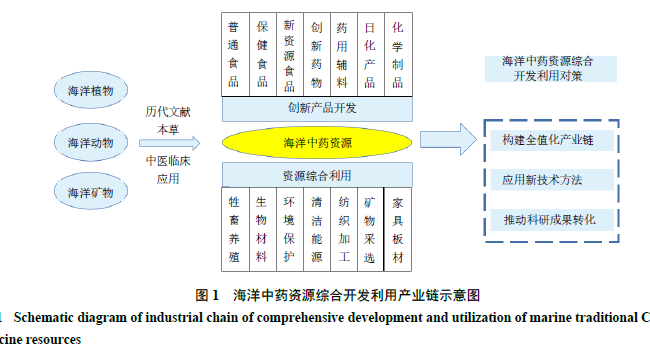
To build a full-value utilization industry chain of marine traditional Chinese medicine resources, it is necessary to carry out systematic and in-depth research according to the characteristics of different marine traditional Chinese medicines, combined with cost-benefit analysis, and then put forward the ideas and methods of full-value development and utilization, see Fig. 1. Taking traditional Chinese medicine seaweeds as an example, the system of full-value utilization has basically been formed through the basic research and industrialization practice for nearly 50 years.
In the aspect of food processing, seaweed food industry covering different levels of primary processing, finishing and deep processing has been formed; in the aspect of drug research and development, China has developed seaweed polysaccharides into new medicines; in the aspect of daily chemical products, with seaweed extract as the active ingredient, a number of series of whitening, spot removal and moisturizing cosmetics such as face masks, creams and emulsions have been developed; in the aspect of agricultural application, since seaweed is rich in In agricultural applications, as seaweed is rich in nutrients and physiological active substances, seaweed or its fermented extracts into bio-fertilizers and yield enhancers, etc.; in livestock and poultry farming, seaweed powder or extracts as feed additives, can prevent diseases, improve animal meat, eggs, milk quality; in the aquaculture industry, there has been a study of kelp, seaweed and other algae processed into sea cucumber farming feed; in textile fiber processing, China has been processed into seaweed fiber or composite fiber fabrics from fucoidan. into seaweed fiber or composite fiber fabric [25].
3.2 Explore the use of new technology to develop marine traditional Chinese medicine resources
China’s marine traditional Chinese medicine resources are mainly simple primary processing, fewer deep processing products, and low processing technology. In the process of further development and utilization, efforts should be made to absorb, learn from and apply new technologies in other fields, such as ultra-high pressure technology, supercritical fluid extraction technology, membrane separation technology, enzyme engineering technology, genetic engineering technology, etc., to promote technological innovation in the field of development and utilization of marine traditional Chinese medicine resources [26].
For example, in the research process of mineral medicine, we can explore the use of nanotechnology to enhance the efficacy of drugs and reduce the dosage of medication; the use of calcination technology to change the material basis of mineral medicine can change its clinical efficacy and scope of application. In addition, through the application of new technologies, can also open up new areas of development and utilization of marine traditional Chinese medicine resources, such as deep processing of traditional Chinese medicine seaweed resources through new technologies, can be expanded to energy, paper, fiber, plastics and other application areas.
3.3 Integration of industry, academia and research to promote the development and utilization of marine traditional Chinese medicine resources
The ultimate goal of scientific research is industrialization in order to maximize its value. Combining innovation with industry, academia and research is an important way to promote the comprehensive development and utilization of marine traditional Chinese medicine resources.
At present, the scientific and technological talents in the field of marine traditional Chinese medicine research are mainly concentrated in marine, medical colleges and research institutes. In the transformation of scientific and technological achievements of marine traditional Chinese medicine, there is still the problem that the combination of industry, academia and research is not close [27]. For this reason, close cooperation among institutions of higher learning, pharmaceutical enterprises and scientific research institutes should be strengthened to actively study the large-scale farming technology and deep processing and comprehensive utilization technology of marine traditional Chinese medicine resources; strengthen the research on the sustainable development and utilization of marine traditional Chinese medicine resources; and promote the research on the biotechnology of marine traditional Chinese medicine, and explore the biosynthesis research of marine natural products.
Departments at all levels should actively build a scientific and technological innovation platform for the production, study and research of marine traditional Chinese medicine, and should innovate the platform operation mechanism, promote the close integration of production, study and research and the transformation of results, and strive to improve the level of development and utilization of marine traditional Chinese medicine resources and develop the marine traditional Chinese medicine industry [28].
Conclusion
Marine traditional Chinese medicine has thousands of years of clinical application history, to strengthen the research on the comprehensive development and utilization of marine traditional Chinese medicine resources, under the guidance of the theory of traditional Chinese medicine, supplemented by modern science and technology and methods, in accordance with the provisions and requirements of the relevant departments, the development and formation of a series of deep-processing products of marine traditional Chinese medicine resources, the formation of marine traditional Chinese medicine resources innovation chain and industrial chain, and to promote the development of the development of China’s marine biomedicine industry and the process of modernization.
The 21st century is recognized as the century of the ocean by all countries in the world, and it is believed that with the help of the national strategy of ocean power, the level of development and utilization of marine traditional Chinese medicine resources in China will be continuously improved, so as to promote the common prosperity and development of China’s traditional Chinese medicine industry and marine biological industry.
 English
  Danish
  German
  Hungarian
  French
  Russian
  Spanish
  Turkish