
Study on the promotion of incremental enrichment of huperzine A by symbiotic cultivation method
Huperzia serrata (Thunb. ex Murray) is a fern plant in the family Taxaceae, belonging to the genus Taxodium. It is a rare Chinese herbal medicine used for treating traumatic injuries, detoxification, pain relief, and treating schizophrenia. Snake foot fir is currently one of the better researched drugs for treating Alzheimer’s disease. Its active ingredient, huperzine A, is an efficient, low toxicity, reversible, and highly selective acetylcholinesterase (AChE) inhibitor for the treatment of myasthenia gravis and Alzheimer’s disease. It can enhance the action of acetylcholine, a central nervous neurotransmitter related to attention, alertness, concentration, and memory. In 1982, huperzine A was successfully isolated from the snake footed fir and was regarded as the “Star of Hope”. According to a survey, by 2025, the number of Alzheimer’s disease patients aged 65 and above in developed countries will reach 7.1 million, an increase of nearly 29% from 5.5 million in 2018. Unless there is a medical breakthrough, the number of patients with the disease may increase from 5.5 million to 13.8 million by 2050. In the United States alone, approximately 14-20 out of every 100000 people suffer from myasthenia gravis, with a total of about 36000-60000 patients, which is also a very alarming number. The biggest problem with drugs currently available on the market for Alzheimer’s disease and myasthenia gravis is drug toxicity and resistance. Compared with current drugs, huperzine A is a natural plant extract with good safety, fewer adverse reactions, and can be quickly absorbed by the human body. The inhibition method is a mixed type of competitive and non competitive inhibition, and the therapeutic effect is significant with a long effective time.
Snake footed Cryptomeria is distributed around the world, but its resources are very limited. One limiting factor is the slow growth of snake footed Cryptomeria, which takes at least 15 years from spores to maturity. And in the mature stage, the height of the snake footed fir is only 10-30cm. At the same time, its growth environment is difficult to replicate and difficult to promote in actual cultivation processes. Therefore, in the near future, the snake footed fir will face the threat of extinction. In recent years, multiple studies have been conducted on this rare plant, such as in vitro cultivation of explants and callus tissues. Kan’ichiro Ishiuchi’s team has successively started from H The explants were obtained from the stem tip of Pinifolia, and cultured in the sterile medium for 2 cycles (each cycle is 7 days). Finally, the explants were successfully transferred into the callus growth medium. In addition, the researchers made various improvements to the culture method of Huperzia serrata, such as the screening of medium components and the research of stem tip culture technology. However, the problem of disinfection and sterilization of explants in the process of tissue culture has not been effectively solved, limiting the large-scale production of huperzine A. Due to the scarcity of natural resources and the aforementioned reasons, there is an urgent need to find a new method that can increase the content of huperzine A at a lower cost.
Endophytic fungi are a type of fungus that live in plant stem and leaf tissues. Studies have found that if endophytic fungi evolve in symbiosis with plants for a long time, they can obtain certain genes of the host plant through genetic recombination, producing secondary metabolites that are the same as those of the host plant. Meanwhile, endophytic fungi can also produce hormones to promote the growth and development of host plants. Therefore, in the co culture system, endophytic fungi are considered as elicitors, which means that plant cells can co culture with endophytic fungi within a certain concentration range. In the co culture system, endophytic fungi and plant cells interact with each other, promoting the accumulation of plant products. Ergosterol is an important component of fungal cell membrane and a characteristic sterol of fungi. It can be used as a representative indicator to measure fungal biomass.
This study introduces a novel co culture system (CCS) to economically and conveniently increase the content of huperzine A in Chinese fir, in order to improve the current situation where Chinese fir cannot be widely used due to resource scarcity. 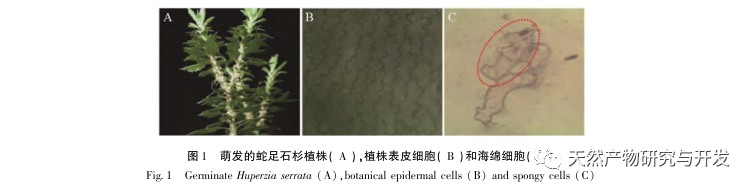

Huperzine A is an AChE inhibitor used for the treatment of Alzheimer’s disease and myasthenia gravis. Its main source is Cryptomeria lanceolata, but the content of Huperzine A in Cryptomeria lanceolata is low, and the limited resources of Cryptomeria lanceolata limit its further development in the pharmaceutical field. There are studies showing that there are various endophytic fungi in plants, which have formed a complex mutualistic relationship with their host plants during long-term evolution. On the one hand, endophytic fungi need to absorb nutrients from plants to meet their own survival needs. On the other hand, endophytic fungi engage in special biochemical communication with host plants in order to resist the host’s defense system. They can synthesize secondary metabolites similar to the host by recognizing the host’s chemical signals or employing host enzyme systems. Jiang et al. isolated and purified endophytic fungi from the semi red mangrove plant Hibiscus, and obtained the same secondary metabolites as the host through solid-state fermentation. Tong et al. isolated and studied the secondary metabolites of the endophytic fungus FS4 in Cryptomeria serrata, and found that its five metabolites exhibited strong inhibitory acetylcholinesterase biological activity similar to that of huperzine A.
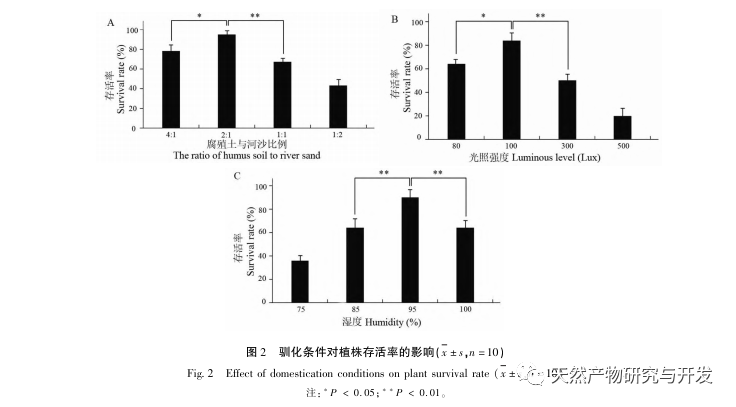
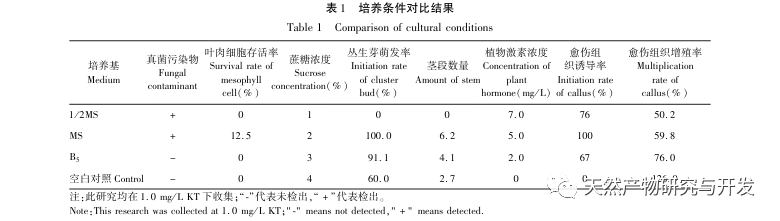
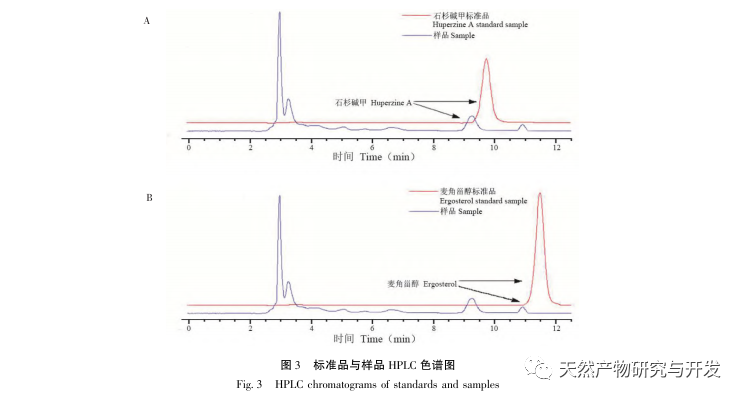
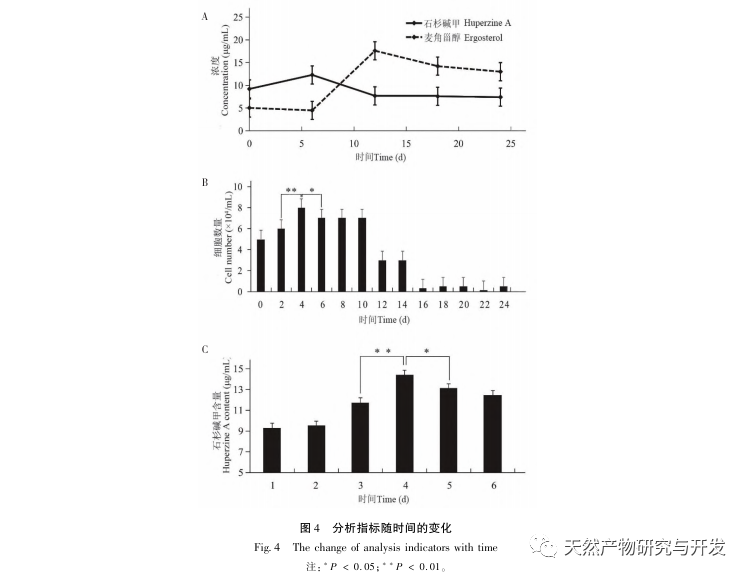
In this study, experiments were conducted on the domestication conditions and tissue culture medium conditions of wild snakefoot hemlock. The optimal culture conditions were determined to be a light intensity of 100 Lux, humidity of 95%, MS liquid medium, sucrose of 20.0g/L, 2,4-D5.0mg/L, and KT1.0mg/L. The relative changes of two compounds, huperzine A and ergosterol, were used to reflect the dynamic growth process of CCS. The fourth day was determined as the optimal time for harvesting and subculture based on its inflection point. After 4 days of cultivation with CCS, the content of huperzine A increased by 49.34%, reaching its maximum value. The overall content of huperzine A in the culture system showed a trend of first increasing and then decreasing. This is because in the later stage of growth, endophytic fungi have stronger reproductive ability than plant cell differentiation ability, competing for nutrients and growth space in the culture medium, resulting in a decrease in cell number. Therefore, the selection of harvesting and subculture time is the key to achieving incremental enrichment of huperzine A in the co culture system. At the same time, the concentration of plant hormone 2,4-D has a significant impact on the system. 2,4-D promotes the dedifferentiation of plant organs and induction of callus tissue, but has an inhibitory effect on cell differentiation when the concentration is too high. Therefore, in the culture system, 5mg/L is used as The optimal concentration. This experiment successfully used a co culture system to achieve the biosynthesis of huperzine A. This method overcomes traditional fixed concepts because plant somatic cell culture does not require thorough sterilization beforehand. Plant somatic cells and endophytic fungi can be co cultured, and the production of huperzine A can be promoted at specific ratios. As long as the cultivation cycle is accurately grasped, this convenient and fast method can be used to accumulate huperzine A, which is of great significance for protecting plant resources and enriching the important bioactive substances of huperzine A.
 English
  Danish
  German
  Hungarian
  French
  Russian
  Spanish
  Turkish