
Optimization of Total Phenolic Acid Extraction Process and Whitening Activity of Golden Lotus Flower by Response Surface Methodology
Golden Lotus is the dried flower of Trollius chinensis Bge, a plant in the Ranunculaceae family. It is also known as Golden Hibiscus, Dryland Lotus, Golden Plum Grass, and Golden Knot. Mainly distributed in the northern parts of Shanxi Province and Henan Province, the northwest of Hebei Province, the eastern part of Inner Mongolia Autonomous Region, and the western parts of Liaoning Province and Jilin Province in China. The Golden Lotus Flower was first recorded in the Compendium of Materia Medica, which records that it has a “smooth and bitter taste, no toxicity, and a cold nature”. The 1977 edition of the Pharmacopoeia of the People’s Republic of China (Volume 1) initially included the medicinal herb of Jinlianhua, which was described as having a bitter and slightly cold taste. Its main functions were antibacterial and anti-inflammatory, and it was used for upper respiratory tract infections, pharyngitis, tonsillitis, otitis media, acute conjunctivitis, and acute lymphangitis. Jinlianhua is not only used as a medicinal herb, but also known as the “Dragon Well outside the Great Wall”. There is a saying in folk culture that “it is better to drink three flowers than two liang of tea”. After brewing, it has a golden color and a refreshing taste. Long term consumption can clear and moisten the throat, dispel internal heat, and invigorate the mind. It is a must-have for home use, a great gift for guests, and for family and friends. Modern pharmacological research has shown that Jinlian flower has various biological activities, such as antibacterial, anti-inflammatory, antiviral, antioxidant, anti-tumor, antipyretic and analgesic. Its chemical components mainly include flavonoids, phenolic acids, alkaloids, etc.
Through extensive literature review, it has been found that flavonoids are relatively abundant in lotus flowers. Currently, research on the effective components of lotus flowers in China mainly focuses on flavonoids, with relatively few reports on phenolic acid components. Moreover, research on the extraction process of total phenolic acids from lotus flowers is even rarer. However, studies have found that the phenolic acid components in lotus flowers have high bioavailability, and the body’s absorption of phenolic acid components in lotus flowers is significantly better than that of flavonoids. In recent years, there have been more and more research reports on the pharmacological activity of total phenolic acids in traditional Chinese medicine. It has been found that total phenolic acids in traditional Chinese medicine have various pharmacological activities such as antibacterial, anti-inflammatory, antioxidant, and antiviral. Some studies have shown that as natural antioxidants, phenolic acid compounds in traditional Chinese medicine have stronger antioxidant activity than ordinary dietary plants, and it has also been found that total phenolic acids in some plants have tyrosinase inhibitory effects. In addition, plant polyphenols are widely used in cosmetics due to their anti-aging and moisturizing effects. However, there are few reports on the whitening activity of total phenolic acids in lotus flowers.
Therefore, for the first time, this experiment used the Box Behnken Design (BBD) experiment in response surface analysis to optimize the extraction process of total phenolic acids from lotus flowers, and studied their in vitro antioxidant and tyrosinase inhibitory effects, laying the foundation for the future search for whitening active substances in lotus flowers and further scientific and rational development and utilization.
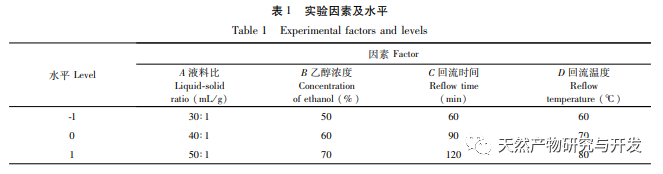
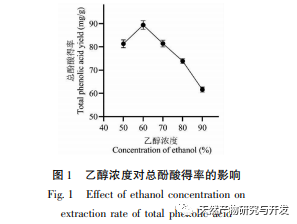
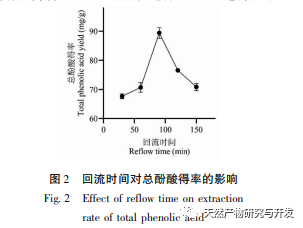
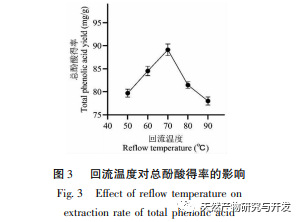
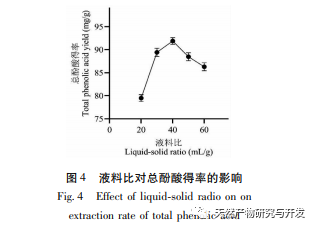
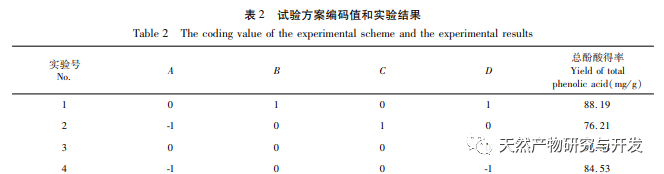
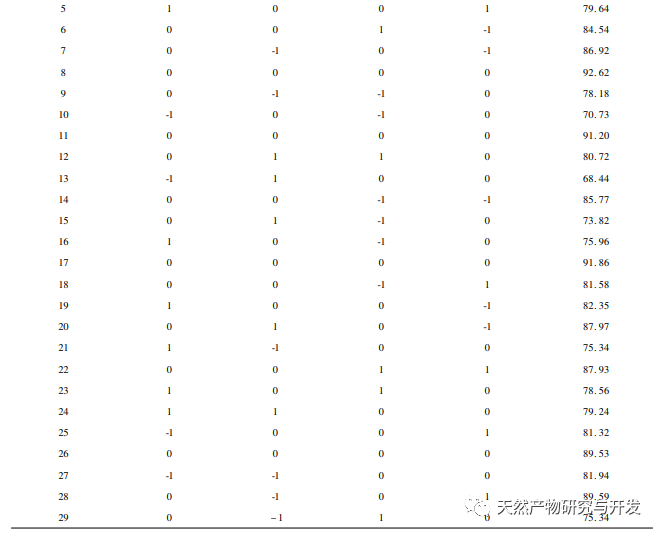
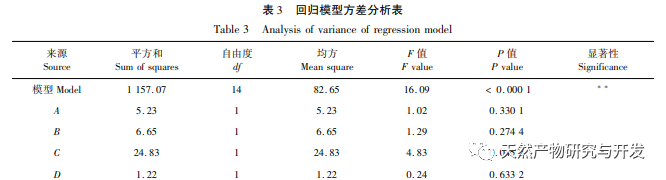
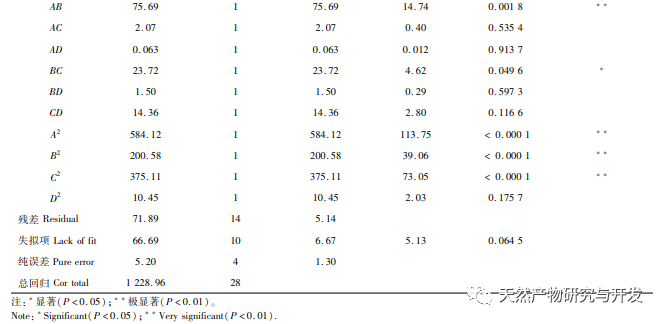
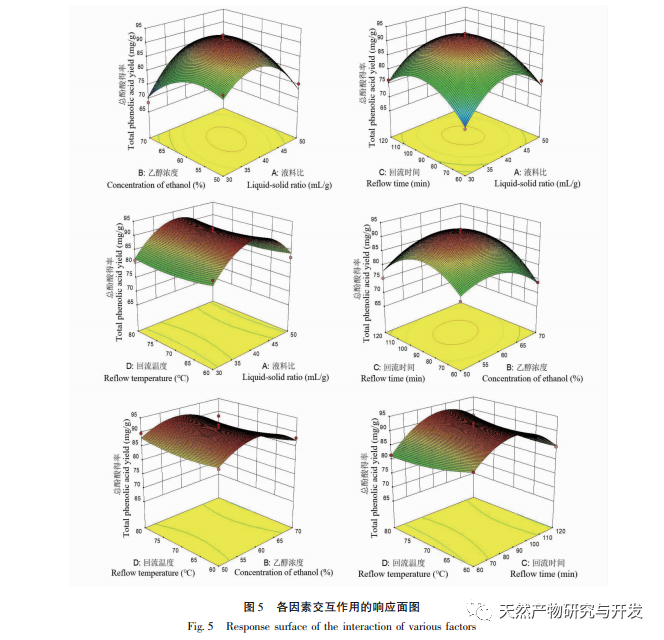
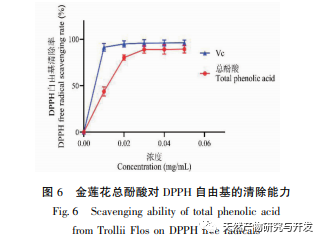
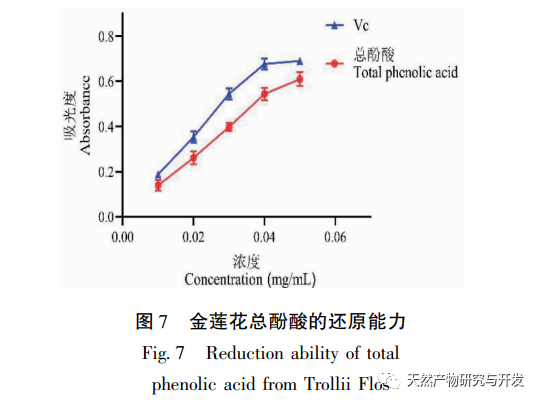
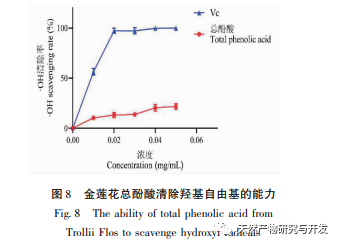
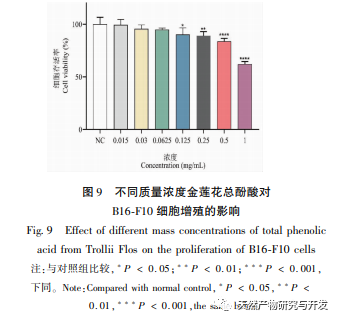
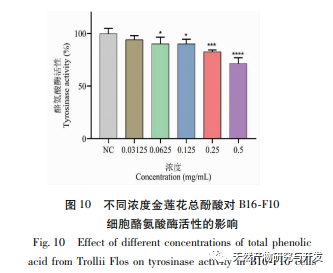
Single factor experiments were conducted to investigate the extraction of total phenolic acids from lotus flowers using ethanol reflux method, and the optimal extraction process conditions were optimized by BBD experiment in response surface methodology. The optimal extraction conditions were obtained as follows: solid-liquid ratio of 1:40, ethanol concentration of 60%, reflux time of 90 minutes, and reflux temperature of 60 ℃. Under these conditions, the yield of total phenolic acids from lotus flowers could reach 92.245mg/g. This method is stable, feasible, and has good repeatability, laying the foundation for further research and development of total phenolic acids in lotus flowers. The results of the in vitro antioxidant activity study showed that within the concentration range of 0.01~0.05mg/mL, the total phenolic acid of Jinlian flower gradually increased its ability to scavenge DPPH free radicals and hydroxyl free radicals, as well as its reducing ability, with good in vitro antioxidant activity. The results of cell experiments showed that the experimental groups of total phenolic acids in lotus flowers at concentrations ranging from 62.5 to 500 μ g/mL could significantly inhibit tyrosinase activity and have certain whitening potential. The above research provides a theoretical basis for the comprehensive development and utilization of Jinlianhua medicinal materials.
In the future, the total phenolic acids of Jinlian flower can be separated and purified, and its whitening mechanism can be further studied, providing a scientific theoretical basis for the development and utilization of Jinlian flower related whitening products.
 English
  Danish
  German
  Hungarian
  French
  Russian
  Spanish
  Turkish