
Principal component analysis and comprehensive evaluation of free amino acids in mulberry leaves from different origins and varieties
Mulberry leaves were first recorded in the “Shennong Bencao Jing” and originated from the dried leaves of mulberry plants. They are distributed in most parts of China. Mulberry leaves have balanced nutritional value and are known as the “immortal leaves”. They are also a typical medicinal and edible resource, containing rich nutrients with special physiological activities such as protein, free amino acids, alkaloids, flavonoids, etc. They are natural raw materials for developing drugs or functional foods. According to reports, free amino acids (FAAs) in mulberry leaves can account for 0.2% to 2.0% of the total dry matter, and the composition and content of FAAs have a significant impact on the flavor quality of mulberry leaves, directly or indirectly affecting the quality of mulberry leaf products. Therefore, comprehensive analysis and evaluation of mulberry leaf FFAs are of great significance. At present, there are various methods for determining FFAs and their application research progress is rapid. There are research reports on using spectrophotometry to determine the content of amino acids in tea, medicinal materials, etc. Xia et al. used spectrophotometry to determine the content of GABA in mulberry leaves of 23 mulberry varieties. The fresh mulberry leaves of the mulberry variety Huosang have the highest GABA content, reaching 1.224mg/g, which is 3.76 times that of the lowest content mulberry variety. Deng et al. determined the total amino acid content of mulberry leaves using an amino acid analyzer to be 8.62-10.63g/100g, while Yang et al. determined the essential amino acid content of mulberry leaf protein to be 29.11g/100g crude protein. Zhen et al. used HPLC to detect the content of free amino acids in mulberry leaves harvested from three different seasons of mulberry varieties. They found that the content of serine, which had a higher content in spring mulberry leaves, decreased during the first frost season, while the content of threonine, which had a lower content in spring mulberry leaves, increased during the first frost season. Lu et al. established a method for simultaneous determination of amino acids, nucleosides, and alkaloids in mulberry leaf samples using ultra-high performance liquid chromatography tandem triple quadrupole mass spectrometry. The spectrophotometric method is simple and easy to implement, suitable for the detection of aromatic free amino acids, but the linear range is small, only one order of magnitude; The amino acid analyzer method is accurate, reliable, and has good reproducibility, and can determine most types of amino acids and their homologues. However, this method has a relatively long determination time, large post column diffusion, resulting in a decrease in resolution, and the instrument structure is complex and relatively expensive; High performance liquid chromatography and high-performance liquid chromatography-mass spectrometry have the advantages of high selectivity, high specificity, high sensitivity, and wide applicability to samples. However, their use is limited by high instrument prices, by-products derived from high-performance liquid chromatography, and interference caused by hydrolysis of derivatives. The combination of high-performance liquid chromatography and fluorescence detection (HPLC-FLD) method for determining amino acid content has the advantages of high specificity, high sensitivity, simplified and cumbersome pretreatment steps, shortened pretreatment time, and no need to use strong bases or contact with high temperatures, which is safer. Fang et al. used HPLC-FLD method to achieve targeted detection of 18 free amino acids in fresh and dried tea leaves, providing reference for this study. Previous studies have shown that factors such as different origins, varieties, drying methods, and harvesting periods have a significant impact on the amino acid content in mulberry leaves. Therefore, this study collected mulberry leaves from 17 different origins in Chongqing, including three varieties, in November (early frost) and dried them at 45 ℃ to constant weight. HPLC-FLD was used to determine the accumulation differences of 18 free amino acids in different mulberry leaf samples, and TAV analysis and SPSS software related statistical analysis techniques were used to comprehensively evaluate Morus alba L. and Huasang M. from different origins Cathayana Hemsl. and Chicken Mulberry M The nutritional and flavor characteristics of free amino acids in three mulberry leaves, Austalis Poi. This provides a reference for the utilization of mulberry resources and the formation of their quality.
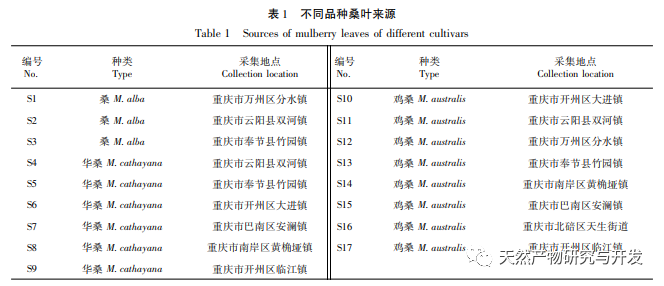
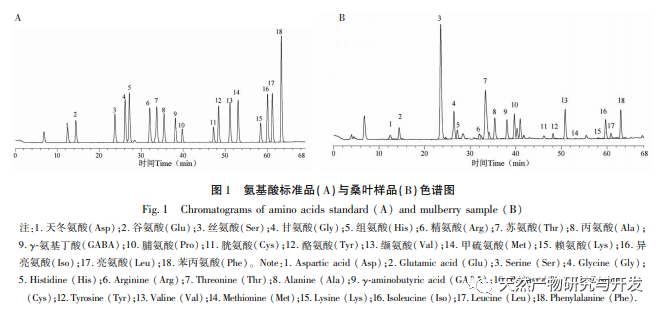
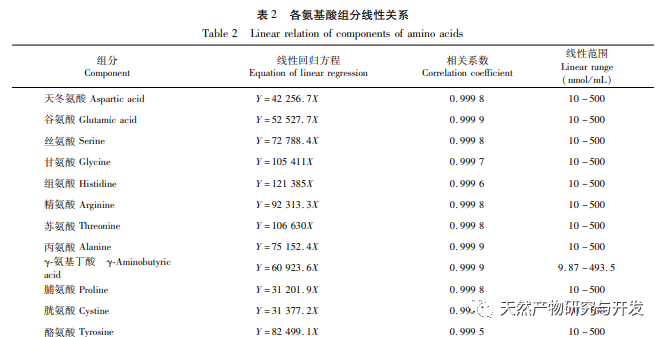
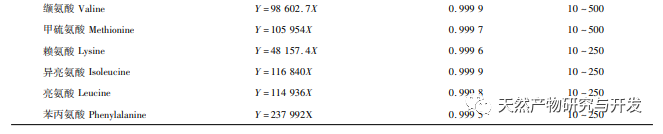
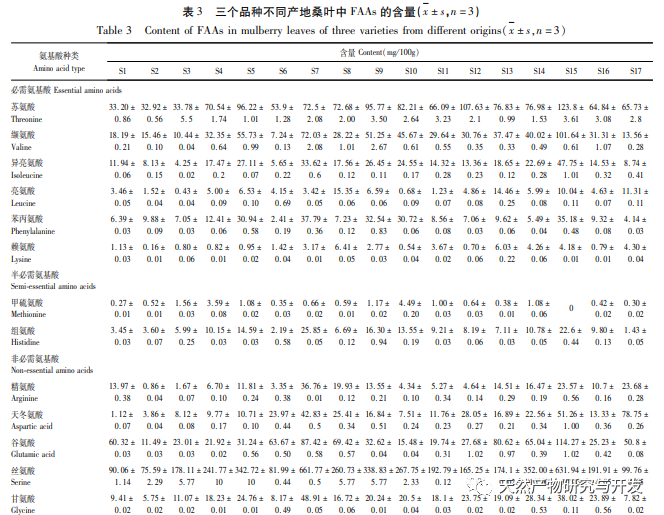
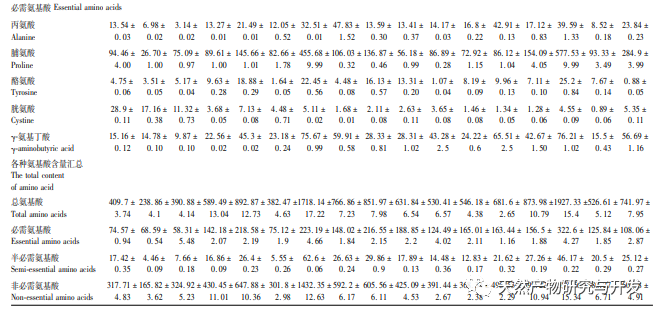
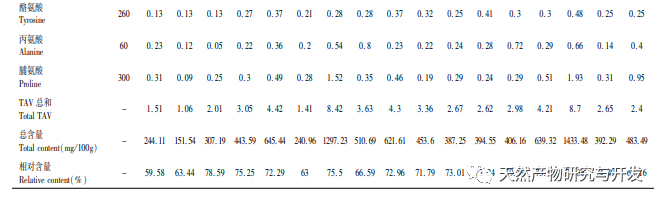
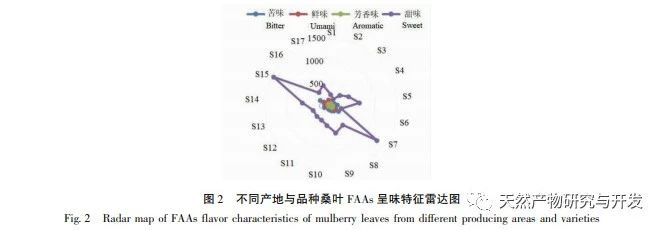
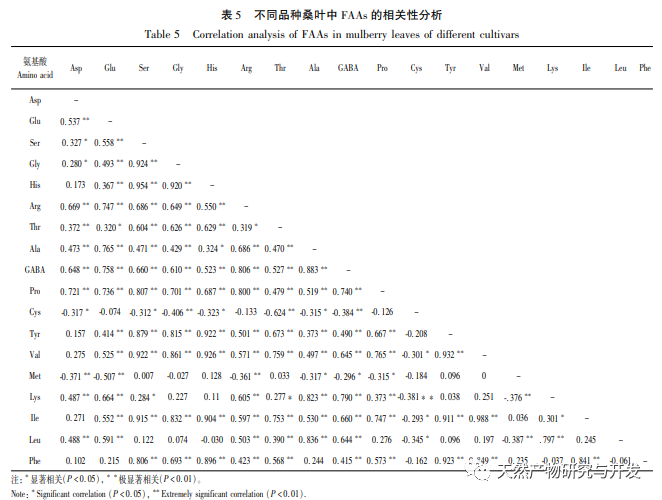
Mulberry leaves contain rich nutrients and bioactive substances, as well as various amino acids. Their functional and biological activities have been widely studied. Zhang’s research shows that the amino acid content in mulberry leaves is similar to that in rapeseed pollen, which contains 8 essential amino acids needed by the human body. The planting resources are abundant, making it a good resource for developing functional food plants; Deng et al. evaluated the quality of mulberry leaves from different regions and found that there were no significant differences in the chemical types of mulberry leaves from different regions, but there were differences in the component content, reflecting the chemical composition characteristics of mulberry leaves from different regions.
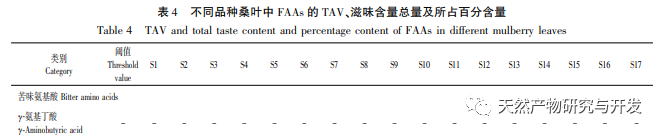
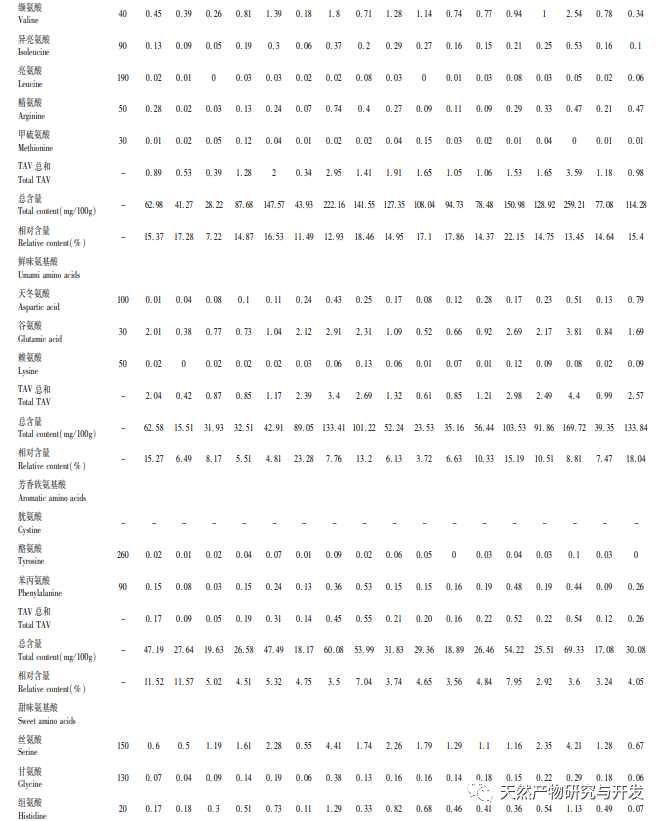
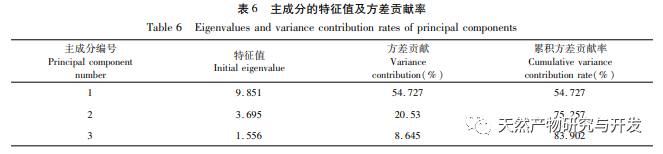
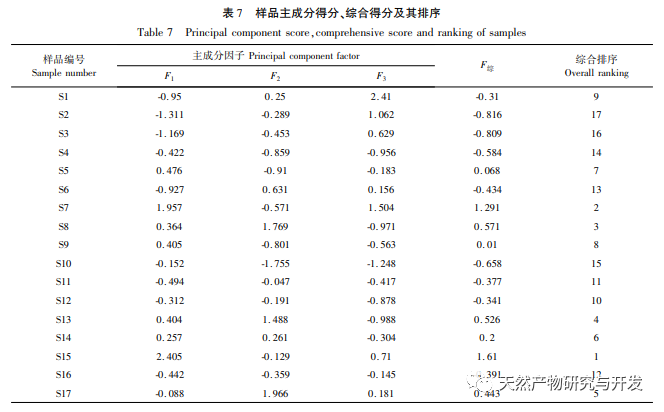
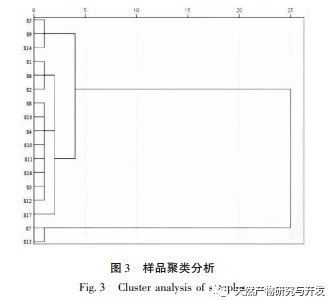
This experiment studied the FFAs of mulberry leaf samples from three varieties of mulberry, Chinese mulberry, and chicken mulberry from different origins. The highest total amino acid content reached 1927.33mg/100g, with high levels of essential amino acids, semi essential amino acids, and non essential amino acids. It has the value of developing amino acid functional nutritional foods. The TAV value serves as a reference indicator for providing taste. Through amino acid TAV analysis, it was found that there are fewer amino acids with TAV values greater than 1 in mulberry leaves from different regions of the three varieties. Although their contribution to taste is relatively small, they do not contribute to taste. The composition of taste is not entirely due to the factors of taste components with TAV values greater than 1. Many taste components in mulberry leaves have multiple taste attributes, and further research on each amino acid component is needed to reveal the interactions between them. Through principal component analysis, it was found that there were significant differences in amino acids among three types of mulberry leaves from different regions, among which the amino acid content and quality of mulberry leaves in Anlan Town, Banan District, Chongqing were the highest. Therefore, when establishing mulberry leaf planting bases, chicken mulberry and Chinese mulberry varieties can be widely planted based on the geographical and environmental advantages of the region. Mulberry leaves in this area are the preferred varieties for further development and utilization. This study investigated the amino acid composition of mulberry leaves from different varieties and origins, providing a reference for the evaluation of mulberry leaf product quality and the development and utilization of functional products.
 English
  Danish
  German
  Hungarian
  French
  Russian
  Spanish
  Turkish