
Rose water is a byproduct produced during the distillation and extraction process of rose essential oil, and its yield is much higher than that of rose essential oil; Rose fresh flower cell fluid is a liquid formed by the condensation of volatile substances in rose fresh flower cells under low temperature conditions, with the natural floral fragrance of rose flowers. In this article, rose water and rose cell fluid are collectively referred to as “rose dew”. Rose dew contains natural and pure ingredients, including trace amounts of rose essential oil and other water-soluble components. It has a light and pleasant fragrance, and has functions such as anti allergy, antibacterial, anti-inflammatory, relieving skin aging, replenishing skin moisture, and enhancing skin vitality. It can be used in the research and development of rose beverages, rose oral liquids, and other products. It is an important raw material for food, cosmetics, and fresheners, and has high development and utilization value. The aroma components of rose dew are key indicators of product development and utilization, which can reflect the quality changes during processing, production, storage, and transportation, and are also the main basis for determining the quality of rose dew. Therefore, understanding and mastering the composition and content of aroma components in rose juice is of great guiding significance for the rational processing and utilization of rose juice.
Dispersion liquid-liquid microextraction (DLLME) is a novel liquid-phase microextraction technique proposed by Rezaee et al., which is based on the formation of dispersed small droplets in the sample solution by the extractant under the action of the dispersant, forming a three-phase emulsion system of extractant dispersant sample solution. This increases the contact area between the extractant and the target analyte, allowing the target analyte to quickly reach distribution equilibrium between the sample solution and the extractant and complete the extraction. This technology integrates extraction and concentration, and has the advantages of simplicity, speed, low cost, low pollution, and high enrichment factor. It has been applied in multiple fields such as food safety, drug analysis, and environmental pollution. However, there are currently no reports of using dispersed liquid-liquid microextraction technology to enrich the aroma components of rose dew.
This study used the DLLME-GC-MS technique to analyze the aroma components of rose petals and optimized the experimental parameters for dispersion liquid-liquid microextraction. The aim is to provide technical support for the study of aroma components in rose petals and theoretical basis for their development, utilization, and product quality control.

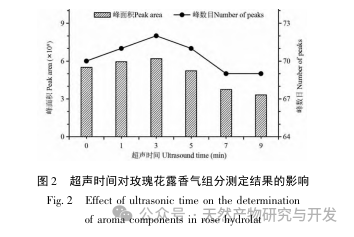
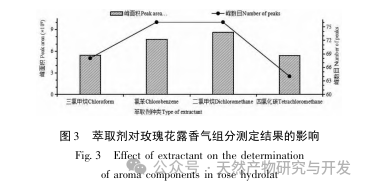
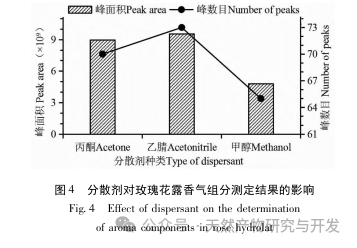
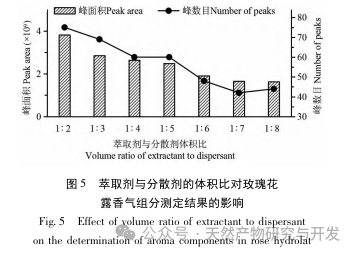
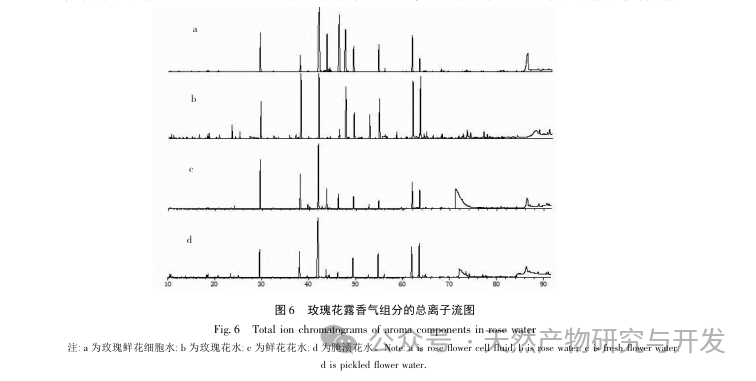
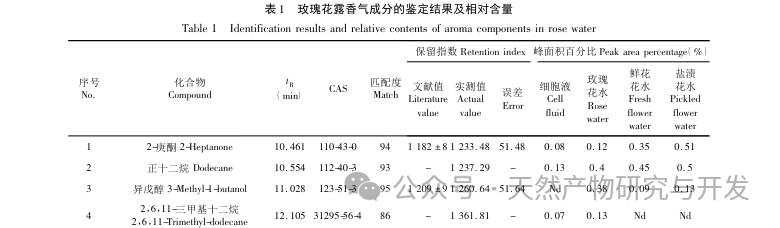
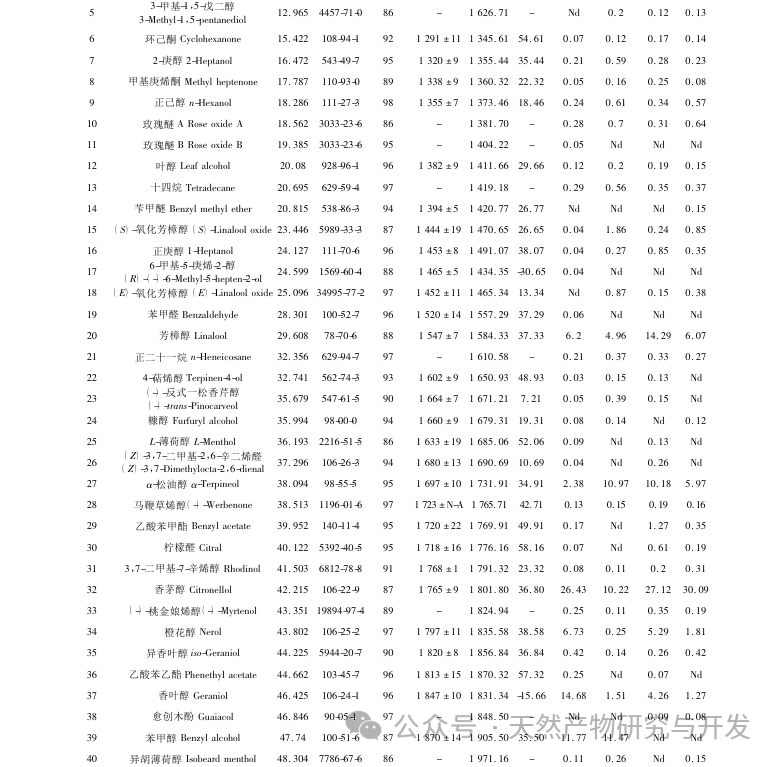
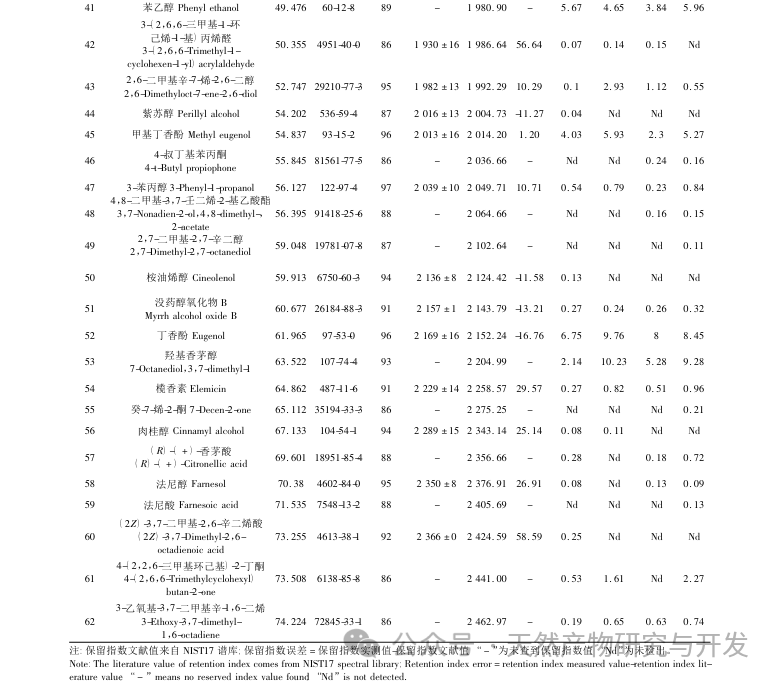
A method was established for analyzing the aroma components of bitter water rose dew using ultrasound assisted liquid-liquid microextraction combined with gas chromatography-mass spectrometry technology. The optimized parameters for the liquid-liquid microextraction method are: sample volume of 7.0 mL, ultrasound assisted extraction time of 3 minutes, extraction agent and dosage of 200 μ L dichloromethane, dispersant of acetonitrile, and volume ratio of extraction agent to dispersant of 1:2. Under optimized parameters, a total of 62 aroma components were identified in rose dew, including 52 in rose cell water, 42 in rose water, 46 in fresh flower water, and 47 in pickled flower water. The aroma components with relatively high content include citronellol, hydroxycitronellol, eugenol, linalool, α – terpineol, phenylethanol, nerol, geraniol, methyl eugenol, etc. There are differences in the relative content and composition of the aroma components of rose cell fluid, rose water obtained through different processing techniques, and rose water from different manufacturers. The experimental results provide a theoretical basis for the study and development of the characteristic aroma of rose dew. The dispersed liquid-liquid microextraction technology is used for the extraction of aroma components in rose dew, which has the advantages of simple operation, low cost, high enrichment factor, and good reproducibility. It can be used for the determination and analysis of large quantities of rose dew samples.
 English
  Danish
  German
  Hungarian
  French
  Russian
  Spanish
  Turkish