
Study on the improvement effect of Chuanxuduan saponin VI on neurogenesis and cognitive function in sleep deprived mice
Sleep deprivation (SD) refers to a state of partial or complete loss of normal sleep caused by various reasons, which is widely present in current society. Long term sleep deprivation can lead to functional disorders in the body, causing neurocognitive dysfunction. Research has confirmed that sleep deprivation activates microglia in the central nervous system and induces them to release neurotoxic molecules. Activated microglia affect cognitive function through mechanisms such as hippocampal neurogenesis and synaptic plasticity. Sleep deprivation has seriously affected people’s physical and mental health, and is a social public health issue that cannot be ignored. Developing effective intervention drugs has great potential.
Asprosaponin VI (ASA VI) is a triterpenoid saponin isolated from the traditional Chinese medicine Dipsaci Radix, which has good anti osteoporosis, anti-inflammatory, and neuroprotective effects. Previous studies found that ASAVI can effectively penetrate the blood-brain barrier, regulate the function of microglia, promote the proliferation and differentiation of neural stem cells, and show good pharmacological activity in anti depression and anti dementia studies. This study investigated the improvement effect of ASA VI on cognitive function in sleep deprived mice and further explored its mechanism of action, providing a basis for the development of related intervention drugs.
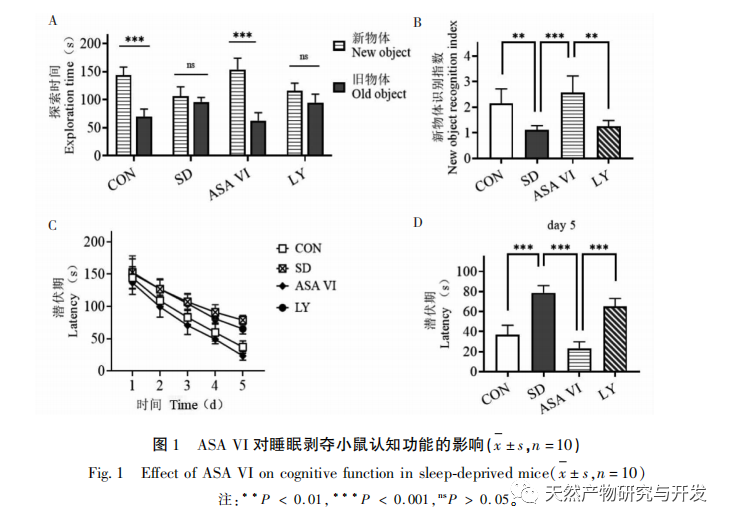
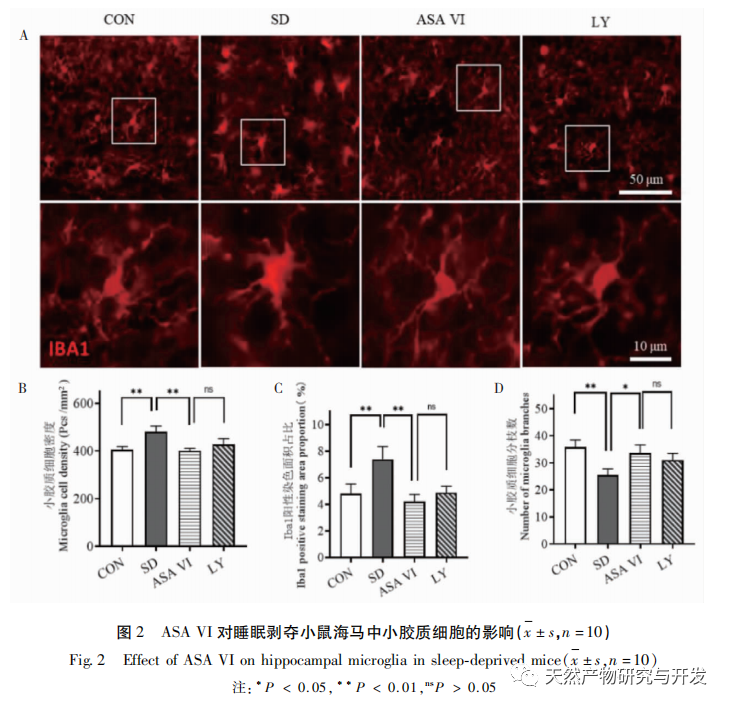
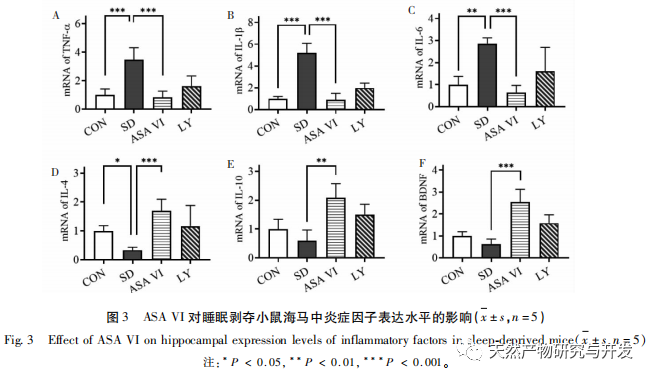
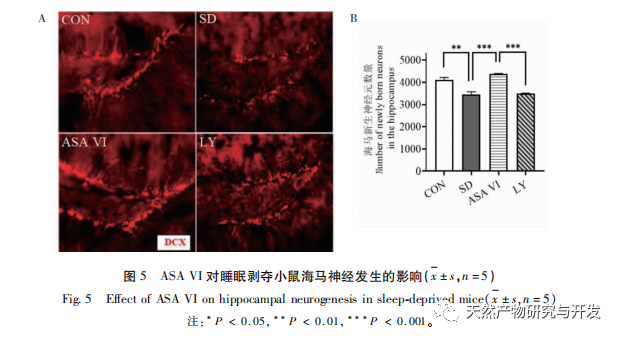
Sleep deprivation can have extensive and profound effects on cognitive behavior, and is closely associated with the occurrence of various diseases. This study found that sleep deprivation significantly affects the short-term memory and spatial learning and memory abilities of mice, increases the number of microglia, increases the expression level of inflammatory factors, and inhibits adult hippocampal neurogenesis. The intervention of natural active ingredient ASA VI significantly improved the cognitive function of sleep deprived mice, while inhibiting the expression of pro-inflammatory cytokines IL-1 β, TNF – α, and IL-6 in the hippocampus, increasing the expression levels of anti-inflammatory cytokines IL-4, IL-10, and neurotrophic factor BDNF, and promoting neurogenesis in the hippocampus. This indicates that ASA VI, as an anti-inflammatory and neuroprotective drug, has the effect of improving learning and memory in sleep deprived mice.
Microglia are a type of highly heterogeneous immune cell that does not originate from the central nervous system. They play an important role in immune surveillance and maintaining homeostasis in the internal environment. When stimulated, microglia shorten their branches, expand their cell bodies, and enter an immune defense state, releasing a large amount of pro-inflammatory cytokines. This study found that sleep deprivation can induce excessive activation of microglia in the hippocampus, thereby increasing the overexpression of pro-inflammatory cytokines IL-1 β, TNF – α, and IL-6. As sleep deprivation continues, these inflammatory factors can lead to chronic neuroinflammation and cause chronic damage to neurons, astrocytes, oligodendrocytes, and other brain cells, ultimately leading to cognitive dysfunction in mice. ASA VI intervention can improve the increase in the number and surface area of microglia in the hippocampus of mice caused by sleep deprivation, and increase the number of branches. While reducing the secretion of pro-inflammatory molecules, it also increases the expression of anti-inflammatory molecules and neurotrophic factors. These results suggest that the possible mechanism by which ASA VI improves cognitive function in sleep deprived mice is by transforming the pro-inflammatory phenotype of microglia into a neuroprotective phenotype. These neuroprotective phenotype microglia not only secrete anti-inflammatory cytokines to suppress neuroinflammation, but also secrete neurotrophic factors to repair damaged tissues and exert neuroprotective functions. The results of this study found that compared with the ASA VI intervention group, LY294002 inhibitor treatment did not significantly affect the morphology and quantity of microglia, the expression of inflammatory factors and neurotrophic factors, indicating that in the hippocampus of sleep deprived mice, ASA VI regulates microglial phenotype independent of the PI3K/Akt signaling pathway. Although there was no significant difference in the expression of hippocampal inflammatory factors between the LY294002 group and the ASA VI group, LY294002 treatment reduced the expression levels of anti-inflammatory cytokines IL-4, IL-10, and neurotrophic factor BDNF to a certain extent, while increasing the expression levels of pro-inflammatory cytokines IL-1 β, TNF – α, and IL-6 to a certain extent. Lin Jianan et al. reported that ginsenoside CK inhibits inflammation mediated by microglia through the PI3K/AKT signaling pathway. These results suggest that the PI3K/Akt signaling pathway may be involved in the regulation of neuroinflammation mediated by microglia, and its role in ASA VI mediated hippocampal inflammation in sleep deprived mice needs further investigation.
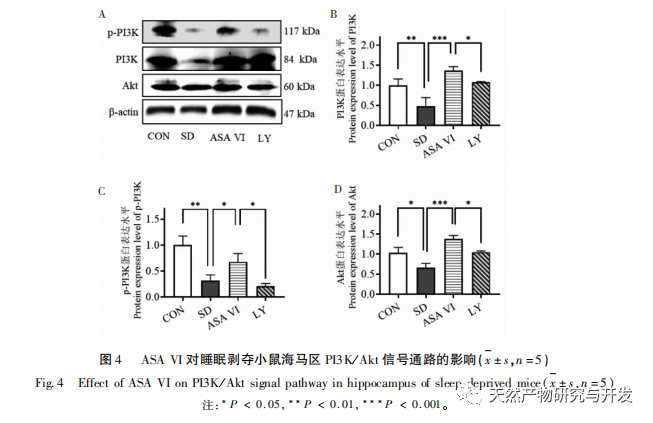
The neurogenesis of the adult hippocampus plays an important role in brain plasticity and neural network maintenance, and its functional disorders can lead to various human diseases, including depression, anxiety, cognitive impairment, and neurodegenerative diseases. When inflammation occurs in the brain, the main neuroimmune cells in the brain – microglia – are overactivated, releasing inflammatory mediators and neurotoxic molecules that significantly inhibit neurogenesis levels in the adult hippocampus, leading to an increased risk of emotional disorders and cognitive dysfunction. The newly formed neurons in the hippocampus of rodents mainly come from the subgranular area (SGZ) of the dentate gyrus, which plays an important role in the formation and consolidation of memory. Research has shown that neuroinflammatory molecules released by microglia can affect neurogenesis in the adult hippocampus by inhibiting the PI3K/Akt signaling pathway. This study found that the PI3K/Akt signaling pathway and the number of new neurons in the hippocampus of sleep deprived mice were significantly inhibited. ASA VI intervention activated the PI3K/Akt signaling pathway in the hippocampus of sleep deprived mice and promoted neurogenesis in the adult hippocampus. After blocking the PI3K/Akt signaling pathway with LY294002, the number of newly generated neurons in the hippocampus significantly decreased, and the improvement effect of ASA VI on cognitive function in sleep deprived mice was abolished by LY294002. Liu et al. reported that ASA VI can promote the proliferation and survival of neural stem cells by activating the PI3K/AKT pathway, and promote their differentiation into neurons, protecting neural stem cells from the effects of neuroinflammation, thereby improving hippocampal neurogenesis, depression like behavior, anxiety like behavior, and cognitive dysfunction in chronic neuroinflammation model mice. These results indicate that the improvement effect of ASA VI on cognitive function in sleep deprived mice depends on the PI3K/Akt signaling mediated neurogenic pathway.
In summary, this study found that ASA VI promotes neurogenesis in the adult hippocampus by regulating the phenotype of microglia in the hippocampus, increasing BDNF expression, and activating the PI3K/Akt signaling pathway, thereby improving cognitive function in sleep deprived mice. ASA VI has potential development prospects as an anti-inflammatory and neuroprotective drug.
 English
  Danish
  German
  Hungarian
  French
  Russian
  Spanish
  Turkish