
Research progress of Chinese herbs and active ingredients acting on diabetes effect targets
Diabetes (DM) is a metabolic disorder caused by insulin deficiency or insufficient secretion, and is characterized by hyperglycemia, of which type 2 diabetes accounts for 90%~95%. According to the latest data of International diabetes Federation (IDF) in 2021, the number of DM in the world will reach 537 million, which is expected to exceed 783 million (12.2%) in 2045, and China is expected to exceed 175 million in 2045. DM has become the third most serious chronic disease that endangers human health in the world, after tumors and cardiovascular diseases. Various acute and chronic complications caused by high blood sugar can cause damage to human tissues, organs, etc. Therefore, it is urgent to take active measures to prevent and treat it early.
At present, there are no reports of drugs that can completely cure DM in clinical practice. There are many types of Western medicine used to control blood sugar, including insulin and its analogues, sulfonylureas, biguanides, gliptides, thiazolidinediones, alpha glucosidase inhibitors, dipeptidyl peptidase inhibitors, sodium glucose cotransporter 2 inhibitors, glucagon like peptide-1 receptor agonists, etc. Although they can quickly and effectively control sugar, long-term use can easily cause a series of problems such as hypoglycemia, gastrointestinal reactions, and cardiovascular diseases. With the screening of traditional Chinese medicine and its active ingredients, as well as the study of pharmacological effects, the characteristics of the multi-component and multi-target effects of traditional Chinese medicine have been continuously revealed, demonstrating its advantages of mild efficacy, minimal toxic side effects, and overall regulation in the treatment of DM. At the same time, it can also prevent and treat various complications of DM. In recent years, the development of new drugs for treating DM has been mainly based on effector targets, including alpha glucosidase, alpha amylase, dipeptidyl peptidase-4 (DPP-4), glucokinase (GK), sodium glucose cotransporter 2 (SGLT2), matrix metalloproteinases (MMP), protein tyrosine phosphatase 1B (PTP1B), aldose reductase (AR), peroxisome proliferator activated receptor (Peroxisome proliferator activated receptor). lifetors activated receptors (PPAR), adenosine monophosphate activated protein kinase (AMPK) pathway, ATP sensitive potassium channel, Screening traditional Chinese medicine and its active ingredients for the treatment of DM targeting specific targets and pathways such as KATP can improve the selectivity of drug action and reduce or minimize toxic side effects; At the same time, it can also elucidate the mechanism of action of active ingredients and provide reference methods and ideas for further development and utilization of traditional Chinese medicine. Therefore, this article will organize and summarize the relevant literature on the effects of traditional Chinese medicine and active ingredients on DM targets and pathways at home and abroad, in order to provide reference for the study of traditional Chinese medicine in the treatment of DM and its complications.


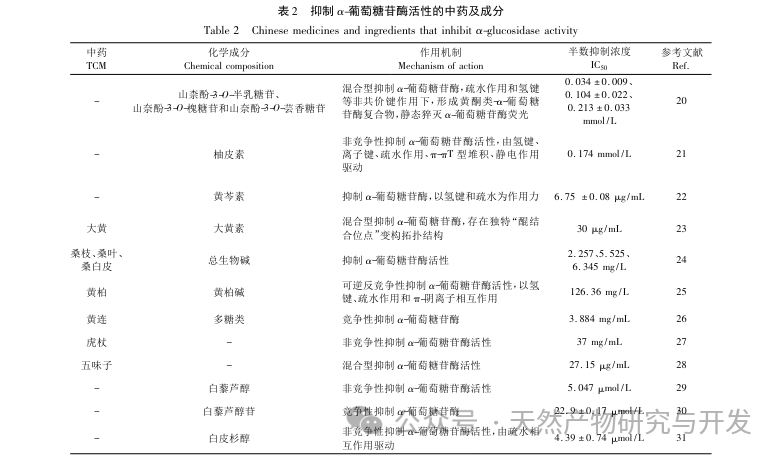
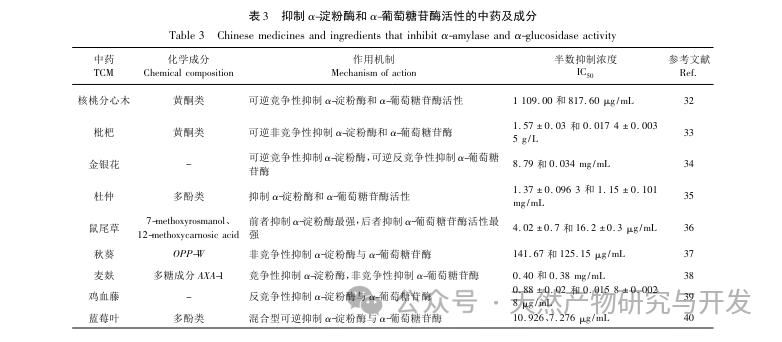
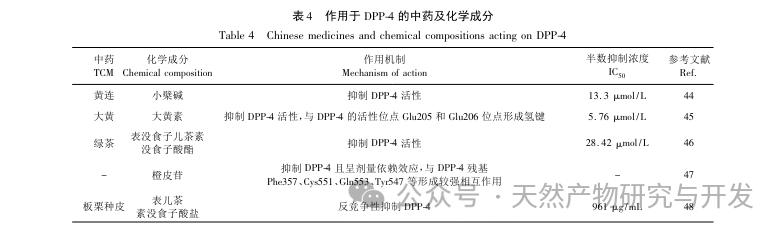
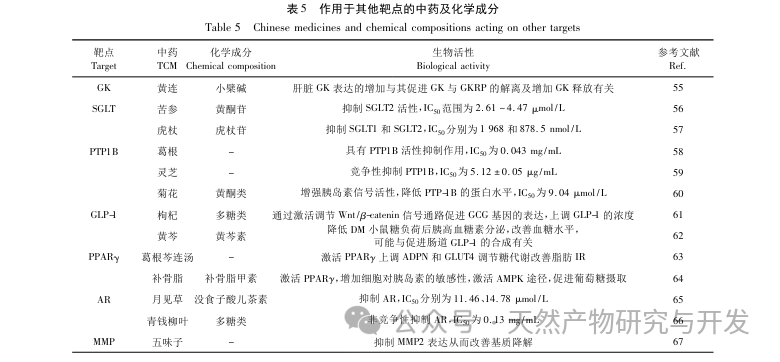
This article summarizes the traditional Chinese medicine and active ingredients for the treatment of DM with effector targets such as α – glucosidase, α – amylase, DPP-4, GK, PTP1B, SGLT2, PPAR, etc. It was found that different natural products have different chemical structures and can inhibit or activate effector targets through competitive, non competitive, and mixed methods. Their pharmacological activities also vary.
Through a review of research results in relevant fields at home and abroad, it has been found that traditional Chinese medicine contains various hypoglycemic active ingredients such as alkaloids, flavonoids, terpenes, and polysaccharides. By acting on enzymes, receptors, ion channels, etc., it regulates insulin secretion, enhances insulin sensitivity, and treats DM. Due to its synergistic and complementary hypoglycemic mechanisms, it reduces toxicity and increases efficiency. Compared with chemical drugs currently used in clinical practice, its effects are milder and safer. Therefore, obtaining active ingredients from natural products that act on target effects has become a key focus of innovative drug development for DM in China.
At present, research on the treatment of DM with traditional Chinese medicine has made certain progress, but it is still in the exploratory stage. In the future, we can conduct in-depth exploration on these issues: many single herbs and active ingredients used to treat DM only act on a single target, and the advantages of multi-target and multi pathway treatment with traditional Chinese medicine have not been fully elucidated, and the specific mechanism of action still needs to be improved. Research has found that the immune response caused by inflammation can trigger insulin resistance, leading to the occurrence of DM. Further elucidating the mechanism of inflammation and insulin resistance can provide effective means for the treatment of DM. The complexity of ingredients, multiple targets of action, and difficulty in elucidating the mechanism of action in traditional Chinese medicine formulas make their research difficult. Research on the treatment of DM is mostly based on basic in vitro experiments of single Chinese medicine extracts and their active ingredients. Therefore, in future work, research on traditional Chinese medicine formulas and their components for treating DM can be the main task. In addition, traditional Chinese medicine and active ingredients can also regulate related signaling pathways through effector targets to treat DM. By comprehensively exploring the relationship between “ingredients disease targets pathways” through various modern scientific technologies, it will provide a basis for further research and development of better traditional Chinese medicine for treating DM.
I believe that with the development of technology and the deepening of research, the mechanism of action of traditional Chinese medicine in treating DM will become clearer, and more safe and efficient natural medicines and active ingredients for treating DM will be discovered.
 English
  Danish
  German
  Hungarian
  French
  Russian
  Spanish
  Turkish