
Research progress on chemical composition and biological activity of castor plant
Ricinus communis L. is a plant species in the family Euphorbiaceae, belonging to the genus Ricinus. It is an annual thick herb or herbaceous shrub, native to Africa and has strong growth adaptability. It is widely distributed in tropical and temperate regions. Ricinus communis L., cultivated as an oil crop in China, is an annual herb. Wild Ricinus communis in southern and southwestern China at an altitude of 20-2300m, is a perennial shrub. Castor oil can be used to prepare biodiesel, which can replace petroleum in manufacturing products due to its excellent properties. It is widely used in many fields such as medicine, chemical industry, aviation, navigation, electronics, and machinery manufacturing. Castor has a long history as a medicinal plant. The Compendium of Materia Medica records that castor seeds are sweet and pungent in nature, with a mild taste and a small toxicity. They are mainly used for treating water intoxication, toxic leaves, and athlete’s foot. The Pharmacopoeia of the People’s Republic of China (2020 edition) records that castor beans are mainly used for reducing swelling and removing toxins, promoting diarrhea and clearing stagnation, and for treating carbuncle, sore throat, scrofula, and constipation; Castor oil is mainly used for smoothing and moisturizing the intestines, treating intestinal stagnation, bloating, constipation, scabies, and burns. Dai medicine records that castor roots and leaves are used for jaundice hepatitis, roots for fatigue, and leaves for injuries caused by falls; Kino medicine records that castor bean can cure injuries caused by falls and blows, while hot leaves can be applied externally to the temples to treat headaches. Modern research has found that castor leaves, fruits, seeds, stems, and other parts contain various chemical components such as castor oil, ricin toxin, and ricinine. Among them, castor oil is used as a prescription drug to treat intestinal dryness and constipation, while ricin toxin is widely used to prepare antibody targeted anti-tumor drugs. This article reviews the research progress on the chemical composition and biological activity of different parts of castor, in order to provide scientific basis for the subsequent research and comprehensive development and utilization of castor.
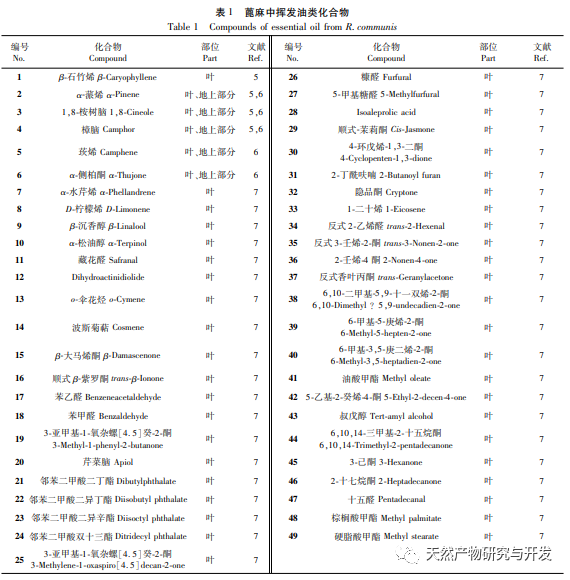
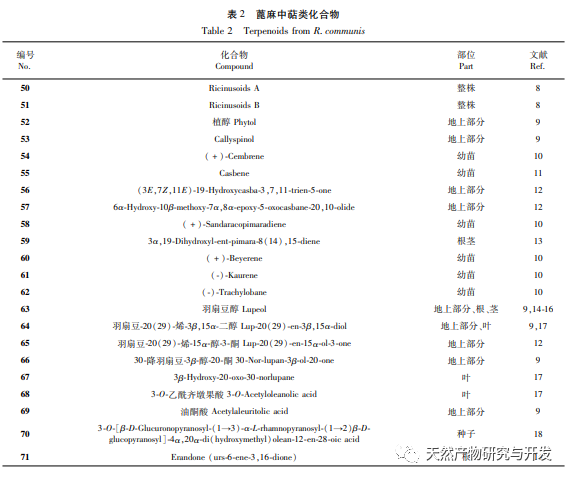
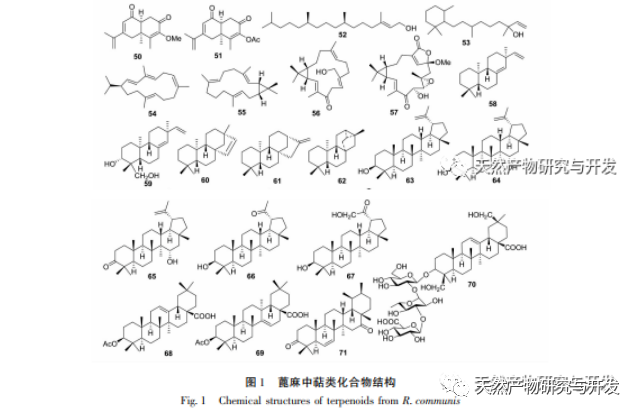
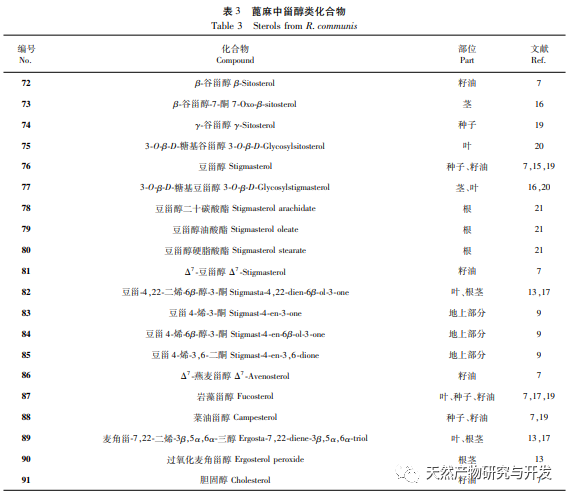
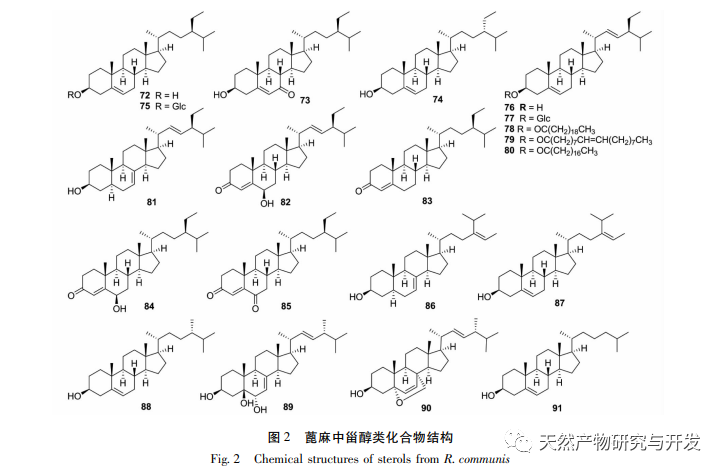
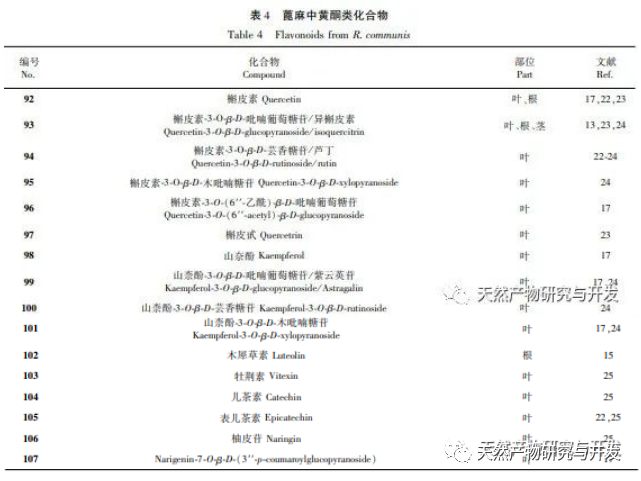
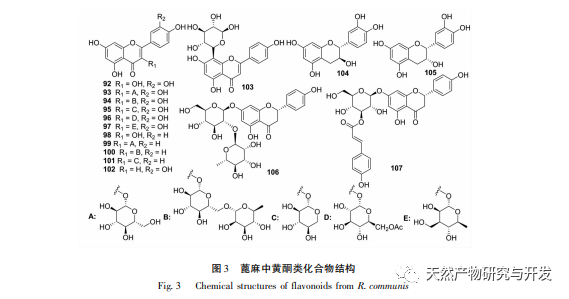
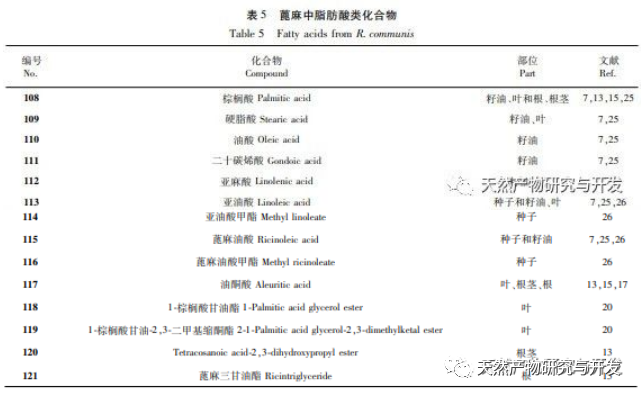
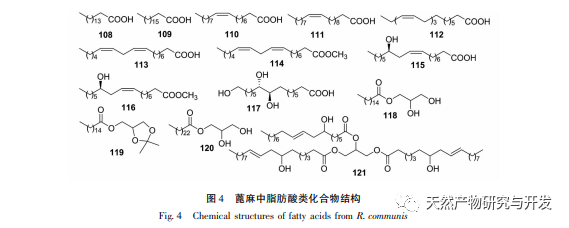
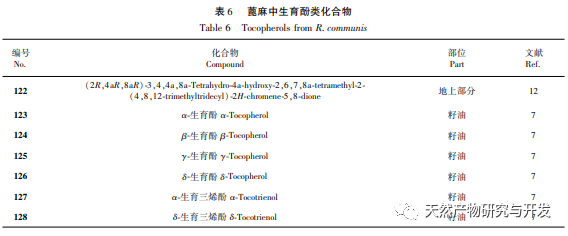
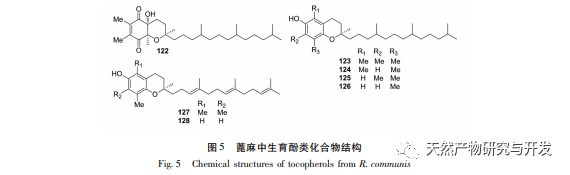
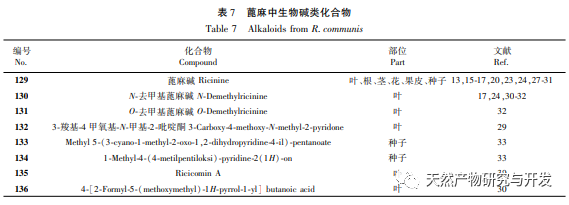
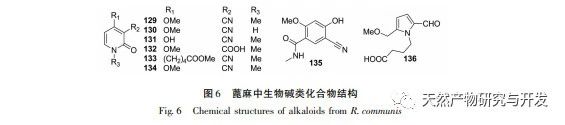
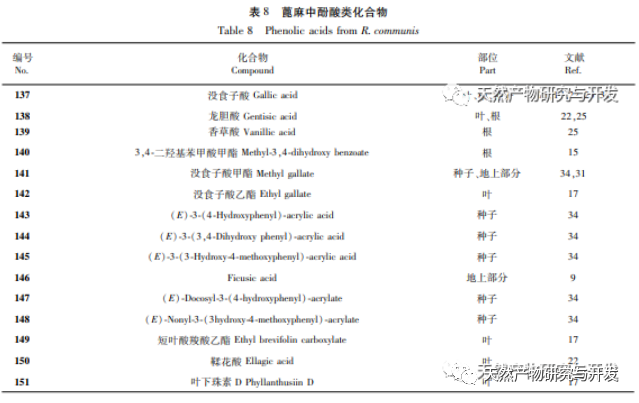
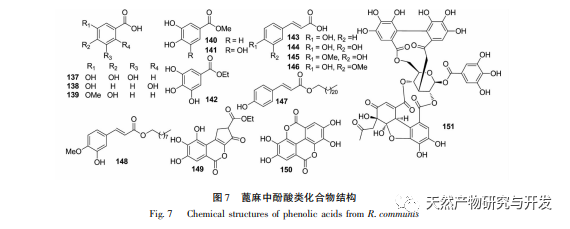
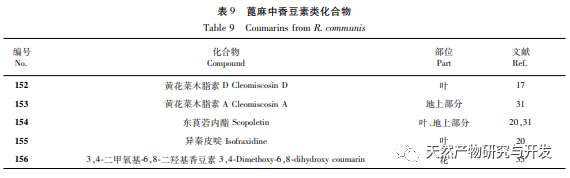
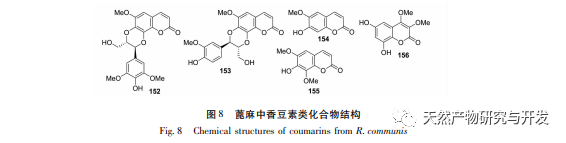
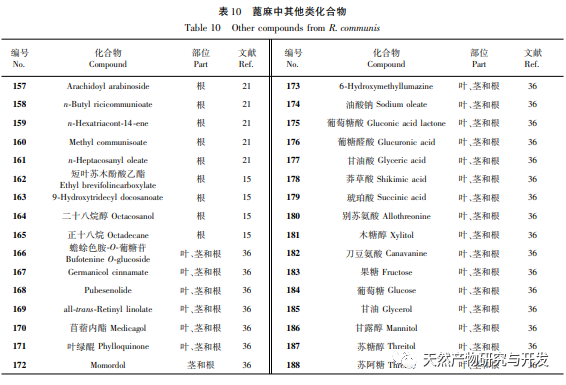
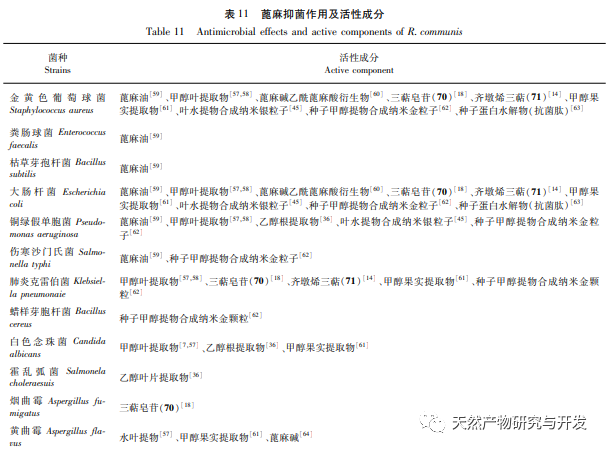
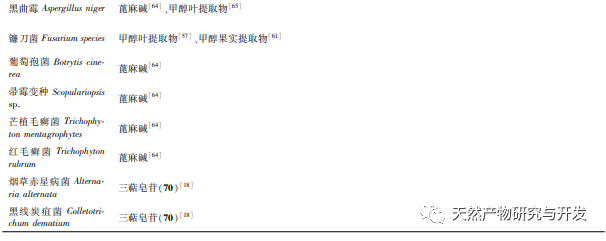
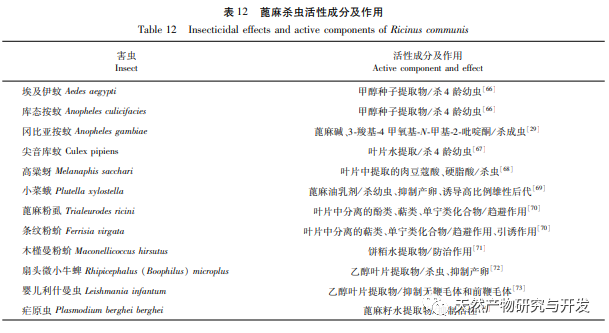
In this paper, the chemical composition and pharmacological activities of castor were summarized. Nearly 200 compounds were isolated, identified and detected from castor, including volatile oil components, terpenoids, sterols, flavonoids, fatty acids, tocopherols, alkaloids, phenolic acids and coumarins. These compounds have pharmacological effects such as anti diabetes, anti-inflammatory, liver protection, sedation, bacteriostasis, etc. The biological activity of castor is mostly based on the activity research of castor crude extract, and the pharmacological mechanism of most isolated monomer compounds is not comprehensively studied. In depth research on the biological activity and mechanism of action of monomer compounds can break through the limitations of toxic components in castor crude extract, which is more conducive to exploring the pharmacological components of castor. The toxic components of castor also have high medicinal value. Ricine has the potential to be used as a nerve inhibitor, and ricin toxin protein has broad-spectrum anti-tumor activity in clinical practice, combined with nanotechnology for targeted therapy. Castor has significant antibacterial and insecticidal activities, is harmless to human health, and does not pollute the ecological environment. It has the potential to be developed into a plant-based fungicide and green pesticide.
As a traditional medicinal plant, castor is often used in traditional Chinese medicine or folk remedies to treat diseases. Although a few medicinal products have been developed and marketed, castor still has enormous potential for medicinal value development. There are over two thousand industrial derivatives of castor oil today, and the industry is thriving. If the biomass outside of castor seeds is fully utilized to increase the output value, it will be beneficial to promote the development of domestic castor planting industry. In summary, in-depth research on the chemical composition and pharmacological mechanisms of castor is of great significance for the comprehensive development and utilization of castor.
 English
  Danish
  German
  Hungarian
  French
  Russian
  Spanish
  Turkish