
Atractylodes macrocephala II reverses polarization of M2 macrophages, regulates PDL1 expression, and inhibits A549 cell migration
Lung cancer is a common malignant tumor that threatens human health and is a major challenge facing public health. According to GLOBOCAN’s 2020 data and the World Health Organization’s “World Population Prospects” analysis, lung cancer remains the tumor with the highest incidence and mortality rate in China in 2022. In the tumor microenvironment, macrophages that exert immune effects are mostly expressed as M2 type. Multiple experimental results have shown that M2 type macrophages promote tumor cell proliferation and migration, and are positively correlated with tumor drug resistance. M1 macrophages are highly expressed in the early stage of lung cancer, while macrophages in the middle and late stages tend to express M2 macrophages. Macrophages have strong plasticity, and the ratio of M1 macrophages is positively correlated with increased survival rate. This makes the strategy of blocking M2 polarization or promoting M2 repolarization to M1 attractive, providing an important research direction for tumor immunotherapy. The method of cultivating soil and generating gold has achieved good results in the treatment of lung cancer. Our research group has previously found that traditional Chinese medicine formulas such as Sijunzi Tang and Shenling Baizhu San can effectively inhibit the proliferation of lung cancer. Atractylenolide II (AT-II) is a sesquiterpene monomer extracted from Atractylodes macrocephala in traditional Chinese medicine formulas for nourishing soil and promoting gold. It has anti-tumor activity in various tumors. AT-II can inhibit tumor progression by inducing apoptosis, but it is unclear whether it can affect the interaction between tumor cells and macrophages by regulating immunity. Therefore, this article explores the immune regulation of AT-II on lung cancer cells in co culture systems.
Lung cancer is the leading cause of cancer-related deaths. In the early stages of the disease, the condition is insidious and it is easy to miss the best treatment opportunity. Where evil gathers its qi, it will inevitably be deficient. Traditional Chinese medicine believes that cancer is the target, while deficiency is the root cause, and deficiency is the formation of rocks. The method of cultivating soil and generating gold “is the practical application of the theory of the five elements’ mutual growth, and the concretization of” supplementing the mother with deficiency “. Although lung cancer is located in the lungs, the research team has previously demonstrated that the “cultivating soil and generating gold method” can inhibit the progression of lung cancer by regulating the spleen. At the same time, a large number of experimental results have also shown that Shen Ling Bai Zhu San, Si Jun Zi Tang, and Jian Pi Yi Fei Fang can regulate and nourish the spleen and stomach, thereby inhibiting the growth of lung cancer. Atractylodes macrocephala is a common drug in the above-mentioned compound, representing the tonifying spleen and nourishing qi medicine. Its main active ingredients are Atractylodes macrocephala lactone and Atractylodes macrocephala ketone. The content of Atractylodes macrocephala decreases significantly after heating and processing, making Atractylodes macrocephala lactone the main active ingredient in Atractylodes macrocephala decoction. Previous pharmacological studies have found that Atractylodes macrocephala has anti-tumor effects and no significant toxicity to the body. AT-II is a sesquiterpene monomer extracted from Atractylodes macrocephala, which has been proven to have inhibitory effects on various tumors.
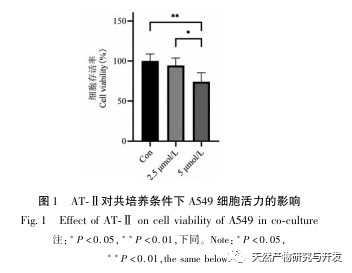
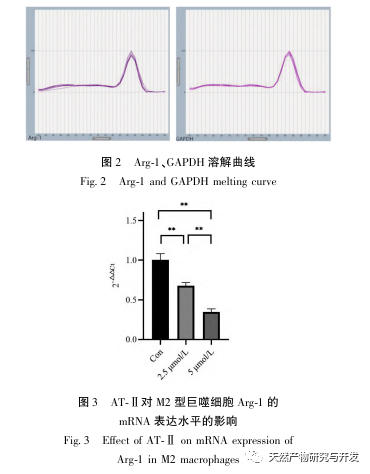
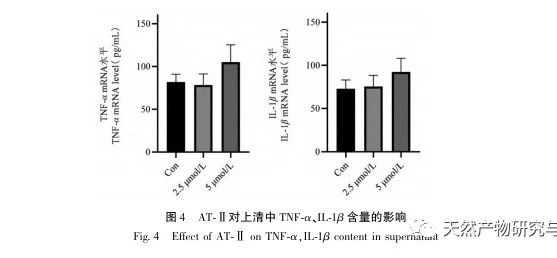
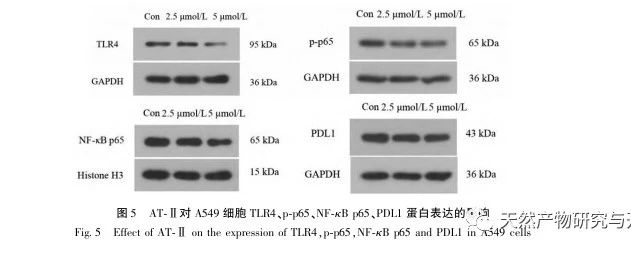
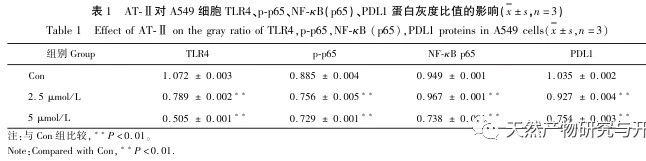
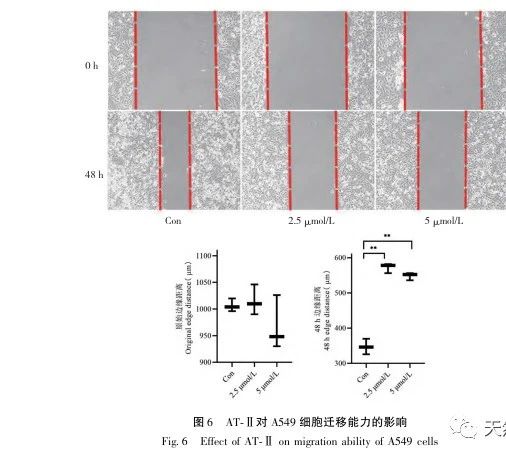
The Chinese Association of Traditional Chinese Medicine points out that the combination of traditional Chinese medicine and immunology is beneficial for elucidating the mechanism of traditional Chinese medicine regulating the body’s immunity, and providing a basis for the clinical effectiveness of traditional Chinese medicine. In 2018, Nobel laureates James Allison and Shuyou proposed a new concept of attacking cancer by mobilizing one’s own immune system, which confirmed the theory of “strengthening the body and treating cancer”. In the tumor microenvironment, macrophages are recruited and activated into tumor associated macrophages (TAMs), which are mostly expressed as pro tumorigenic M2 type and highly express Arg-1, producing anti-inflammatory factors such as CCL17, CCL18, and CCL22. This study found through co culture experiments simulating the tumor microenvironment that AT-II reduced the expression of macrophage Arg-1 and lung cancer cell viability, indicating that AT-II can inhibit the proliferation ability of lung cancer cells by reducing M2 polarization. M2 macrophages promote tumor progression, while high infiltration of M1 macrophages has been shown to inhibit tumor metastasis and is positively correlated with increased survival rate. The strong plasticity of macrophages makes reprogramming or repolarization an effective pathway for regulating macrophage function. Macrophage polarization is associated with the occurrence and development of various diseases in clinical practice, especially malignant tumors. Research has shown that TAMs exhibit temporary expression of one or several phenotypes based on the local environment. This study used ELISA to measure the levels of M1 macrophage related factors TNF – α and IL-1 β in the supernatant to infer whether AT-II converts M2 macrophages into M1 macrophages to achieve the effect of inhibiting tumor cell proliferation. The results showed that the levels of M1 related factors TNF – α and IL-1 β increased but did not show significant differences, which may be related to the fact that they are still in the transition period from M2 to M1 and have not completely reversed to M1 macrophages; The polarization of macrophages is not affected by their location itself, but by the signaling effects of the specific microenvironment in which they are located. The factors that affect polarization include factors derived from tumor cells, tumor microenvironment, macrophage autocrine factors, and steady-state imbalance factors. Clinical studies have shown that inflammation is an independent risk factor for cancer, and inflammatory markers such as SII, NLR, and PLR can be used to evaluate the prognosis of cancer patients. Inflammation is a driving factor for tumor progression, and the NF – κ B signaling pathway is currently the most recognized inflammatory pathway involved in tumor progression. At the same time, studies have shown that the activated NF – κ B pathway promotes the synthesis and release of inflammatory mediators in M1 macrophages. The WB results of this study showed that AT-II inhibits the TLR4/NF – κ B pathway in A549 cells, which may lead to no significant increase in TNF – α and IL-1 β levels. At the same time, it has been confirmed that the TLR4/NF – κ B pathway is closely related to the immunosuppressive molecule PDL1. The enrichment results of Larsen’s research group showed that PD-L1 is enriched to other marker gene sets through NF – κ B. When IL-1 α is combined with IFN – γ, it has a synergistic effect. Chen et al. used siRNA to knock down p65 and found a decrease in PD-L1 levels driven by cytokine combination. Experiments have shown that high expression of PDL1 in the tumor microenvironment is positively correlated with the migration ability of tumor cells. This is consistent with the results of this study, which showed a decrease in PDL1 protein expression and a slower healing rate in scratch experiments. Specifically, AT-II reduced PDL1 expression by inhibiting the TLR4/NF – κ B pathway, thereby reducing the migration ability of A549 cells.
In the tumor microenvironment, TAMs are tamed and mostly expressed as pro tumor types. Targeted TAMs therapy has become an emerging approach for cancer treatment. This article demonstrates through experiments that AT-II can reverse macrophage pro tumorigenic transformation, reduce PDL1 expression, and inhibit lung cancer cell migration, providing a new approach for clinical treatment of lung cancer.
 English
  Danish
  German
  Hungarian
  French
  Russian
  Spanish
  Turkish