
Chinese medicine Huangqi, also known as Huangqi, is the dried root of Astragalus mongholicus or Astragalus membranaceus. It was first recorded in the “Shennong Bencao Jing” and is a traditional Chinese medicine and a commonly used medicinal and dietary ingredient. It is mainly used to treat Qi deficiency syndrome and has functions such as generating muscle, removing sores, and diuresis. Modern research has shown that Astragalus membranaceus contains various chemical components such as polysaccharides, flavonoids, amino acids, saponins, etc; It has the functions of enhancing immunity, protecting liver, diuresis, anti stress, lowering blood pressure, regulating blood sugar, delaying aging, and has a wide range of antibacterial effects.
The traditional processing methods of Huangqi include honey roasting, fermentation, wine making, vinegar making, etc. Honey roasting Huangqi enhances the effect of tonifying the spleen and nourishing qi, and can be used for symptoms such as lung deficiency, shortness of breath, insufficient qi and blood, and qi deficiency constipation. At present, the processing of Astragalus membranaceus mostly adopts the traditional honey roasting method. Although the operation is simple, the processing time is long, the production efficiency is low, the process parameters are difficult to control, and there is a large amount of smoke and dust during operation, which makes the working environment susceptible to pollution. Microwave processing has the characteristics of simple operation, uniform heating, strong penetration, fast heating speed, high efficiency, and easy parameter control. It is a green and healthy new technology for processing Chinese medicinal materials. There have been multiple reports on the use of microwave methods to prepare various traditional Chinese medicine decoction pieces, all of which have achieved ideal results.
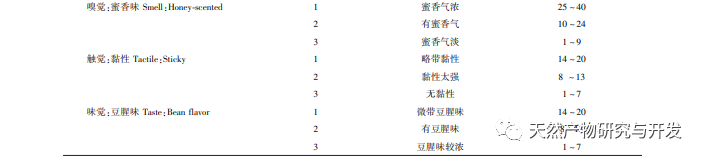
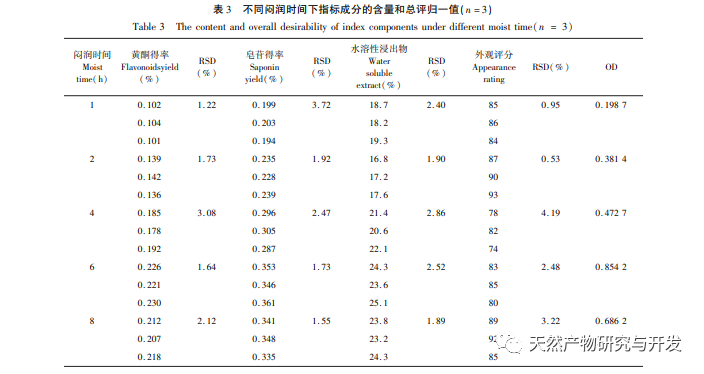
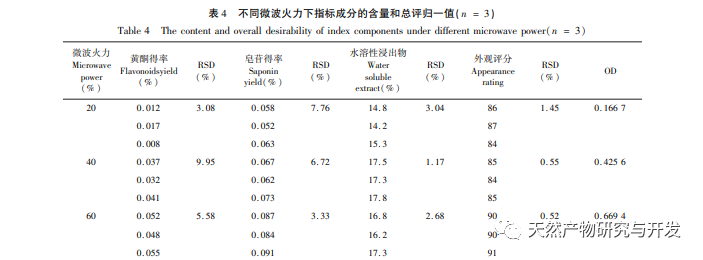
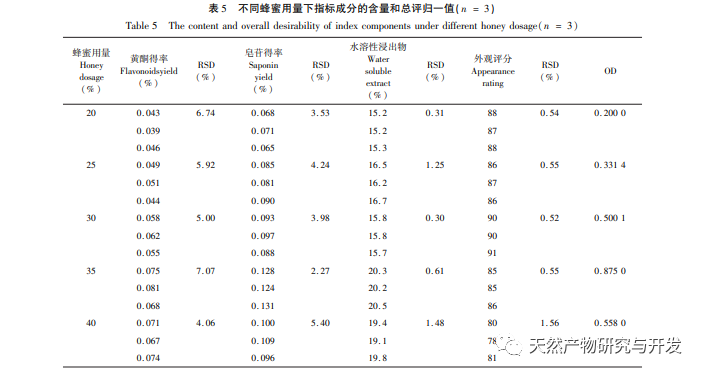
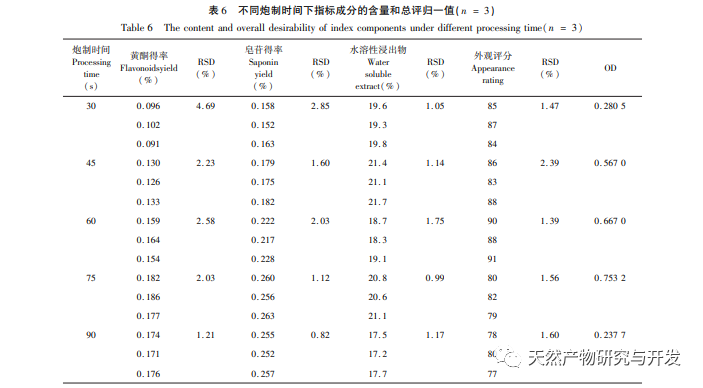
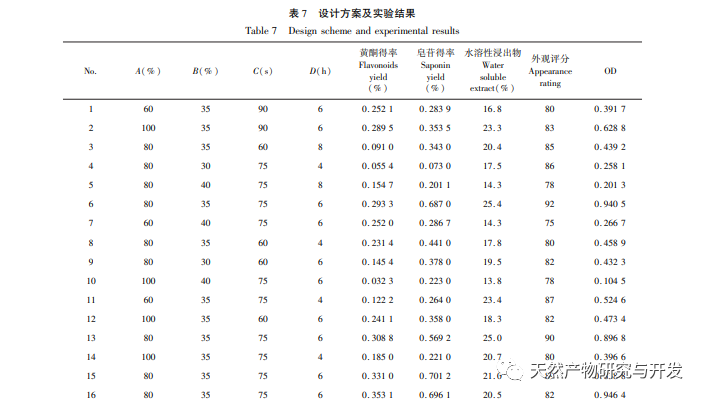
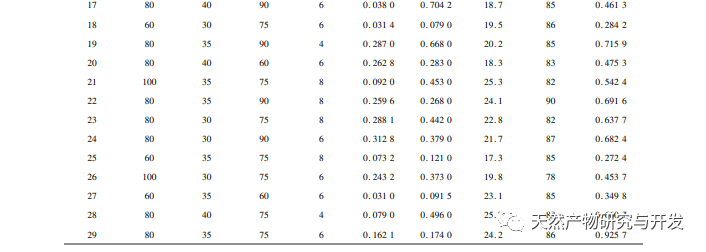
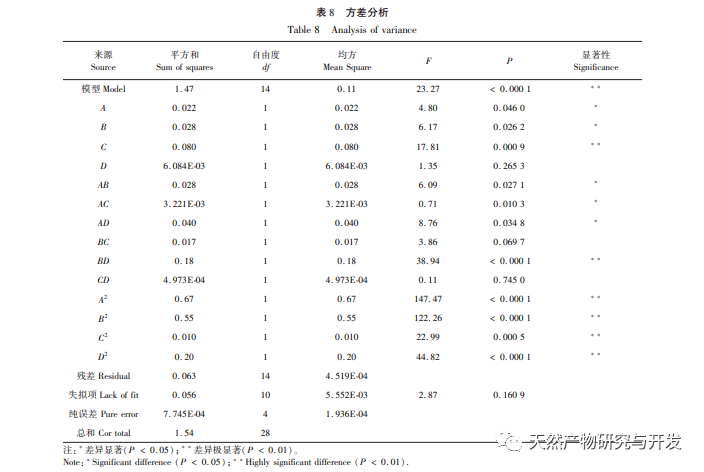
On the basis of preliminary experiments, this study used the extraction rate of total flavonoids and total saponins in Astragalus membranaceus, combined with the content of water-soluble extracts and the overall evaluation normalization value of the appearance of the decoction pieces as evaluation indicators to investigate the four main influencing factors of honey dosage, soaking time, processing time, and microwave power. Response surface methodology was used to optimize the microwave processing technology of Astragalus membranaceus, and compared with traditional processed products, in order to obtain a better processing method and provide broad application space for microwave processing.




Discussion and Conclusion
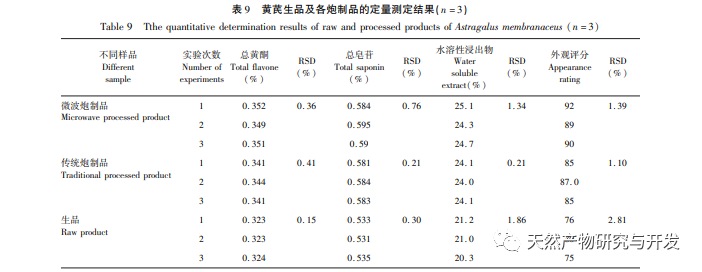
Microwave processing uses electromagnetic waveguides with short wavelengths and high frequencies to induce vibration and friction of water molecules, generating heat. The heat generation process occurs simultaneously inside and outside the medicinal material. Due to the heat dissipation of water molecules on the outer surface of the medicinal material, the temperature inside the medicinal material rises faster than the outer surface, ultimately resulting in a state of “high inside and low outside” in the temperature of the processed product. It has the advantages of energy saving, environmental protection, simple operation, and high efficiency, and has been widely used in the preparation of traditional Chinese medicine. The total flavonoids, total saponins extraction rate, water-soluble extracts, and appearance score of the honey astragalus processed by microwave were all higher than those of the raw product and traditional processing methods. The reason for this may be that the microwave heating is relatively uniform, resulting in a uniform and transparent color of the honey astragalus, and a higher appearance score than the other two methods; On the one hand, it may be due to the short microwave heating time and low temperature, which causes minimal damage to the small and unstable structures of flavonoids and saponins in Astragalus membranaceus, resulting in an increase in their extraction rates.
Huangqi has the effects of enhancing immune function, antibacterial and viral inhibition, replenishing qi and stabilizing the surface, diuresis and detoxification. Mihuangqi can make the medicinal properties of Huangqi more gentle, nourishing qi and blood, warming the lungs and promoting diuresis. The 2020 edition of the Chinese Pharmacopoeia uses Astragaloside IV in Astragalosides and Flavonoids in Astragalus membranaceus as quality control indicators for Astragalus membranaceus medicinal materials and roasted Astragalus membranaceus. A large number of literature reports that the qi tonifying effect of Astragalus membranaceus mainly relies on saponins and flavonoids. Therefore, this article uses Astragaloside and flavonoids as content indicators for the optimal honey roasted Astragalus membranaceus processing technology, which is more comprehensive. At the same time, this experiment also added water-soluble extracts and appearance scoring indicators to comprehensively control the quality of Astragalus membranaceus.
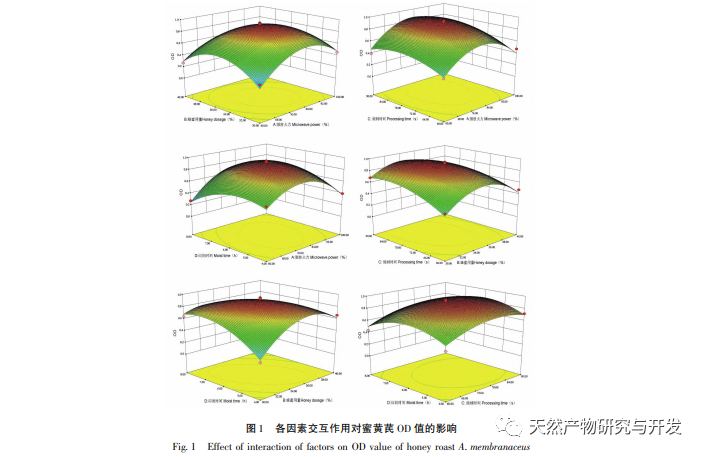
This study used the total normalized value (OD) of flavonoids, saponins, water-soluble extracts, and appearance of decoction pieces in Astragalus membranaceus as evaluation indicators, and examined factors such as processing time, honey dosage, soaking time, and microwave power. The optimal microwave processing technology for Astragalus membranaceus was obtained as follows: processing time of 81 seconds, honey dosage of 34%, microwave power of 82%, soaking time of 6.1 hours. Compared with traditional processed and raw products, it was found that the evaluation indicators of this method were higher than those of traditional processed products. This provides a model for the widespread application of microwave processing.
 English
  Danish
  German
  Hungarian
  French
  Russian
  Spanish
  Turkish