
Analysis of the components of 7H-azulene [1,2,3-i, j] isoquinolin-7-one in Acorus genus traditional Chinese medicine based on UPLC-Q-TOF/MS2 combination technology
The APG IV system is the fourth edition of the angiosperm classification system established by the Angiosperm Phylogeny Group (APG). The classification system considers Acorales to be a branch of monocotyledonous plants in the middle angiosperms, and is the most basic group of monocotyledonous plants. Under Acorales, there is only one family (Acoraceae) and one genus (Acorus), and common plants include Acorus calamus L. and Acorus tatarinowii Schott. The 2020 edition of the Chinese Pharmacopoeia includes Acori Tatarinowii Rhizome and Acori Calami Rhizome, both of which are medicinal herbs of the Acori genus. Acori Calami Rhizome is named after its use in Tibetan medicine, and its original plants are A. tatarinowii Schott and A. calamus L., respectively. Modern pharmaceutical research has shown that traditional Chinese medicine of the Acorus genus has good effects on improving learning, memory, and cognitive abilities. In recent years, in addition to active components such as volatile oil, β – asarone, and sesquiterpenes, alkaloids with good activity have also been found in traditional Chinese medicine of the Acorus genus. Lao et al. isolated tatarine A, catarine B, and catarine C from Acorus tatarinowii. Among them, the ethyl acetate extract and n-butanol extract of Acorus tatarinowii containing these three components can significantly improve the memory impairment of mice with scopolamine induced memory impairment model; Li et al. isolated Acorus calamus alkaloids A and neo catarine from Acorus calamus, which have good protective effects on damaged nerve cells.
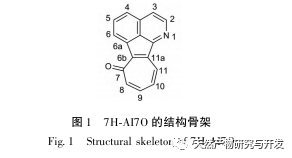
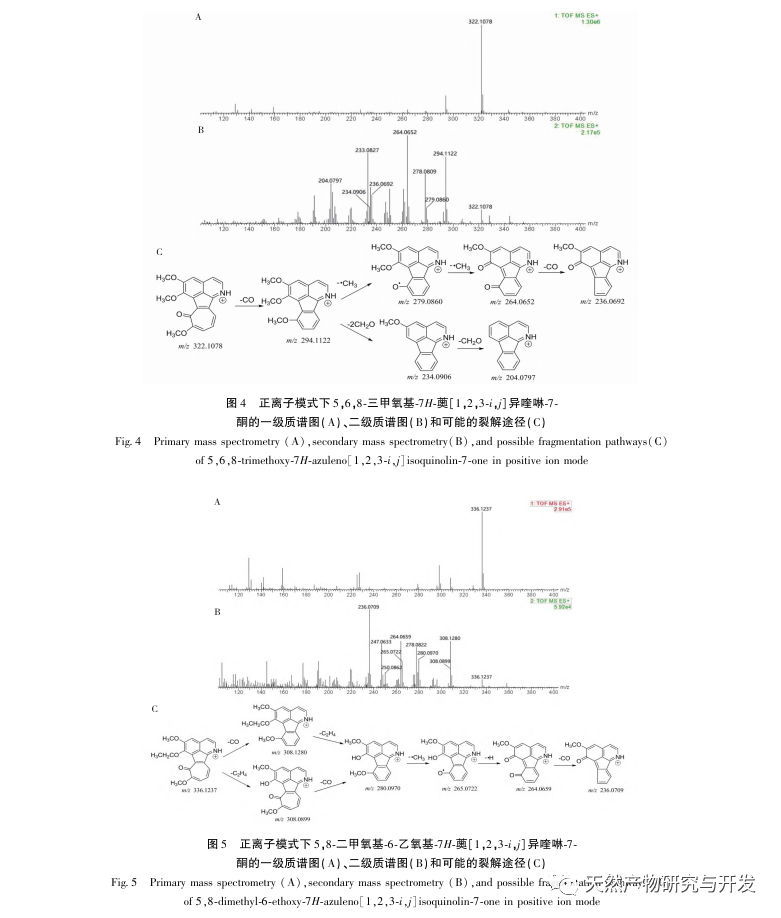
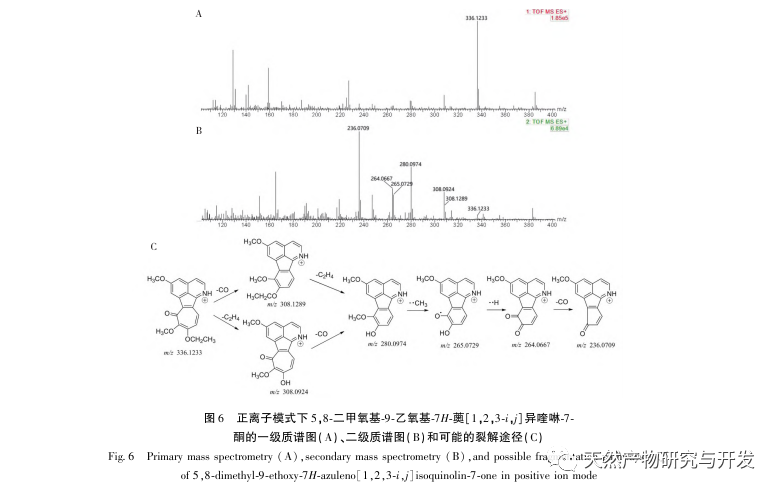
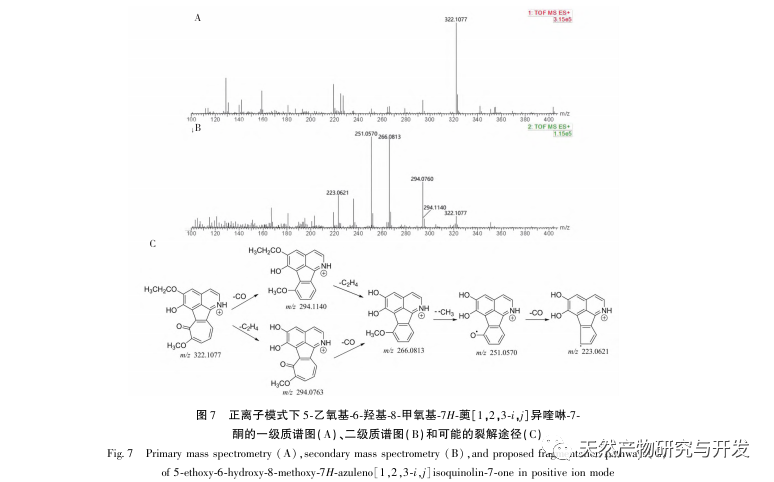
Acorus calamus alkaloid is a structurally novel tropoloisoquinoline alkaloid (TA), with the chemical name 6-hydroxy-5,8-dimethoxy-7H-azuleno [1,2,3-i, j] isoquinolin-7-one, j]isoquinolin-7-one), Its basic parent nucleus is 7H-azulene [1,2,3-i, j] isoquinolin-7-one (7H-azuleno [1,2,3-i, j]isoquinolin-7-one, Abbreviated as 7H-AI7O, with the skeleton shown in Figure 1), Acorus calamus alkaloid is currently the only compound found in nature with a 7H-AI7O structural parent nucleus. However, the amount of Acorus calamus alkaloid in plants is extremely small, with only 5mg isolated from 10kg of dried roots and stems of Acorus calamus. Therefore, considering the structural characteristics and biological activity of the 7H-AI7O class components, this article uses Acorus calamus alkaloids as the reference substance and the 7H-AI7O class components as the monitoring object, and adopts ultra-high performance liquid chromatography? The UPLC-Q-TOF/MS2 tandem quadrupole time-of-flight mass spectrometry (UPLC-Q-TOF/MS2) technology is used to rapidly monitor and identify the composition and distribution of 7H-AI7O class components in traditional Chinese medicine of the Acorus genus. This provides a certain experimental basis for further enriching the plant sources of these components and the development of related drugs.
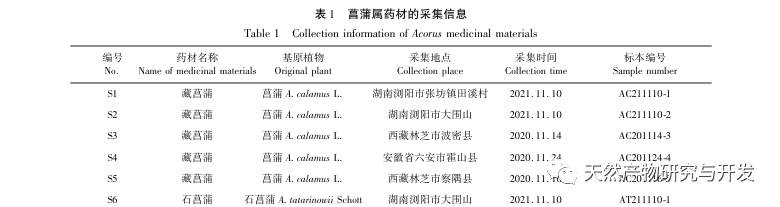

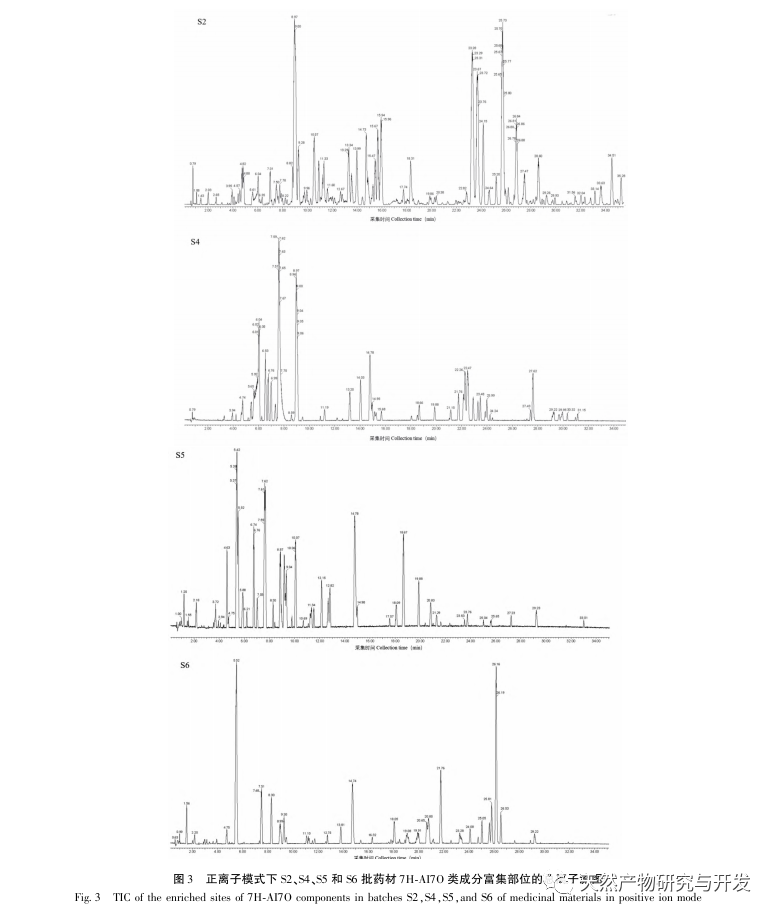
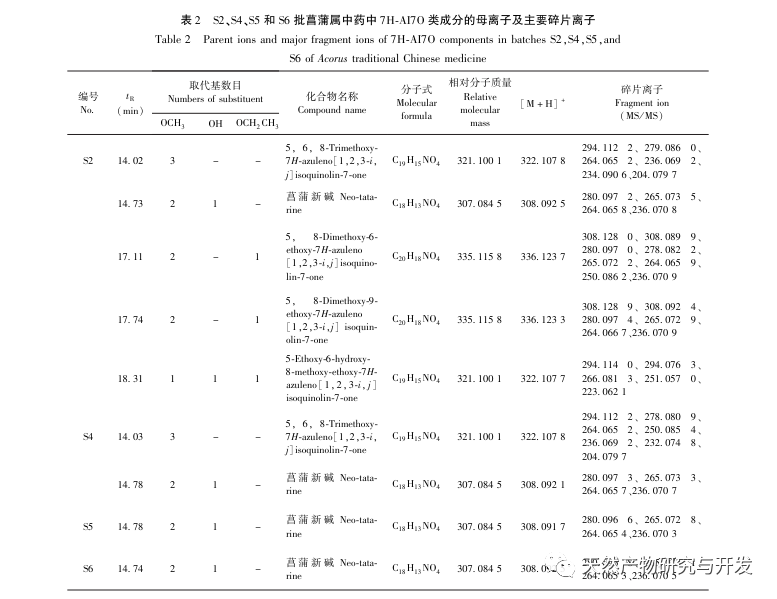
 angiosperm phylogeny groupAt present, only 5 batches of Tibetan Acorus tatarinowii and 5 batches of Acorus tatarinowii were collected in this experiment, with limited sample sizes and production areas. However, based on the samples collected so far, some information can still be obtained. Both Tibetan Acorus tatarinowii and Acorus tatarinowii medicinal materials contain 7H-AI7O class components; Tibetan Acorus calamus containing 7H-AI7O components is more widely distributed in the production area than Acorus tatarinowii; The structural types of 7H-AI7O compounds contained in Acorus tatarinowii are more abundant than those in Acorus tatarinowii, but the research content is not yet complete. In the future, we will continue to expand the scope of specimen collection, accumulate sample numbers, and comprehensively and systematically analyze the distribution and content changes of 7H-AI7O components in Acorus tatarinowii from different origins; Systematically isolate Acorus calamus medicinal materials containing abundant 7H-AI7O class components detected, obtain specific compounds, further improve the mass spectrometry database of 7H-AI7O class components with different substituents, and provide experimental basis for rapid and accurate detection and determination of the structure of 7H-AI7O class components.
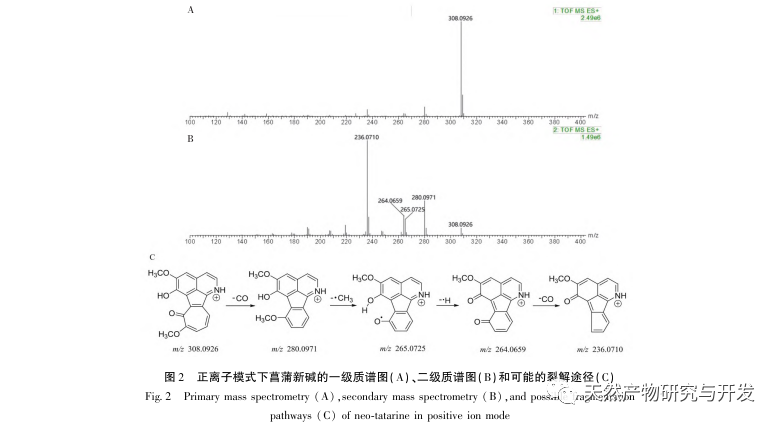
The amount of 7H-AI7O derived from plants is extremely small. Previous experiments have found that Acorus calamus alkaloids (7H-AI7O structure) and Acorus calamus alkaloids A (AA structure) can be simultaneously isolated from Acorus calamus. The structural difference between these two compounds mainly lies in the fact that the former has an additional carbonyl group at the 7th position. Combined with the cracking characteristics of 7H-AI7O components that are prone to losing CO and generating [M+H-28]+, it is speculated that there may be a biotransformation relationship between 7H-AI7O and AA components in plants. Therefore, future research will also explore the biotransformation relationship between 7H-AI7O and AA components in Acorus Chinese medicine, as well as the influence of soil, climate and other factors on the biosynthesis of 7H-AI7O components in plants. To provide experimental evidence for further exploring the material basis of traditional Chinese medicine in the Acorus genus for opening orifices, eliminating phlegm, awakening the mind, and improving intelligence.
 English
  Danish
  German
  Hungarian
  French
  Russian
  Spanish
  Turkish