
“New product stand-up analysis is the front-end work of new product development, the quality of which directly affects the quality of new product development and the quality of project decision review, and ultimately the success or failure of new product projects.”
The core questions of project analysis
Usually, the project analysis must answer 3 core questions:
1. Will anyone buy the product we propose to develop?
This is a market perspective question. The answer to this question is based on the insight of customer needs, on the analysis of competitors, and on the understanding of the overall market situation. Customer demand research should answer the question of “will anyone buy our product”; competitor analysis should answer the question of “why will customers buy our product instead of competitors’ products”; market analysis should answer the question of “how many people will buy our product? Competitor analysis answers the question “Why will customers buy our products instead of competitors’ products”; market analysis answers the question “How many people will buy our products”.
2. Can we develop the product?
This is a technical perspective question. There is a customer need, but if you do not have the ability to develop and deliver the new product that the customer wants, then the previous market analysis is meaningless. The analysis related to technology includes the technical feasibility analysis of development, manufacturability analysis, testability analysis and serviceability analysis.
3. Can we make money with this product?
This is a business and financial perspective. If a new product is purchased by customers and we can develop it, but the company cannot make money, then the company will not invest in such a project. Financial feasibility analysis includes the analysis of the initial investment, payback period analysis, return on investment analysis and so on.
The main content of the new product project project analysis
Project analysis is a summary of the project team’s market analysis, technical analysis and financial analysis of the project, but also a summary of the work done on the front end of the project innovation. Through the project initiation analysis, the decision-making team must have a clear understanding of why the company’s scarce resources should be invested in the project. A complete project analysis consists of three areas:
1. Product definition
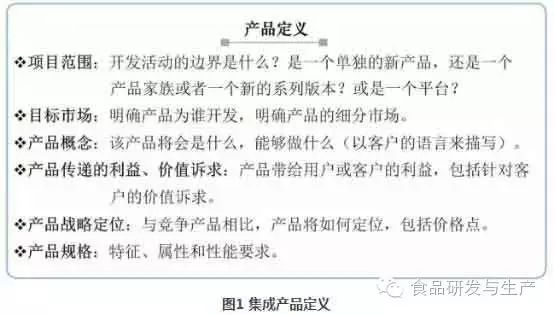
Through customer needs research, competitive analysis and market analysis, we come up with a list of customer needs. Through QFD, $APPEALS and other methods, we transform the customer requirements into a list of performance indicators for the product. The product definition is refined through concept testing. The product definition answers the basic question of “what kind of product does the customer want”. This lays the foundation for the rest of the project analysis. Integrated product definition:
2.Project feasibility analysis
On the basis of defining the product, it is necessary to conduct market feasibility analysis, technical feasibility analysis and financial feasibility analysis of the project. Only if the answers to these three core questions can be recognized by the company’s decision-making team, the project may enter the development stage.
3.Follow-up action plan
If the project is approved, the project team needs to develop a follow-up project plan for approval by the decision-making review team. The decision-making review team commits the resources needed by the project team based on the subsequent action plan. The action plan for the development phase should be detailed, and the plans for the testing phase and the go-to-market phase should be initially formulated.
If the project project analysis review passes, the product development team has to sign a written development mission statement (i.e.: project mission statement, charter) with the decision-making review team, committing to achieve the project performance objectives set in the ideal analysis report, and the project formally enters the development phase.
Project analysis team composition and main responsibilities
New product project analysis work is not a product manager, not one or two people to write a report to the company leadership can be. Project analysis work should be involved by the company’s relevant functional departments, the need for a cross-functional team to complete.
The basic framework of new product project project analysis
The project project analysis is a sequential process that includes 15 items, as shown in Figure 2.
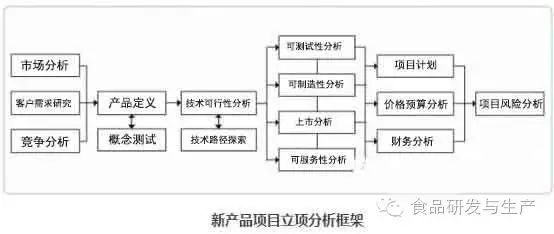
Contents of project establishment analysis
1~5 items related to market research
Enterprises derive a list of customer needs based on market analysis, customer needs research and competitive analysis, and then translate customer needs into product definitions. On this basis, the defined product is tested for concepts to revise and improve the product concept, and to understand the market acceptance and price sensitivity of the product.
Items 6~11 are related to technology analysis
First, technical path exploration and technical feasibility analysis are performed on the defined product to explore the appropriate technical realization path and analyze whether the product can be developed. Next, testability analysis and manufacturability analysis are performed to ensure that the developed prototype can be tested and the tested prototype can be produced. The next step is to conduct a listing analysis and serviceability analysis, listing analysis is a “soft technology”, that is, to analyze how to produce products to sell well. Serviceability analysis is to analyze how to do a good job of product service, improve customer satisfaction, in order to get repeat customers and referrals.
Items 12 to 15 are related to business and financial analysis
Project schedule and resource budget analysis is what defines the project itself. Financial analysis analyzes the return on investment of the project and whether the project is worth investing in. The last item, Project Risk Analysis, analyzes the possible risks of all aspects of the overall project and suggests avoidance or response options.
Conclusion
Whether it is a tangible product project or a service product project, whether it is a consumer product project or an industrial product project, whether it is a high-tech project or a labor-intensive project, the framework of this analysis is applicable. Enterprises can add or simplify some analysis contents according to the actual needs of the project in the actual project analysis.
 English
  Danish
  German
  Hungarian
  French
  Russian
  Spanish
  Turkish