
Study on the Alkaloids of False Konjac Leaves
Piper sarmentosum, also known as false gourd, clam konjac, and prickly ash, belongs to the Piperaceae family and the Piper genus. It is a perennial, creeping, and root taking herb widely distributed in provinces such as Guangdong, Guangxi, and Yunnan. It has a long history of use as a medicinal and edible plant in China. Fake konjac has a pungent taste and a warm nature. It has the effects of dispelling wind, dispelling cold, promoting qi, and relieving pain. When used as a root medicine, it can be used to treat diseases such as sores, swelling, and toxins, rheumatism, bone pain, traumatic injuries, and wind cold cough. Its tender stems and leaves are consumed as vegetables in some areas of southern China. Research has shown that fake konjac contains various chemical components such as alkaloids, flavonoids, and phenols. The reported biological activities include anti-inflammatory, antibacterial, antidepressant, antioxidant, and neuroprotective effects.
The search for antibacterial compounds or components from natural products is an important source and pathway for the discovery and application of antimicrobial drugs. Yuan et al. used the growth rate method to test the inhibitory activity of 2mg/mL methanol extract of fake konjac leaves against 9 plant pathogenic fungi, including banana anthracnose. The results showed that at this concentration, the methanol extract of fake konjac leaves had good antibacterial effect, with inhibition rates of over 50%. Zaidan et al. found that the methanol extract of fake konjac can effectively inhibit the growth of pathogenic bacteria such as Staphylococcus aureus and Klebsiella pneumoniae. Liu isolated and identified four alkaloids with varying degrees of inhibitory activity against Cryptococcus neoformans from the 70% methanol extract of the entire plant of fake konjac.
In summary, it is known that there are antibacterial active structural components in fake konjac, and previous studies have confirmed that the alkaloid compounds contained in fake konjac have great potential for antibacterial activity. In order to further investigate the chemical components and biological activities of fake konjac leaves, this experiment studied the total alkaloid extract of fake konjac leaves and screened all isolated compounds for their antibacterial activity against Staphylococcus aureus, aiming to provide reference and basis for the further development and utilization of fake konjac plant resources.

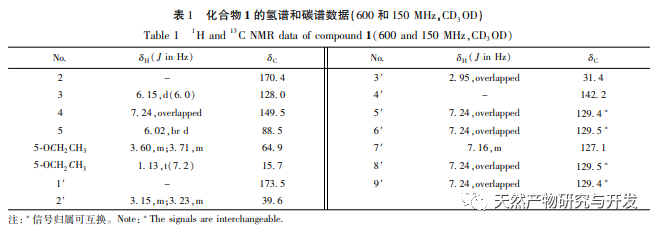

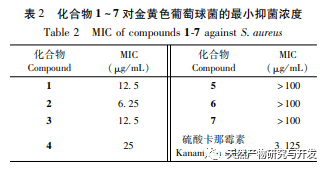 This experiment studied the chemical composition of total alkaloids extracted from fake konjac leaves and their antibacterial activity against Staphylococcus aureus. A total of alkaloids were isolated and identified. Among them, compound 1 is a new phenylpropanoid alkaloid, and compound 7 is isolated from fake konjac for the first time. The antibacterial activity of the isolated compounds was tested using the micro double dilution method, and the results showed that compounds 1-4 had moderate inhibitory activity against Staphylococcus aureus. Therefore, it is speculated that compounds 1-4 are one of the important material bases for the in vitro antibacterial activity of fake konjac. This experiment conducted research on the chemical composition and antibacterial activity of fake konjac leaves, providing a reference for the rational development and utilization of fake konjac plant resources.
 English
  Danish
  German
  Hungarian
  French
  Russian
  Spanish
  Turkish