
Mechanism of Jolkinolide B in the treatment of colon tumors based on network pharmacology and experimental research
Colorectal cancer (CRC) is the third most common malignant tumor in the world, which is a serious threat to human health. In 2015, the number of deaths from colon cancer reached 774000. Because of the tremendous changes in people’s lifestyle and diet structure, the incidence rate and mortality of colon cancer are increasing year by year. Strengthening the research on prevention and treatment of colon cancer is one of the important contents of cancer control in China. The search for lead compounds from natural resources that can target colon tumors and promote tumor cell apoptosis is becoming increasingly important. The traditional Chinese medicine “wolfberry” has a long history of use and is commonly used in the treatment of colon cancer in folk medicine. This medicine is included in the 2020 edition of the Chinese Pharmacopoeia, and is the dried root of Euphorbia fis cheriana Steud and Euphorbia ebracteolata Hayata plants in the Euphorbiaceae family. It was first recorded in the “Shennong Materia Medica” and is mainly used for coughing, breaking up accumulations, sores, mouse necrosis, and poisoning. Northeastern folk use its decoction to treat colon cancer. Research has shown that the traditional Chinese medicine “wolfberry” can prolong the survival rate of animals with colon cancer by 47%.
The active secondary metabolites in wolf venom are mainly terpenoids, which are abundant in content. In the early stage, our experimental group isolated structurally diverse diterpenes such as ent abietane, rosane, and diterpenoid dimers from the dried roots of Euphorbia lanceolata, a medicinal plant source of wolfberry. Among them, ent abietane diterpene Jolkinolite B (structure shown in Figure 1) can effectively inhibit the proliferation of colon tumor cell SW480 (IC50=9.5 μ mpl/L), providing a material basis for the treatment of CRC, but the mechanism of action is not yet clear. Given the foundation of previous research, we plan to use network pharmacology methods combined with in vitro cell experiments to explore the mechanism of action of the active substance Jolkinolide B in treating CRC, providing experimental evidence for subsequent drug development and clinical applications.

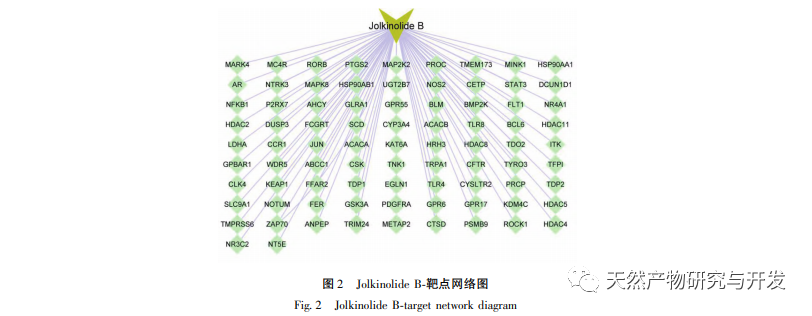

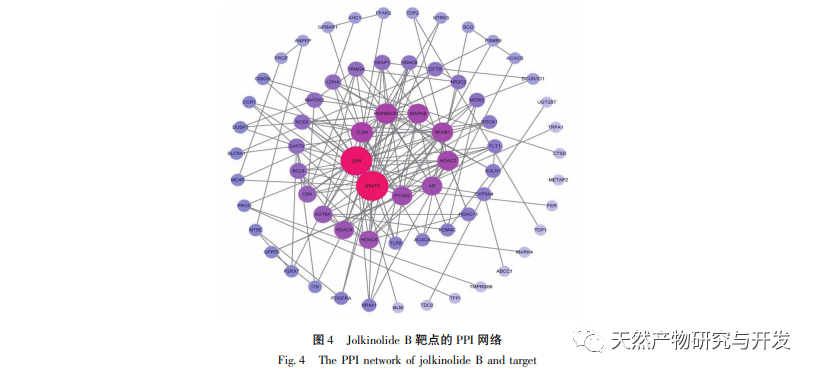
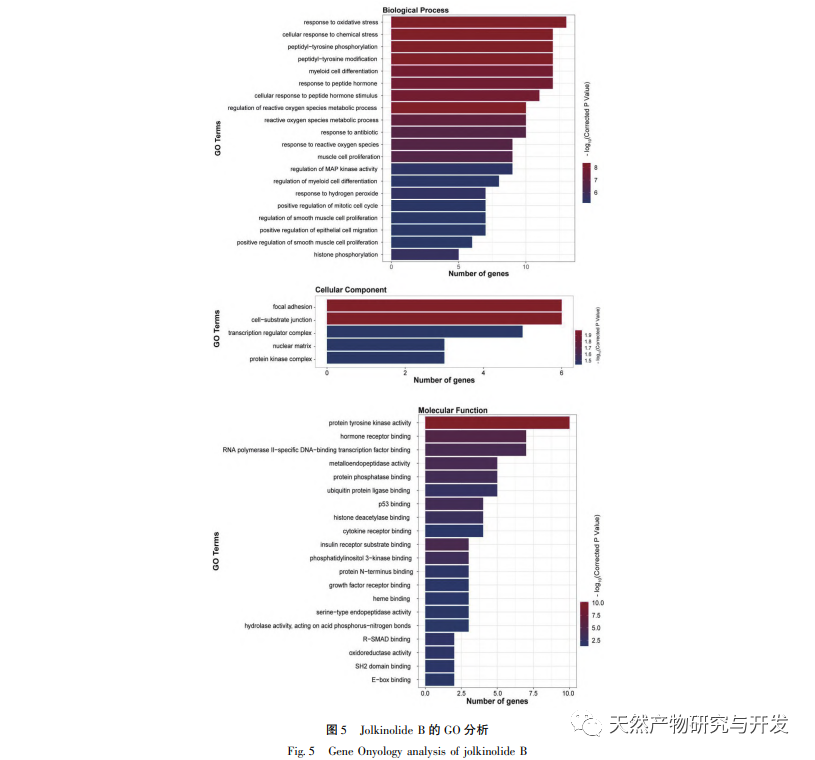
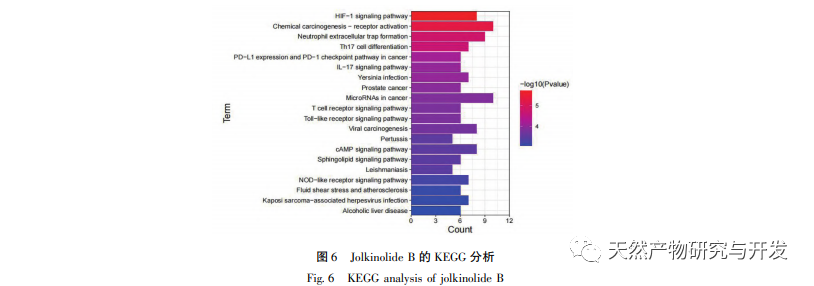
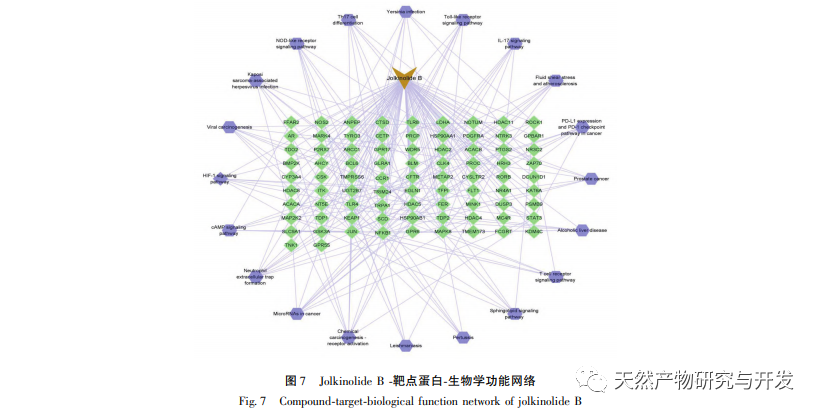
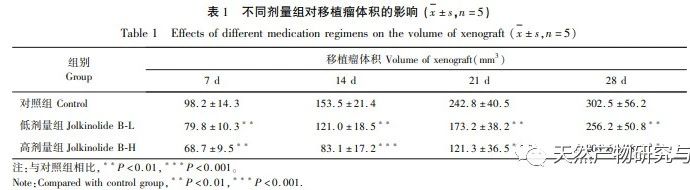
Network pharmacology can largely reflect the complex interactions between biomolecules and chemical components. By screening the target of action through network pharmacology, it can provide a basis for more targeted research on traditional Chinese medicine, clarify the optimal compounds and their mechanisms of action of traditional Chinese medicine. The traditional Chinese medicine wolfberry is a plant of the Euphorbiaceae family, belonging to the Euphorbiaceae genus. It has the effects of dispelling water and phlegm, breaking down accumulation, and killing insects. The research results indicate that diterpenoids are the active substance basis of traditional Chinese medicine wolfberry, with various biological activities such as anti-tumor, anti-inflammatory, antibacterial, and reversal of multidrug resistance. The traditional Chinese medicine wolfberry has a long history of use and is commonly used in the treatment of colon cancer in folk medicine. Based on this, pharmacological mechanism prediction is carried out. Based on the previous research on the chemical components of traditional Chinese medicine wolfberry, the excellent compound Jolkinolide B in wolfberry was screened through in vitro cytotoxic activity screening and in vivo biological experiments. A Jolkinolide B-target network was constructed to explore the relationship between the excellent compound Jolkinolide B targets in wolfberry, and functional annotation of the targets was performed at the gene level. This provides a research basis for the multi-target and multi pathway pharmacological mechanisms of Jolkinolide B.
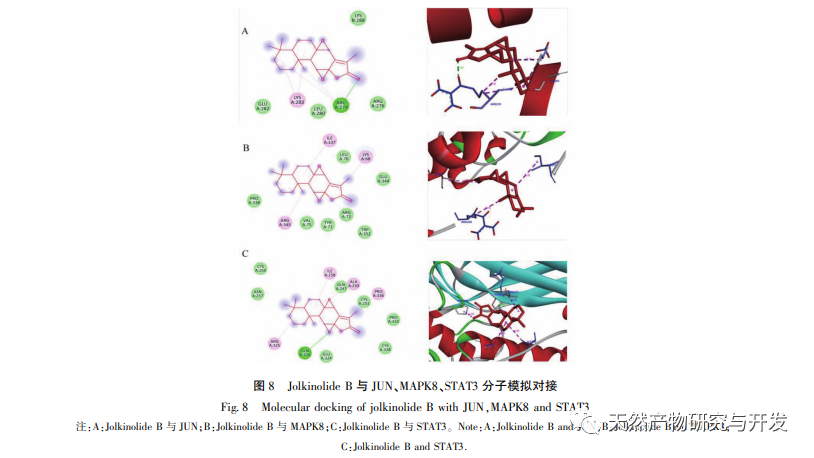
The Jolkinolide B-PPI interaction network analysis shows that the main targets are STAT3, MAPK8, and JUN, which have been confirmed by relevant literature research; These targets transmit signals from receptors on the cell surface to DNA in the nucleus, participating in biological processes such as cell death and cell cycle, as well as regulating pathological processes such as inflammation and stress response. MAPK1 and MAPK3 are members of MAPK. STAT3 is a transcription factor that can be activated by MAPK and plays a key role in many cellular processes such as cell growth and apoptosis, participating in the occurrence and development of tumors. In addition, STAT3 is crucial for the differentiation of TH17 helper T cells and is associated with autoimmune diseases, recurrent infections, and other diseases.
The annotation results of GO indicate that most of the targets of Jolkinolite B are located in the cellular matrix and transcription complexes, and are involved in various stress responses and biological processes in cells. This result suggests that Jolkinolite B may be involved in regulating most cellular life activities. The KEGG enrichment analysis results indicate that the pharmacological effects of Jolkinolite B involve the interaction of multiple pathways, including the IL-17 signaling pathway, PD-1/PD-L1 signaling pathway, and HIF-1 signaling pathway. The molecular docking results indicate that Jolkinolide B forms hydrogen and hydrophobic interactions with core proteins STAT3, MAPK8, and JUN, with stable structure and potential research value, demonstrating the multi-target and multi pathway characteristics of Jolkinolide B in the treatment of CRC.
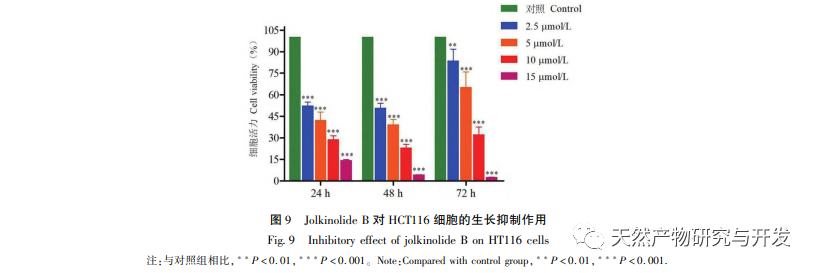
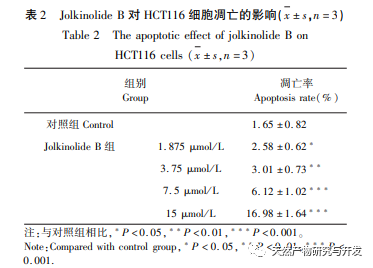
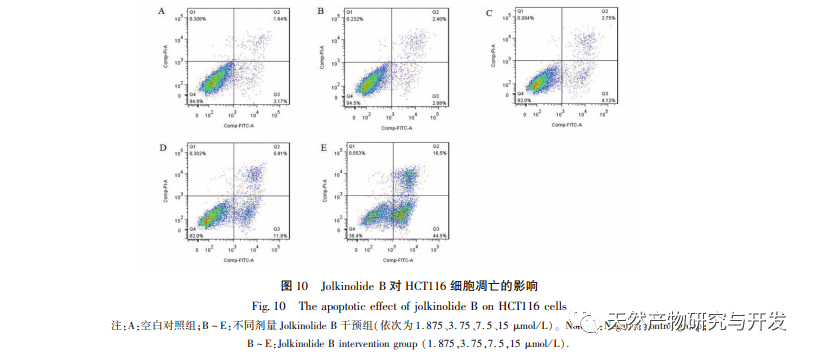
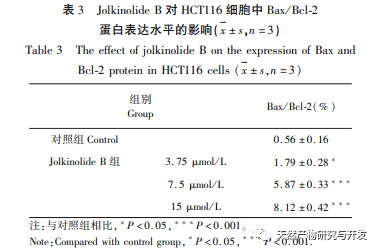
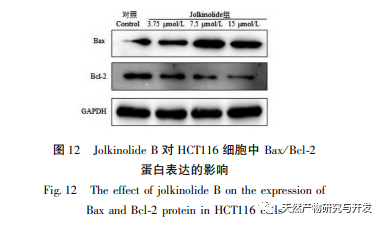
The main mechanisms of action of anti-tumor drugs are inducing tumor cell apoptosis, inhibiting the cell cycle, and suppressing migration. The experimental results at the cellular level showed that Jolkinolite B significantly inhibited the proliferation of HCT116 cells, promoted cell apoptosis, and inhibited cell migration. When Bax was highly expressed in cells, cells were sensitive to death signals and promoted apoptosis. When Bcl-2 was highly expressed, Bcl-2 could form heterodimers with Bax, inhibiting cell apoptosis. So the ratio of Bax/Bcl-2 in cells plays an important role in determining the sensitivity of cell apoptosis. Therefore, Western blot validation experiments at the cellular level showed that Jolkinolite B significantly upregulated the ratio of Bax/Bcl-2, promoting apoptosis in HCT116 cells. Based on the results of network pharmacology analysis, Jolkinolide B can intervene in CRC through multiple targets and pathways, and its anti-tumor activity may be related to its impact on the expression of apoptotic genes Bax and Bcl-2.
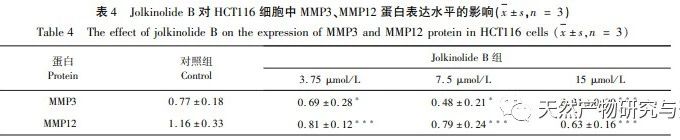
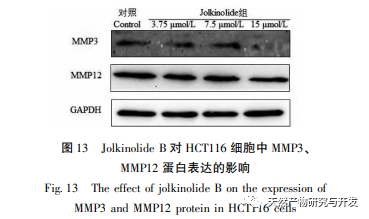
The invasion and metastasis of tumors is a complex process involving intercellular interactions and degradation of extracellular matrix. The degradation of extracellular matrix depends on the synthesis and activation of enzymes that degrade matrix components. Matrix metalloproteinases (MMPs) are a class of zinc dependent proteolytic enzymes with structural homology. Their main physiological function is to degrade extracellular matrix components such as collagen, gelatin, elastin, fibronectin, and proteoglycans. Research has shown that matrix metalloproteinase-3 (MMP-3) and matrix metalloproteinase-12 (MMP-12) play a crucial role in the degradation of extracellular matrix mediated by tumor cells, and are closely related to the potential invasion, metastasis, and prognosis of various malignant tumors in humans. Therefore, Western blot validation experiments at the cellular level showed that Jolkinolide B significantly downregulates the expression of MMP-2 and MMP-12 to inhibit tumor invasion and metastasis. Based on the results of network pharmacology analysis, Jolkinolide B can intervene in CRC through multiple targets and pathways, and its inhibition of tumor invasion and metastasis may be related to its impact on the expression of MMP-2 and MMP-12.
In summary, this study applied activity screening, bioinformatics, and molecular docking techniques to analyze the mechanism of Jolkinolide B in the prevention and treatment of colorectal cancer (CRC) based on the network correlation between the active ingredient Jolkinolide B in traditional Chinese medicine wolfberry and related target proteins, signaling pathways, and biological functions. The results showed that this compound treats CRC with multiple targets, pathways, and biological functions, providing direction for further research on the mechanism of Jolkinolide B in the prevention and treatment of CRC. In view of this, this project will continue to conduct mechanism research by combining molecular biology and pathophysiology methods in the future.
 English
  Danish
  German
  Hungarian
  French
  Russian
  Spanish
  Turkish