
Screening of Antibacterial Activities and Chemical Composition Analysis of Extracts from 21 Medicinal Plants
Cotton (Gossypium hirsutum L.) is a plant belonging to the Malvaceae family and the Gossypium genus. It is one of the important economic crops in China, and its production is related to increasing farmers’ income, stabilizing agriculture, and promoting the healthy development of the textile industry. Xinjiang is the most important cotton producing area in China, with its total cotton output accounting for 90.2% of the country’s total cotton output in 2022. However, due to factors such as long-term large-scale continuous cropping, various diseases such as cotton wilt, Fusarium wilt, and red rot have become severe, resulting in a significant decrease in yield, quality, and planting efficiency, becoming the main factors restricting cotton production. At present, the prevention and control of cotton diseases mainly focus on chemical control. Due to the long-term use of chemical pesticides and unscientific medication, environmental pollution, increased resistance of plant pathogens, as well as their high toxicity, long degradation period, and large accumulation in food, it is not suitable for the current high-quality development requirements of cotton. Therefore, people’s concept of using chemical pesticides has changed greatly. By studying new biocontrol agents mainly from plants, the incidence rate of plants has been kept at a low level, and has become a more effective and safe alternative.
Through extensive research, it has been found that plant extracts have a significant inhibitory effect on pathogenic bacteria causing cotton wilt, red rot, and Fusarium wilt. Among them, El Samawaty et al. found that extracts from four plants, cinnamon, clove, garlic, and ginger, inhibited to varying degrees the 10 pathogens causing cotton seedling wilt disease, with clove and garlic extracts showing the best antibacterial effect. Pei et al. found in their study on the antibacterial activity of extracts from five traditional Chinese medicinal herbs, namely Sophora alopecuroides, Paeonia lactiflora, Polygonatum sibiricum, Hedyotis diffusa, and Paeonia lactiflora, against cotton wilt disease that Paeonia lactiflora had the best inhibitory effect, with an inhibition rate of over 54%. Guo et al. used the mycelial growth rate measurement method to study the antibacterial activity of extracts from three Artemisia plants, including Artemisia scoparia, Artemisia scoparia, and Artemisia scoparia, using cotton red rot fungus as the test strain. The results showed that Artemisia scoparia extract had strong and stable antibacterial activity. Matloob et al. found that extracts from burdock flowers and black cumin seeds at a concentration of 10% had the highest inhibition rates against cotton Fusarium wilt, with inhibition rates of 37.0% and 25.9%, respectively. The inhibitory effect of gourd bark seed extract is lower at the same concentration.
Biological control of cotton diseases such as Fusarium wilt and red rot is an effective measure to achieve green agricultural production and reduce the use of chemical pesticides. Xinjiang has abundant medicinal plant resources, and the preparation of plant-based pesticides by tapping into local resources is a powerful tool to promote biological control. Datura stramonium leaves, flowers, and seeds can all be used as medicine, mainly composed of alkaloids, volatile oils, and phenolic compounds. It has insecticidal, rodent killing, weed control, and antibacterial activities, and is widely present in farmland and saline alkali land in Xinjiang. Alkaloids, as a type of organic nitrogen-containing active compounds in living organisms, account for over 60% of small molecule drugs, making them the most promising class of compounds in the development of new natural product drugs. This study aims to investigate the inhibitory effect of medicinal plants in Xinjiang on cotton diseases, providing reference for the development of plant-based pesticides in Xinjiang.
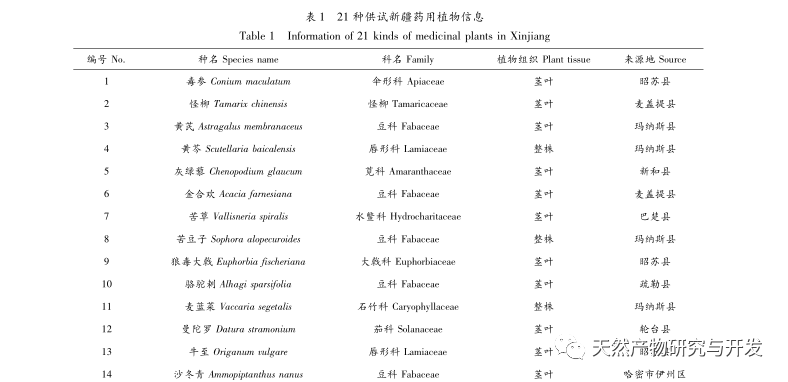

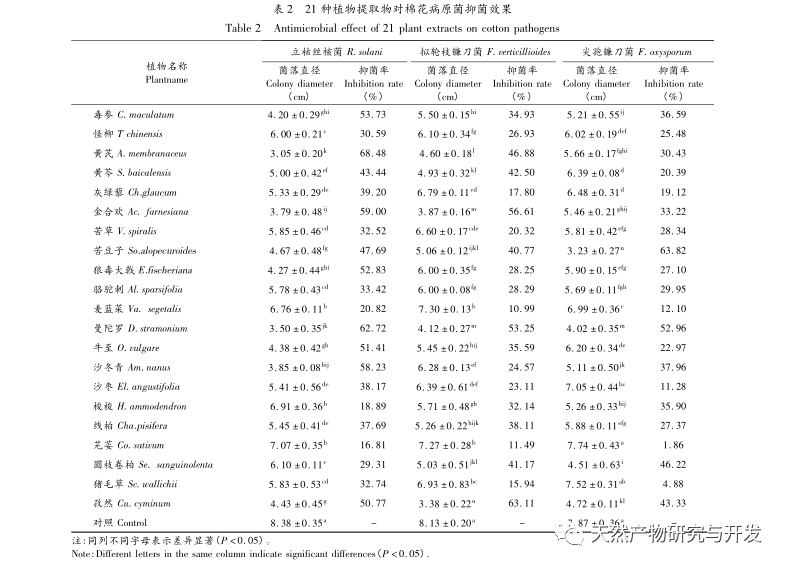



 In this study, 21 plant ethanol extracts showed varying degrees of antibacterial activity against pathogenic bacteria (Fusarium oxysporum, Fusarium oxysporum, and Fusarium oxysporum) causing three cotton diseases in Xinjiang. Among them, the ethanol extract of Datura had strong antibacterial activity against these three pathogens, indicating that Datura is a broad-spectrum fungicide. In relevant studies, it has been verified that Datura has antibacterial effects on Fusarium oxysporum, Fusarium oxysporum, and Fusarium oxysporum. However, the antibacterial activity in this study was not significant, which may be due to the extraction method of Datura and the inability to fully extract the effective antibacterial components. Therefore, there may be significant differences in the effectiveness of the same active substance at different concentrations, so further research is needed in terms of extraction rate and other aspects in this study. In addition, Xinjiang has a vast territory and rich plant resources due to different climates and complex natural geographical conditions. There are more than 100 species of plants that can be used as plant-based pesticides. In this study, some plants were randomly collected from adverse environments such as saline alkali land and dry land in Xinjiang. On the one hand, this enriches the variety of antibacterial plants in Xinjiang, but there is still some specificity, which needs further research.
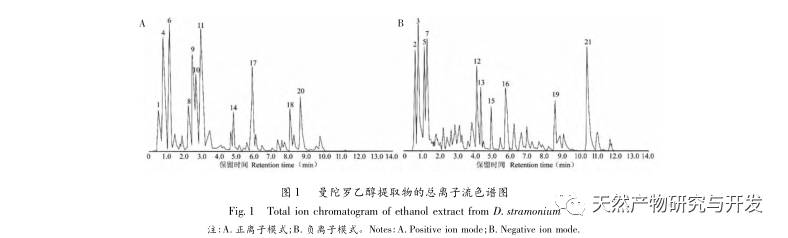
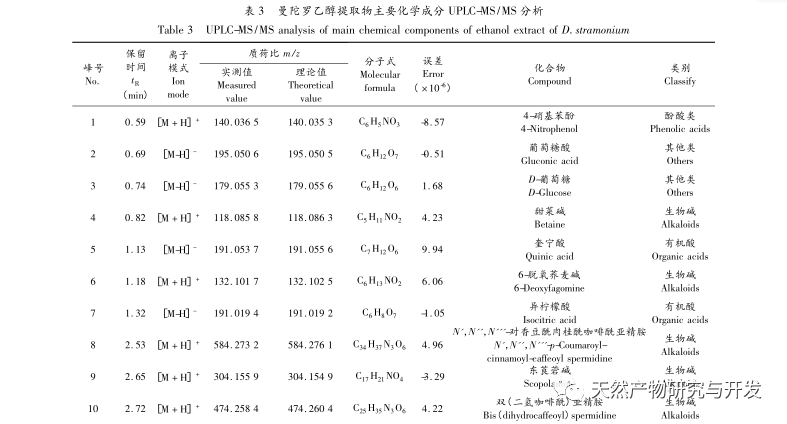
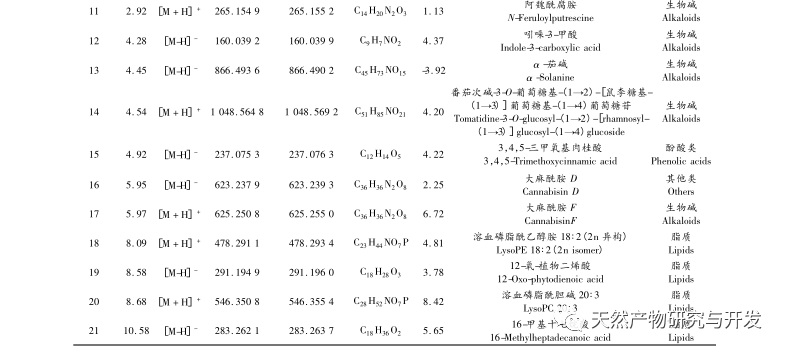
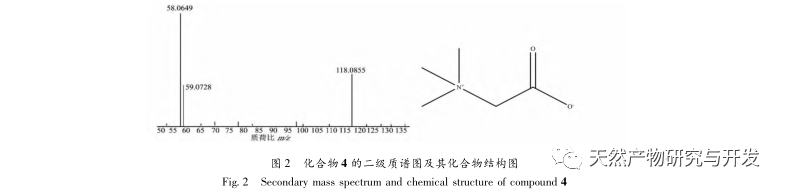
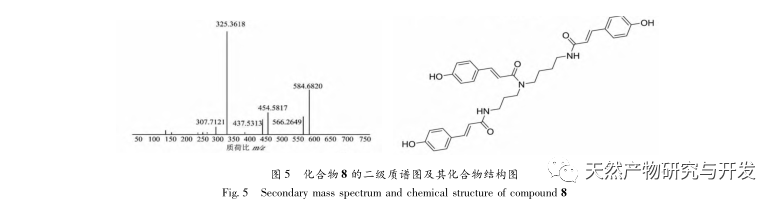
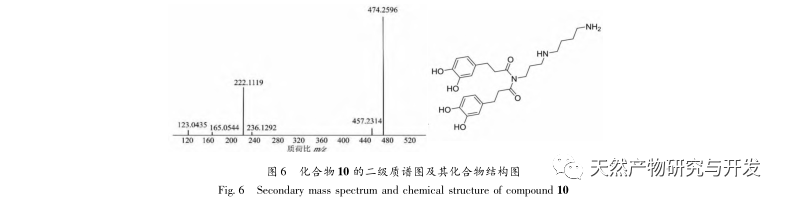
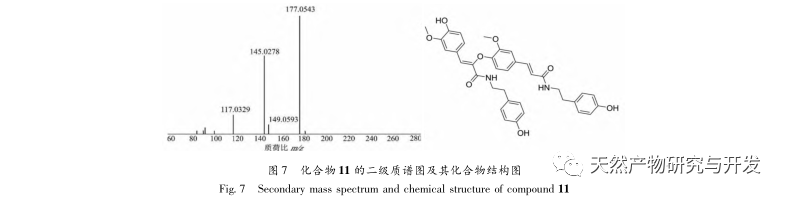
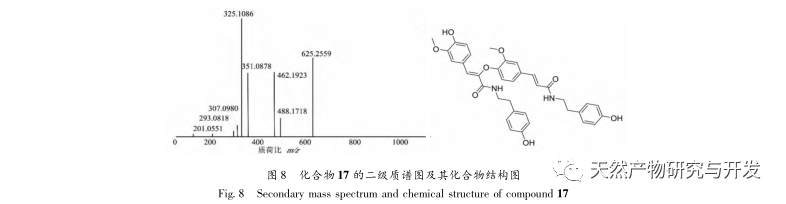
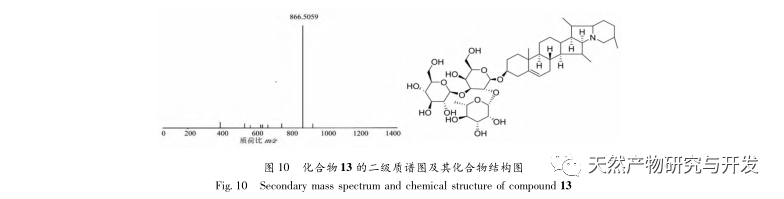
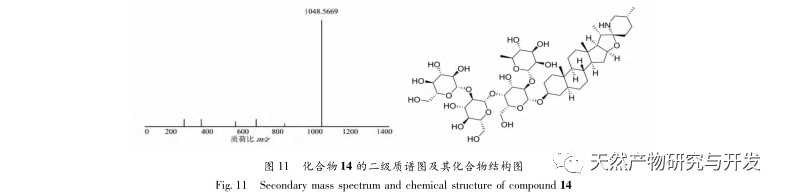
According to the results of this experiment, the ethanol crude extract of Mandrake stems and leaves mainly contains 21 major chemical substances. Alkaloids are the most active pharmacological components of Mandrake plants, mainly including scopolamine, betaine, 6-deoxybuckwheat alkaloids, α – solanine, and tomato alkaloids. Previous research has shown that the main alkaloids in Datura stramonium are scopolamine and atropine, further confirming the existence of scopolamine. However, another major component, atropine, was not found in this experiment. Through literature review, it was found that the content of scopolamine in the leaf tissue of Datura stramonium during the nutritional period was abnormally higher than that of atropine, while the content of atropine in the roots and stems was much higher than that of scopolamine. Therefore, it may be due to the fact that this experiment mainly tested the leaf tissue during the nutritional period of Datura, and atropine and scopolamine have significant differences in different parts and growth stages of Datura, resulting in differences in the composition analysis of Datura.
This study demonstrates that plant resources in Xinjiang have extremely high medicinal activity and great research potential for antibacterial agents based on plant derived research, providing inspiration for new drug compounds. However, this study is only a preliminary screening and analysis, and there are still some differences from previous research. Further research should be conducted on the mode and mechanism of action of the selected effective plant extracts, as well as their bactericidal activity on living plants, in order to apply them to the development and utilization of new plant-based agricultural drugs.

 English
  Danish
  German
  Hungarian
  French
  Russian
  Spanish
  Turkish