
Research progress on the resistance of secondary metabolites of microorganisms to Phytophthora capsici
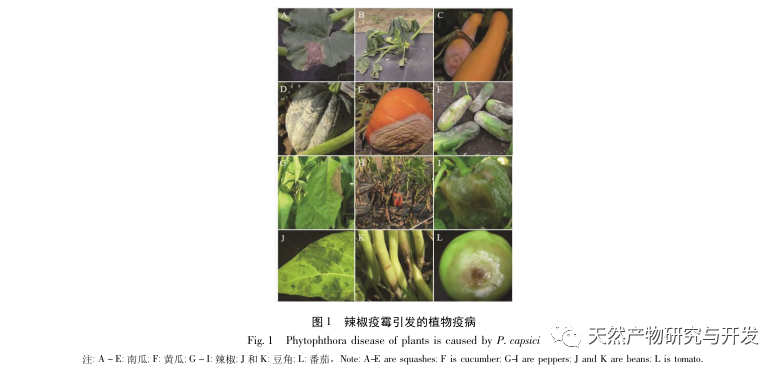
Chili Phytophthora belongs to the Oomycota phylum, Oomycetes class, Peronosporales order, Peronosporaceae family, and Phytophthora genus. It was first reported in 1922 and is a highly destructive invasive pathogen that can cause plant diseases (as shown in Figure 1), resulting in significant economic losses to agricultural production. Kamoun et al. reported on the top ten oomycetes pathogens that have significant negative impacts on global food security and natural ecosystem conservation, including six phytophthora species, with Phytophthora capsici ranking fifth. Chili Phytophthora was initially considered a pathogen unique to chili peppers, but later it was discovered that it could also infect certain Solanaceae, legumes, and most melon crops. Chili Phytophthora grows rapidly and prefers high temperature and high humidity weather. It can infect all plant parts including roots, stems, leaves, and fruits. Its sporangia can overwinter in soil and survive for 1-2 years, which seriously affects crop rotation of chili and other crops. In addition, Phytophthora capsici can be transmitted through various pathways such as water sources, contaminated soil, and air convection. Once introduced into the field, it is difficult to control and often cannot be eradicated. Therefore, Phytophthora capsici, as a destructive soil borne pathogen, is one of the main factors limiting the development of crop industries such as chili, beans, and melons.
Chemical pesticide control, disease resistant variety breeding, and biological control are common methods for preventing and controlling Phytophthora capsici. At present, the chemical pesticides mainly used for the control of Phytophthora capsici include propineb, dimethomorph, metalaxyl, and azoxystrobin, with control efficiencies ranging from 50% to 90%. Chemical pesticides have become an important means of disease prevention and high yield in agricultural production due to their advantages of convenient application, fast control effect, and low cost. However, long-term use of chemical pesticides can lead to the development of drug resistance in pathogens and also pollute the environment. The breeding of disease resistant varieties is mainly carried out through hybrid breeding, mutagenesis breeding, and biotechnology assisted breeding techniques, which are more economical and environmentally friendly methods for preventing and controlling crop diseases. However, the breeding of disease resistant varieties requires a longer time, and disease resistant varieties may experience a loss of disease resistance. Compared to chemical control, biological control is a safer option as it can avoid environmental pollution. Microbial control is a type of biological control, and the microorganisms that control plant diseases are usually bacteria, actinomycetes, and fungi. They can inhibit the infection of host plants by pathogenic bacteria through various mechanisms. Among them, inhibitory metabolites are one of the most important biocontrol mechanisms for microbial antagonism against plant pathogens. The alkaloids, lipopeptides, macrolides, terpenes and other substances produced by microbial secondary metabolism have good inhibitory effects on Phytophthora capsici. For example, the novel lipopeptide gagopeptide A isolated from Bacillus subtilis can inhibit the movement of the motile spores of Phytophthora capsici and cause them to lyse; The minimum inhibitory concentration (MIC) of antibiotic Ao58A purified from the culture medium and mycelium of Micromonospora coerulea against Phytophthora capsici is 3 μ g/mL, and under greenhouse conditions, the antibiotic Ao58A is equally effective as methimazole in controlling Phytophthora capsici. Therefore, a large amount of fungicides not only come from chemical synthesis, but also from secondary metabolites of microorganisms. This article provides a review of 94 microbial derived secondary metabolites with anti Phytophthora capsici activity over the past two decades, focusing on the sources of microbial secondary metabolites, antibacterial effects, and the antibacterial mechanisms of some secondary metabolites. The aim is to provide reference for the research and development of microbial derived secondary metabolites with anti Phytophthora capsici activity.
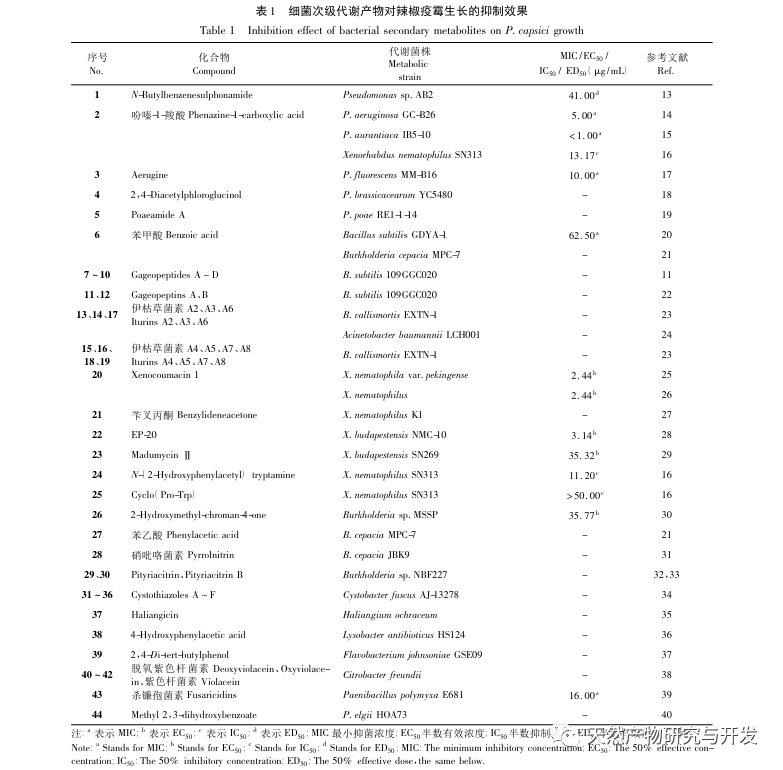
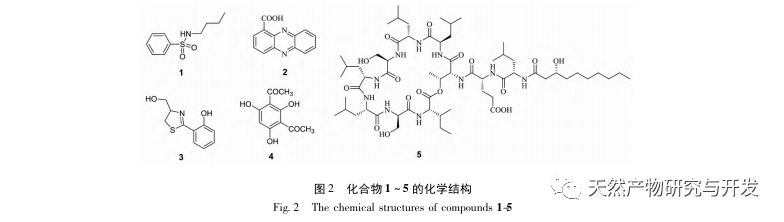
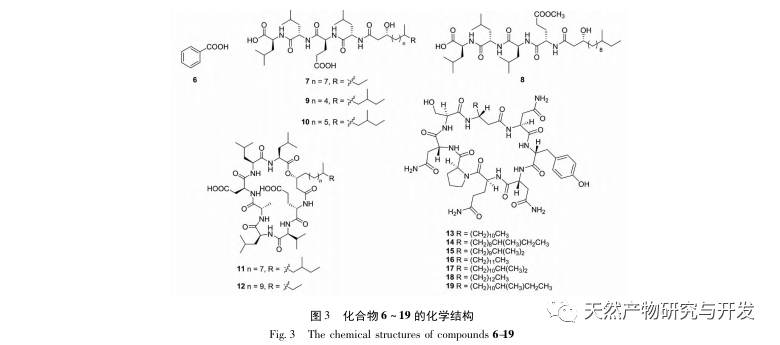


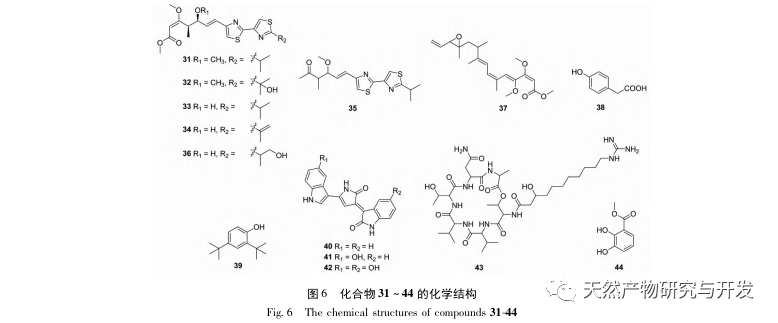
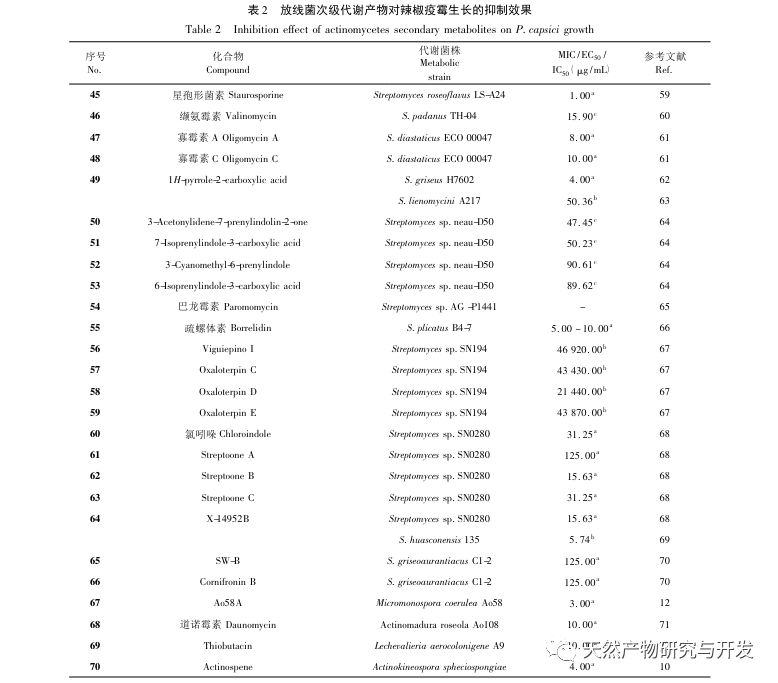
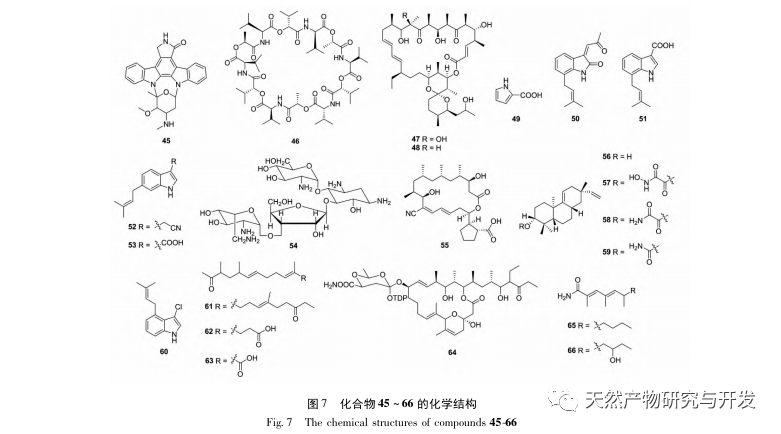
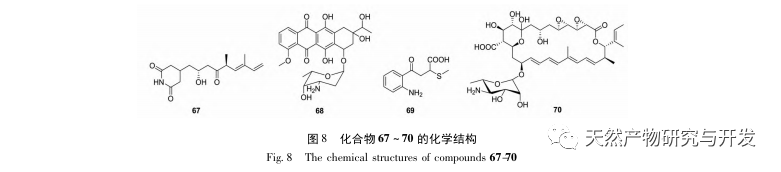
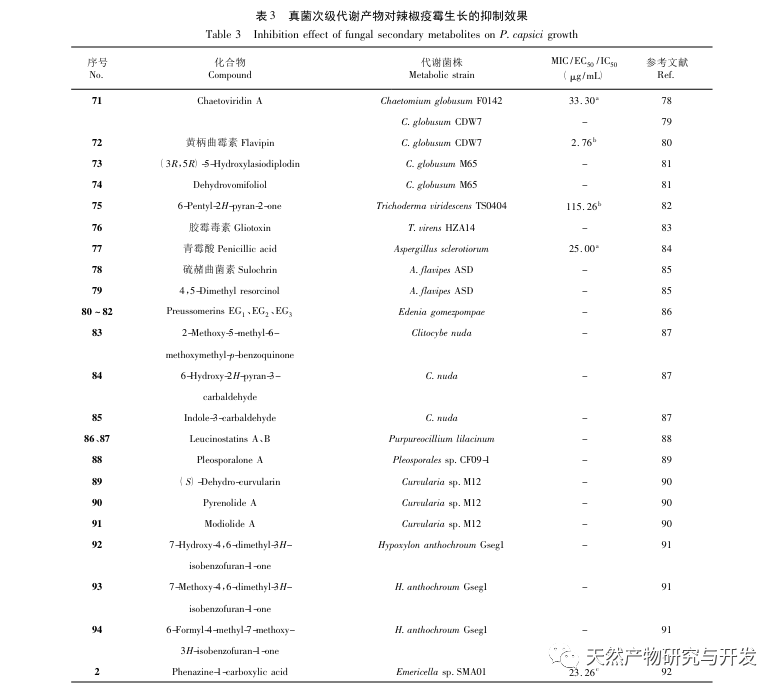
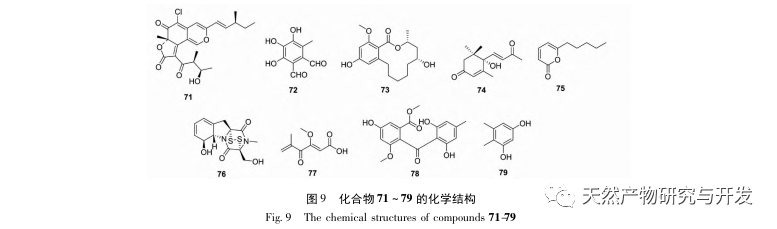
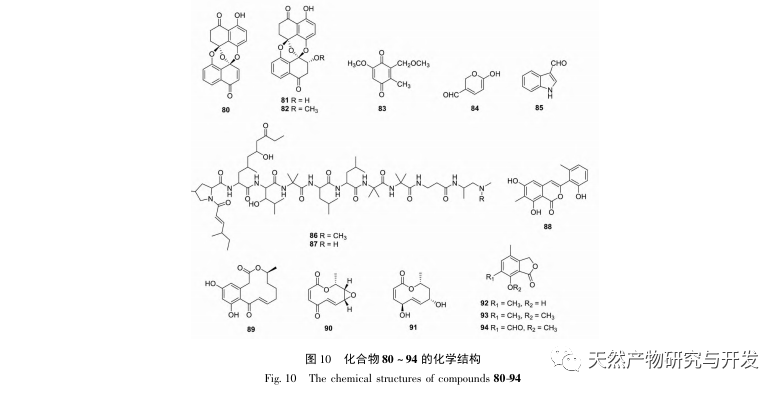
The development and use of microbial and its metabolite derived biologics are considered effective means of controlling plant diseases and strategies for achieving green agricultural development. This article summarizes 94 microbial secondary metabolites with anti pepper phytophthora activity, among which bacterial derived products account for the highest 46.8%, while actinomycetes and fungi derived products account for 27.7% and 25.5%, respectively. The vast majority of these 94 microbial secondary metabolites have good inhibitory activity against Phytophthora capsici, and some secondary metabolites can be inhibited by limiting spore movement, lysing spores, damaging cell membranes, inhibiting protein synthesis, and inducing plant resistance. In addition, Trichoderma, Trichoderma, and Aspergillus are commonly used biocontrol fungi, but research on their antagonism against Phytophthora capsici has mostly focused on live bacteria and fermentation broth, with relatively little research on their pure products against Phytophthora capsici. Therefore, it is very necessary to isolate and purify the fermentation products of these three types of fungi in order to obtain more structurally novel and highly active secondary metabolites against Phytophthora capsici.
Although microbial secondary metabolites have great potential in inhibiting Phytophthora capsici and other plant pathogens, it cannot be denied that there are still multiple limiting factors in applying microbial secondary metabolites to agricultural production. Firstly, most of the reports on the resistance of secondary metabolites of microorganisms to Phytophthora capsici are focused on the isolation and identification of the products, as well as the preliminary screening and evaluation of their anti Phytophthora capsici activity, with little research on their antibacterial mechanisms and field experiments; Secondly, many products have weak stability and are easily affected by external environmental factors, which greatly reduces their antibacterial effect. Therefore, in the future, it is necessary to pay attention to conducting multi-level and multi-faceted in-depth research by combining antibacterial mechanisms and field experiments; And modify the structure of products with promising applications to improve their stability and control effect on Phytophthora capsici. In short, we should objectively recognize the potential of secondary metabolites from microbial sources in the prevention and control of plant diseases, and fully leverage their advantages. And under the conditions of severe chemical pesticide pollution and difficulty in breeding disease resistant varieties, the development and utilization of microorganisms

 English
  Danish
  German
  Hungarian
  French
  Russian
  Spanish
  Turkish