
Depression is a mood disorder or emotional disorder characterized by depression as the main symptom, caused by various factors. Clinical symptoms include low mood, lack of pleasure, decreased sense of self-worth, and even suicide. At present, most of the drugs used to treat depression are chemically synthesized, such as ketamine, imipramine, and trazodone. Although they have significant therapeutic effects, most of them have shortcomings such as narrow antidepressant spectrum and large toxic side effects. Therefore, developing antidepressant drugs with better efficacy and lower side effects from natural products has become an urgent task. Plant chemicals have become a research hotspot for treating depression due to their natural, efficient, and low toxicity characteristics. The pathogenesis of depression includes hypotheses such as monoamine neurotransmitter deficiency, cytokine hypothesis, and cytokine regeneration hypothesis. The monoamine neurotransmitter hypothesis is widely accepted, and its potential mechanism is related to the low levels of 5-hydroxytryptamine (5-HT), norepinephrine (NE), and dopamine (DA) in the brain or serum of patients. Relevant literature has shown that fluoxetine hydrochloride has clinical efficacy in treating depression.
Cyperus esculentus L. is a herbaceous plant in the Cyperaceae family and Cyperus genus. The entire plant of oil sedge includes three parts: roots, stems, and leaves. Among them, the fibrous roots of oil sedge contain essential oils, proteins, organic acids, oils, and other nutrients. Wiebe et al. found that the extract of Cyperus angustifolia from underground tubers can cause changes in human brain electrical activity, which may have the potential to alleviate anxiety. The pharmacological components and mechanism of action of the live aroma of oil sedge have not been reported yet. Our research group has conducted preliminary studies on the antidepressant effects of extracts from three parts (roots, stems, and leaves) of Artemisia scoparia in our laboratory. The research shows that the volatile oil from the roots of Artemisia scoparia has the strongest antidepressant effect. There have been no reports on the antidepressant effect of oil resin from the roots of Artemisia scoparia, but Jia et al. found that the mechanism of antidepressant effect of alcohol extract from the roots of Aconitum carmichaelii, which belongs to the family Cyperaceae, is to inhibit the reabsorption of serotonin monoamine neurotransmitters and the activity of monoamine oxidase.
The combination of ultra-high performance liquid chromatography and tandem quadrupole time-of-flight mass spectrometry (UPLC/Q-TOF-MS) technology has been widely used in material based research. UPLC/Q-TOF-MS technology has the advantages of high sensitivity and selectivity, and can achieve the combination of traditional and advanced technologies. The Chronic Unpredictable Mild Stress (CUMS) depression model is used to study the mechanism of selecting antidepressants and anti anxiety drugs; Inhaling citrus essential oil can significantly alleviate depression related behaviors in CUMS depression model mice; This model has been studied in terms of the antidepressant effects and potential mechanisms of plant extracts puerarin and perilla aldehyde, both of which can alleviate depression like behavior induced by the CUMS depression model.
Based on this, this experiment used ultra-high performance liquid chromatography combined with quadrupole time-of-flight mass spectrometry to identify the content of oil resin components in the roots of Artemisia scoparia, and established a CUMS depression model to study the antidepressant effect of oil resin in the roots of Artemisia scoparia. In order to provide scientific basis for further elucidating the mechanism of antidepressant effect of oil resin from the roots of oil sedge.
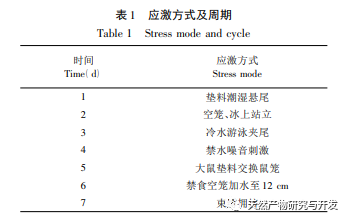
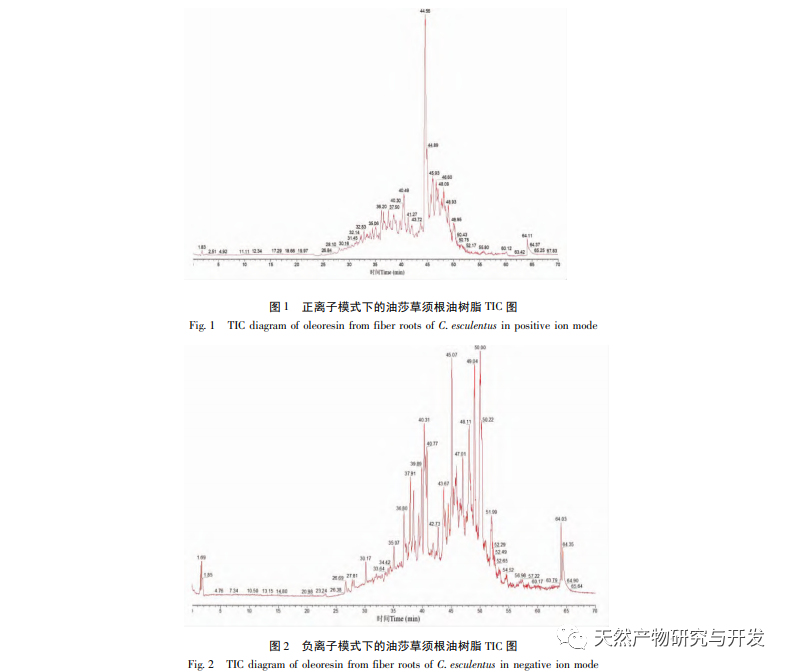
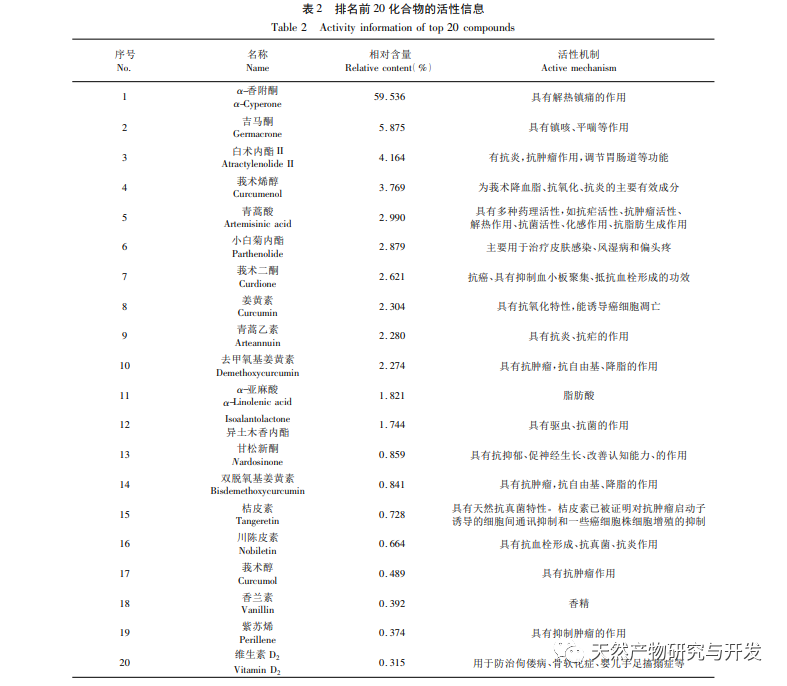
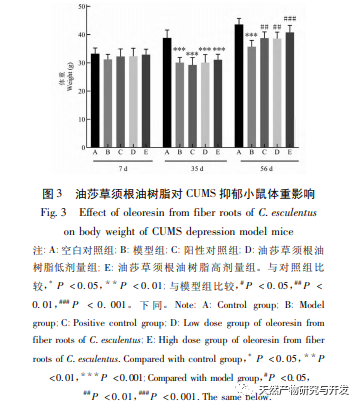
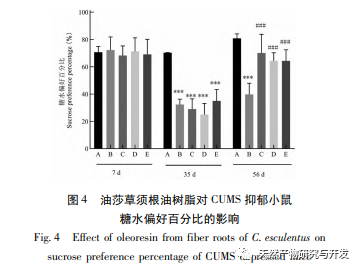
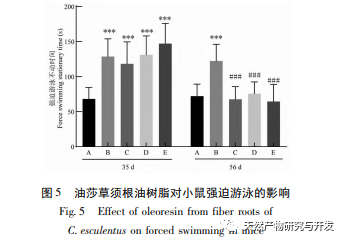
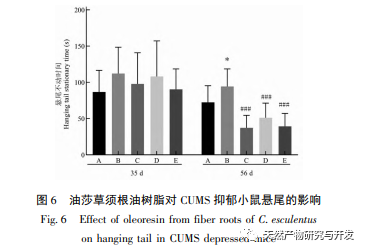
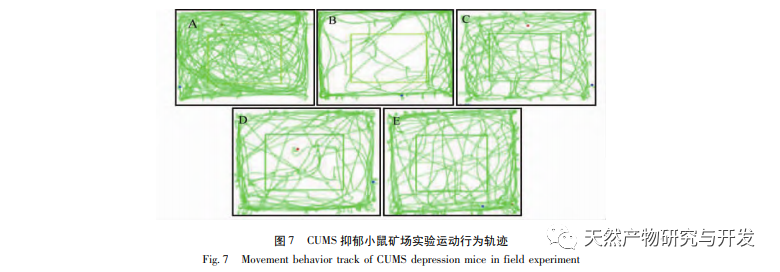
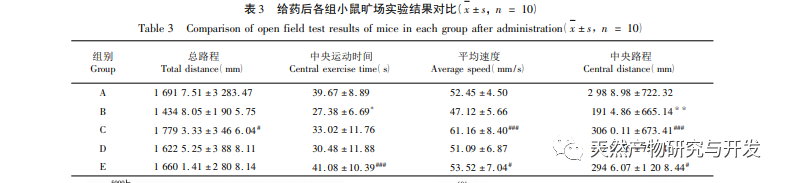
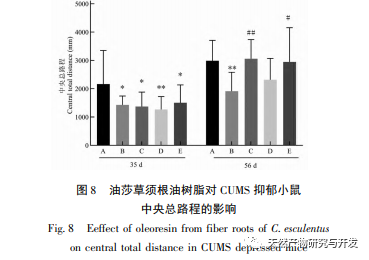
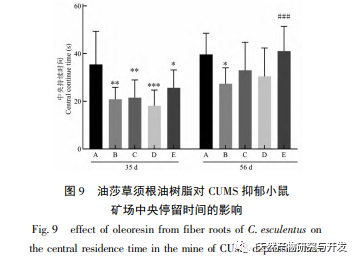
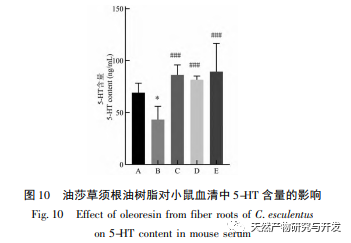
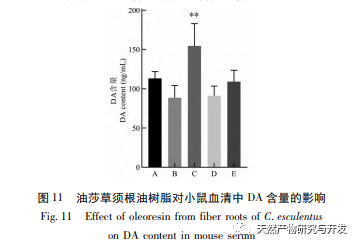
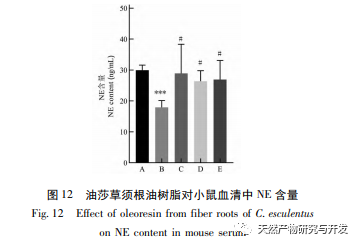
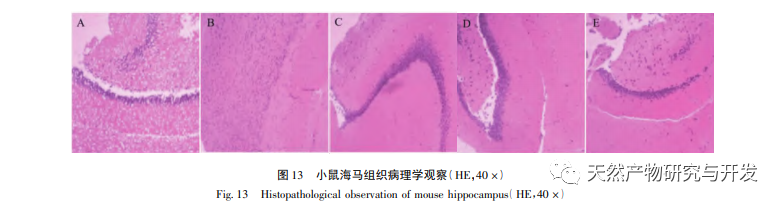
Based on UPLC/Q-TOF-MS technology, the identification of the components of oil resin in the roots of oil sedge grass was carried out, and it was found that α – coumarin (59.536%) was the main component of oil resin in the roots of oil sedge grass. After 35 days of establishing the CUMS depression mouse model, the weight and sugar water preference percentage of the mice significantly decreased after administration (56d). The open field behavior trajectory map showed less activity in the central region, and the tail suspension rest time and forced swimming rest time significantly increased. The establishment of the CUMS depression model was successful, consistent with the results reported in the literature. Oil resin from the root of oil sedge can alleviate depressive like behavior in CUMS mice, and its antidepressant effect may be achieved by regulating serum 5-HT levels, NE levels, behavioral changes, and restoring hippocampal tissue integrity to alleviate depressive state in mice. The target component for its antidepressant effect may be alpha vanillin, and further in-depth research is needed on its antidepressant mechanism.
In this study, the sample group increased the levels of 5-HT, NE, and DA in the serum of mice, indicating that the oil resin from the roots of Sedum erinaceus can regulate neurotransmitter levels and play an antidepressant role. Essential oils from Atractylodes macrocephala, Rosa rugosa, black pepper, and methyl jasmonate have all been studied for their antidepressant activity based on the monoamine hypothesis. This study will provide important references for elucidating the antidepressant functional components of oil resin from the roots of oil sedge, screening new medicinal parts for antidepressant treatment, and laying a theoretical foundation for the development of candidate new antidepressant drugs and the deep level development and utilization of oil sedge resources.
 English
  Danish
  German
  Hungarian
  French
  Russian
  Spanish
  Turkish