
Mechanism study of baicalin anti-inflammatory effect on colorectal cancer based on Hedgehog signaling pathway
Colorectal cancer (CRC) is one of the most common malignant tumors worldwide, accounting for approximately 10% of all diagnosed malignant tumors in the year. Long term recurrent chronic inflammatory infiltration is a common cause of colorectal cancer, which can eventually develop into colitis associated colorectal cancer (CAC) through repeated stimulation of intestinal tissue. Therefore, exploring scientifically effective treatment strategies to control inflammatory infiltration is an important means of preventing and treating colorectal cancer. At present, although chemotherapy, radiotherapy, and surgical treatment have significantly improved the survival cycle of patients, the side effects of chemotherapy and radiotherapy have been widely criticized by patients. In addition, patients may experience recurrence or distant metastasis of colorectal cancer under normal circumstances. Therefore, it is urgent to seek highly effective and low toxicity anti-inflammatory drugs for colorectal cancer.
During long-term clinical drug monitoring and treatment, our department found that the traditional Chinese medicine Huangqin, in the form of a formula, is commonly used in the clinical treatment of inflammatory colorectal cancer and in alleviating the progression of inflammatory cancer. It can significantly improve patients’ intestinal inflammation symptoms. Through literature research, it was found that Huangqin decoction, with Huangqin as the main ingredient, can alleviate dextran sulfate sodium (DSS) – induced colitis in mice by regulating the number of Th17/Treg cells and inhibiting the release of pro-inflammatory cytokines. Baicalin is a flavonoid compound derived from the traditional Chinese medicinal plant Scutellaria baicalensis Georgi. Modern pharmacological research has shown that baicalin has various pharmacological activities such as anti-inflammatory, antioxidant, anti liver fibrosis, myocardial protection, and anti-tumor effects. Baicalin capsules, with baicalin as the main active ingredient, have been clinically used as adjuvant therapy for acute and chronic hepatitis, as well as persistent hepatitis. In recent years, the advantages of this natural active ingredient in the treatment of colorectal cancer have gradually been recognized, especially as an adjuvant drug for clinical treatment of colorectal cancer. In addition, studies have shown that the Hedgehog signaling pathway plays an important role in the inflammatory transformation process of colorectal cancer, and its abnormal activation can promote multiple processes such as proliferation, migration, and invasion of colorectal cancer cells. When the Hedgehog signaling pathway is activated, the expression of Sonic Hedgehog (SHH) increases, which in turn relieves the inhibition of G protein coupled receptor (SMO) activity, thereby alleviating the activation process of serine/threonine protein kinase (SUFU). Subsequently, transcription factor (Glioma, Gli1) proteins containing zinc finger domains are transported into the nucleus to form mature processing complexes, leading to an increase in downstream target gene expression levels of the Hedgehog signaling pathway, causing excessive cell proliferation and leading to various pathological processes such as abnormal tumor proliferation, metastasis, and invasion.
Therefore, based on the preliminary experiments, this study used the human colorectal cancer SW620 cell model and the AOM/DSS induced inflammatory colorectal cancer model, taking the Hedgehog signaling pathway as the entry point, to systematically investigate the anti colorectal cancer effect of baicalin from both in vivo and in vitro levels, and to explore the anti-inflammatory mechanism of baicalin mediated by the Hedgehog signaling pathway in colorectal cancer. The aim is to longitudinally explore the innovative targets of baicalin in anti colorectal cancer and provide a rich research basis for clinical single/synergistic drug use.
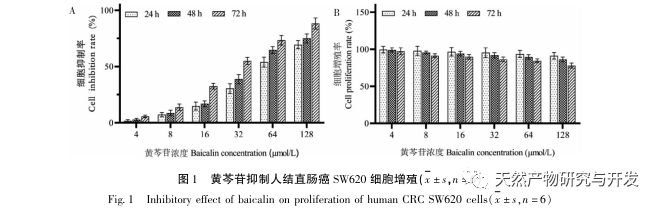
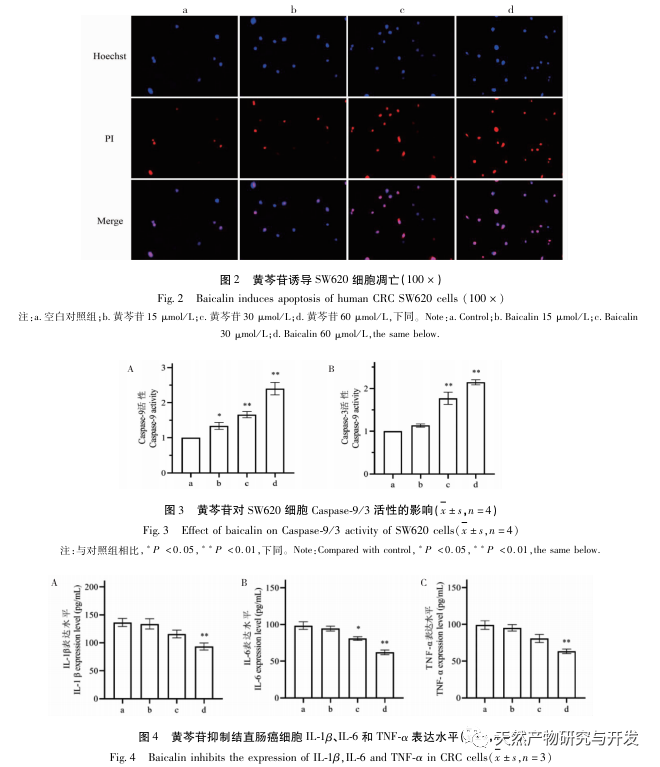
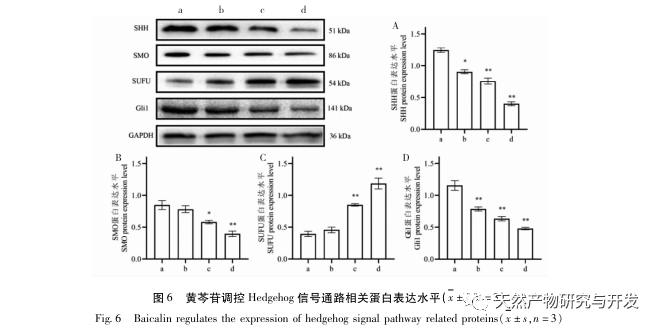
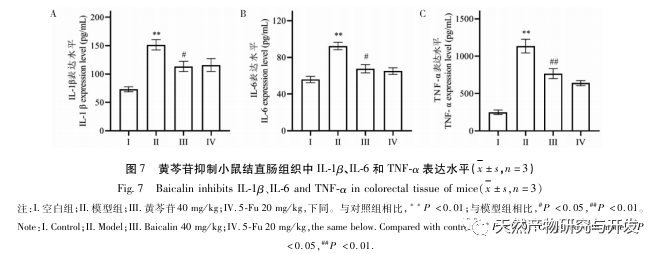
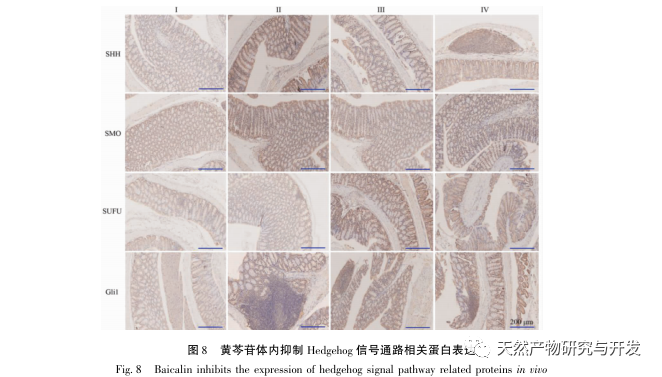
In recent years, active compounds derived from natural plants have gradually entered the central stage of cancer treatment, providing a promising pathway for the effective prevention and treatment of various malignant tumors, including inflammatory colorectal cancer, using natural products. Baicalin is a plant derived flavonoid compound with various functions such as anti-inflammatory, anti microbial infection, and anti malignant tumor. Baicalin capsules, mainly composed of baicalin, are currently used as adjuvant therapy for acute, chronic, and persistent hepatitis in clinical practice. In this study, we found that baicalin can inhibit the activation of the Hedgehog signaling pathway, thereby suppressing the proliferation of SW620 colorectal cancer cells, inducing cell apoptosis, and inhibiting the infiltration of inflammatory factors. This suggests that baicalin may be a promising adjuvant therapy for anti-inflammatory colorectal cancer. However, the inhibitory effect of baicalin on the proliferation of NCM460 cells in this study suggests caution and avoidance of the inhibitory effects caused by high concentrations and prolonged exposure of baicalin on NCM460 cells.
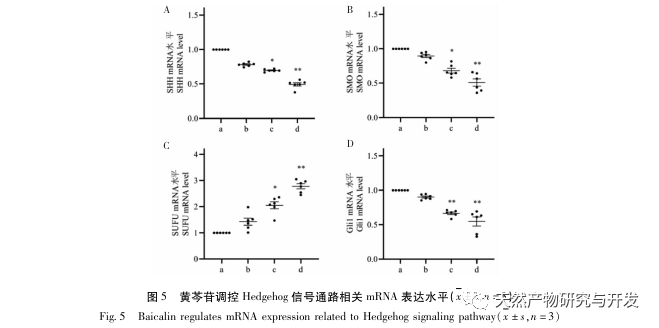
The Hedgehog signaling pathway is an important signaling pathway discovered in recent years that is involved in the occurrence and development of colorectal cancer. In this signaling pathway, when the important regulatory factor SMO is activated, SUFU separates from Gli1, allowing Gli1 to be released and subsequently transcribing downstream target genes, leading to an increase in the expression level of the oncogene c-Myc, which is involved in cancer cell division and repair of damaged DNA. Gli1, as a key transcriptional activator and final control point that directly regulates downstream target genes at the end of the Hedgehog signaling pathway, abnormal functional status of Gli1 will directly lead to changes in the expression levels of various downstream target factors, thereby affecting the malignant phenotype of colorectal cancer cells such as proliferation, apoptosis, and invasion. In this study, we found that baicalin can cascade regulate the mRNA and protein expression related to the Hedgehog signaling pathway, ultimately reducing the expression of the terminal control factor Gli1. This is of great significance for baicalin to control or delay the malignant phenotype of colorectal cancer. However, the regulatory effect of this control point on downstream cancer-related factor biology still needs further exploration.
As an established risk factor for colorectal cancer, long-term recurrent chronic inflammation can indirectly induce genetic instability and epigenetic modifications through inflammatory factors, ROS, and nitrogen substances, leading to cancer development. Specifically, when the body encounters internal/external injury or other related inflammatory stimuli, it will activate immune system related inflammatory cells, which then secrete a large amount of cytokines such as IL-1 β, IL-6, and TNF – α to form a new inflammatory infiltration microenvironment with the extracellular matrix, ultimately leading to cancer. In this study, we found that high-dose baicalin can reduce the secretion of inflammatory factors IL-1 β, IL-6, and TNF – α in vitro and in vivo, suggesting that it may prevent the occurrence of colorectal cancer by inhibiting changes in the inflammatory microenvironment. According to literature reports, the effect of inhibiting Hedgehog signaling in the colon does not directly affect the colorectal epithelial cells themselves, but rather acts on stromal cells to induce the expression of immune regulatory cytokine IL-10, thereby inhibiting inflammatory intestinal injury. Therefore, the intrinsic relationship between the inflammatory factors studied in this article and the Hedgehog signaling pathway still needs further exploration.
In general, it is difficult to achieve sufficient anti-cancer effects by regulating a single disease molecular target during the treatment of malignant tumors. Therefore, in clinical practice, the treatment of colorectal cancer often adopts a combination and synergistic approach to enhance the efficacy of chemotherapy drugs or reduce toxic side effects. The classic Hedgehog cascade signaling pathway has been shown to be closely related to the disease progression and drug resistance of colorectal cancer. Based on this, this study is based on clinical needs and elucidates the molecular mechanism of baicalin, an effective component of traditional Chinese medicine monomers, in combating colorectal cancer through the classic pathways mentioned above. This will provide a certain foundation for clinical combination therapy and also be the future research direction of our research group.
On the basis of preliminary experimental research, this article further elucidates the anti-inflammatory mechanism of baicalin against colorectal cancer in vitro and in vivo using modern pharmacological methods. However, considering the complexity of malignant tumor formation and the differences between different strains of tumor cells, the correlation between the anti-inflammatory effects of baicalin on colorectal cancer in vitro and in vivo still needs to be further comprehensively explored in multiple cell or animal models. At the same time, although this study confirmed the anti-inflammatory effect of baicalin on colorectal cancer by inhibiting the Hedgehog signaling pathway and reducing the expression of inflammatory factors, the research content of the two is relatively isolated and the in vitro and in vivo effects have certain differences. Further clarification of the “crosstalk” mechanism between the two is still needed. Based on this research, our research group will use animal models of colorectal cancer related diseases to conduct in-depth research on this scientific issue. This article provides rich scientific basis for further elaborating the value of Hedgehog signaling pathway in the treatment of colorectal cancer, and also provides solid theoretical support for the application of baicalin in the treatment of colorectal cancer.

 English
  Danish
  German
  Hungarian
  French
  Russian
  Spanish
  Turkish