
Study on the Chemical Components of Paraconiothyrium sp. YLHJ01, an Endophytic Fungi in Artemisia annua
Artemisia selengensis Turcz, also known as reed artemisia or water artemisia, is a perennial herbaceous plant in the Asteraceae family. It is a characteristic wild edible plant in the Poyang Lake area and a traditional seasonal vegetable. Its unique aroma and rich nutrition make it popular among consumers. Modern scientific research has shown that Artemisia annua contains abundant nutrients and has certain health benefits, mainly due to its chemical components such as flavonoids, terpenes, phenylpropanoids, polysaccharides, etc. These ingredients have shown good biological activities in antioxidant, anti obesity, anti-inflammatory, anti-tumor, and immune regulation, and their comprehensive development and utilization are of great significance.
There are abundant species of endophytic fungi in plants, and their metabolites are diverse. These metabolites may produce various active substances similar to those of the host, which is a potential sustainable source of natural active substances in plants and a rich source of biomolecules for medical applications. Taking endophytic fungi as resources, in-depth research on the activity of their secondary metabolites, such as anti-tumor, antioxidant stress, antibacterial, etc., is of great significance for screening new drugs and developing new medicinal resources. At the same time, obtaining natural products through fungal metabolism has advantages in terms of economy and environmental protection.
Paraconiothyrium sp. is a newly discovered and named genus in 2004. In recent years, literature has reported the isolation of many novel skeletal secondary metabolites and compounds with significant antibacterial and anti-tumor activities from Paraconiothorium sp. This study isolated the endophytic fungus Paraconiothyroum sp. YLHJ01 from the characteristic edible plant Artemisia annua in Jiangxi for the first time, and used it as the research object. It is planned to ferment it in rice culture medium in order to discover compounds with novel structures and good biological activity. The research results will enrich the structural types of secondary metabolites of the endophytic fungus Paraconiothyroum sp. YLHJ01, provide drug lead structures, and provide template molecules for chemical synthesis and biosynthetic scientists to study.
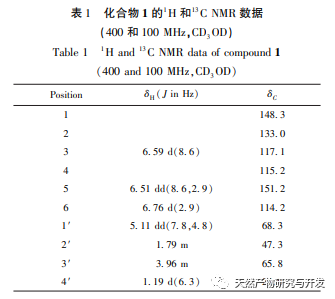
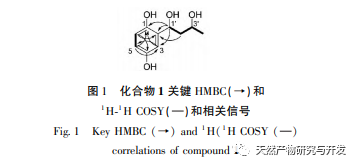
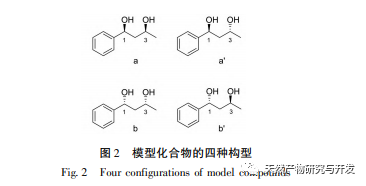
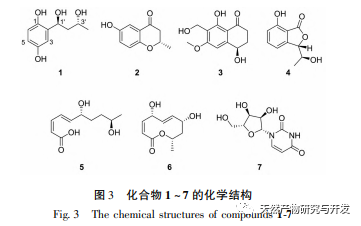
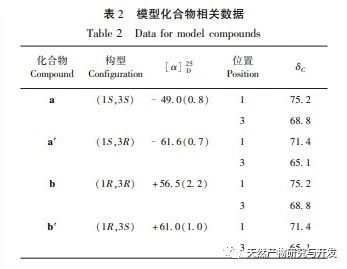
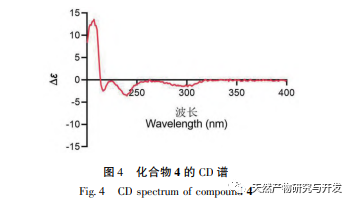
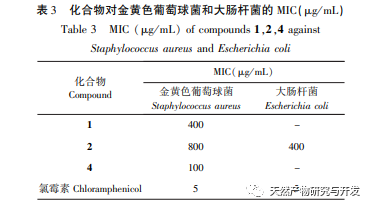
In this study, seven compounds were isolated and identified from the fermentation products of the endophytic fungus Paraconiothorium sp. YLHJ01 in Artemisia annua. Among them, compound 1 is a new phenol derivative, and compounds 2-5 and 7 were isolated from this genus for the first time, greatly enriching the diversity of secondary metabolite structures in the Paraconiothorium genus. Sathiyaseelan et al. reported that some phenolic compounds were found to exhibit cytotoxicity towards tumor cells in the endophytic fungus Paraconiothorium brasiliense MT269522. In addition, reports have shown that phenol derivatives and phthalein compounds have anti-tumor and antibacterial activities. Therefore, this article conducted preliminary evaluations of the tumor cytotoxicity and antibacterial activity of compounds 1-7 isolated from Paraconiothorium sp. YLHJ01. Unfortunately, compounds 1-7 were not found to have cytotoxicity against HepG2 tumor cells and A549 tumor cells. However, through antibacterial activity testing, compounds 1, 2, and 4 were found to have certain antibacterial effects. In summary, this study enriches the structural types of secondary metabolites produced by the endophytic fungus Paraconiothorium sp. YLHJ01 in Artemisia annua, providing template molecules for chemical synthesis and biosynthetic scientists to study, and also providing certain reference significance and scientific value for the development of natural active compounds in the future.

 English
  Danish
  German
  Hungarian
  French
  Russian
  Spanish
  Turkish