
Research progress on secondary metabolites and pharmacological activities of polar actinomycetes
Actinomycete belongs to the phylum Actinobacteria and is a Gram positive bacterium. The secondary metabolites derived from actinomycetes account for about 45% of the secondary metabolites derived from microorganisms, and exhibit a range of biological activities, including anti-tumor, antibacterial, anti-inflammatory, antiviral, and anti angiogenic effects. Antibiotics derived from actinomycetes account for 70% of reported natural antibiotics, and some have been widely used in clinical practice, such as vancomycin and azithromycin. Actinobacteria have always been considered a good source of newly active secondary metabolites from microbial sources.
Polar regions generally include the North and South Poles and their subregions, characterized by low temperatures, polar daylight, and strong ultraviolet radiation. Polar microorganisms have evolved unique gene regulation and metabolic functions to adapt to extreme polar conditions, thus possessing the potential to produce structurally novel secondary metabolites. In recent years, researchers have discovered many structurally unique and highly active secondary metabolites from polar actinomycetes. This article reviews the research progress on secondary metabolites and pharmacological activities of polar actinomycetes from 1999 to 2021. According to their chemical structure types, they can be classified into peptides, alkaloids, terpenes, macrolides, polyketones, macrolactams, and other categories. This article summarizes the secondary metabolites derived from newly discovered polar actinomycetes in recent years (see Table 1), which can provide a basis for better development and utilization of polar actinomycete resources.
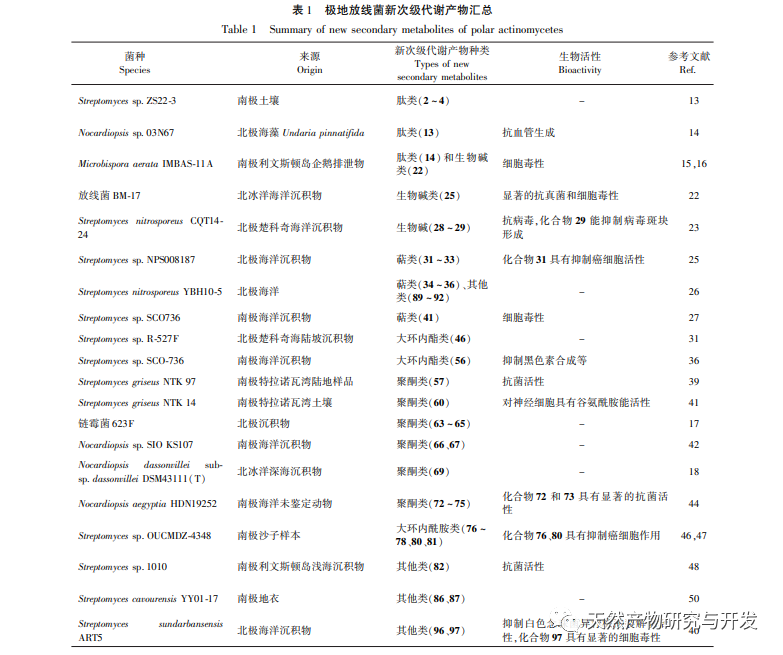
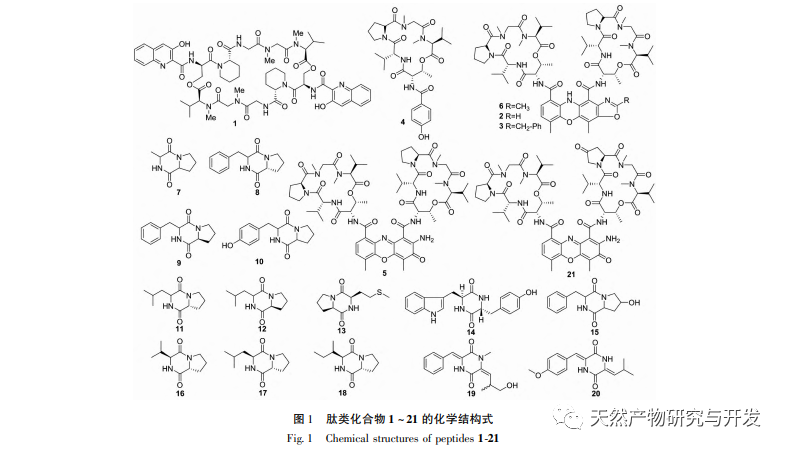
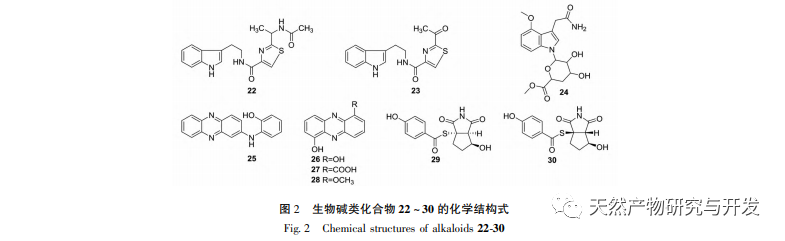
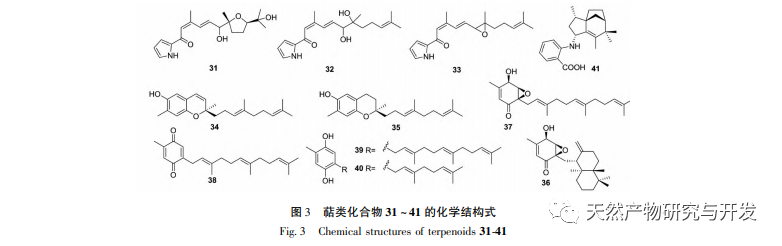
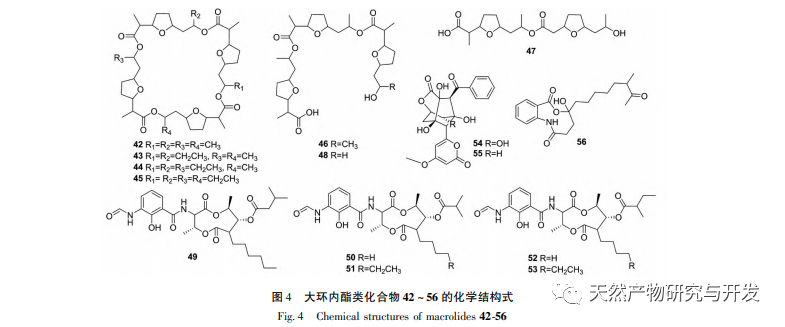
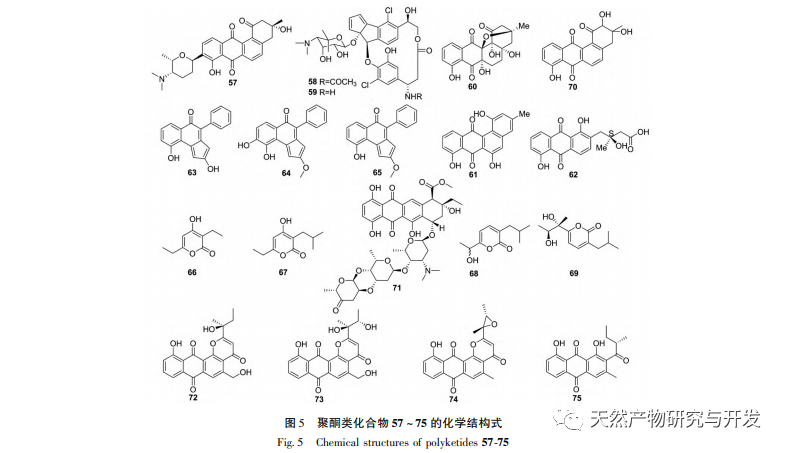
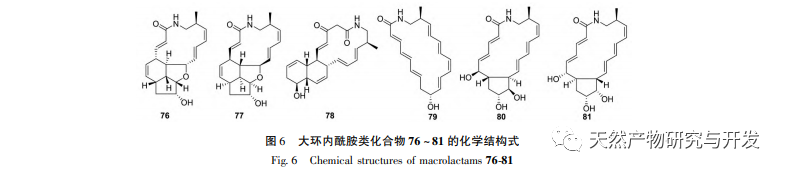
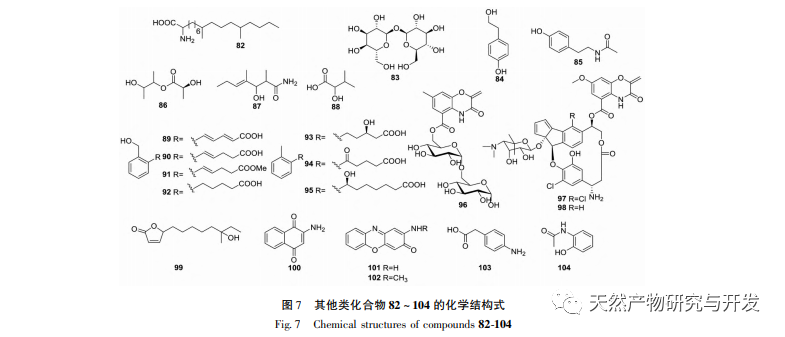
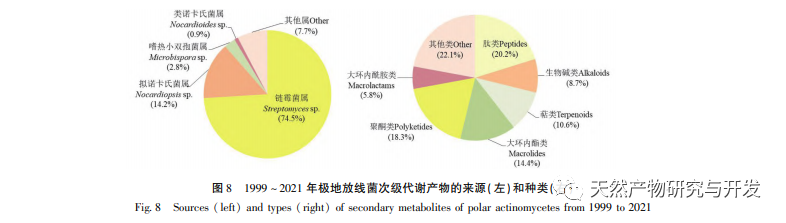 From 1999 to 2021, 104 secondary metabolites from polar actinomycetes were reported both domestically and internationally, among which 44 (42.3%) were new compounds. The summary of new secondary metabolites is shown in Table 1. Most of the secondary metabolites of polar actinomycetes were isolated from the Streptomyces genus (74.5%), while a small portion were isolated from the pseudo Nocardia genus (14.2%), thermophilic Bacillus genus (2.8%), Nocardia like genus (0.9%), and other genera (7.7%) (Figure 8, left). According to the classification of chemical structure types, among the 104 secondary metabolites, 21 (20.2%) are peptide compounds, 9 (8.7%) are alkaloids, 11 (10.6%) are terpenes, 15 (14.4%) are macrolides, 19 (18.3%) are polyketones, 6 (5.8%) are macrolactams, and 23 (22.1%) are other types of compounds. The main structural types are peptides, polyketones, macrolides, etc. (Figure 8, right). Among them, the secondary metabolites with very rare structures include nitroporosines A (29) and B (30), antartin (41), gephyromycin (41), etc. 60), saliniquinones G-I (72-74), etc. Most of the 104 secondary metabolites have good pharmacological activities such as antibacterial, antifungal, antiviral, and cytotoxicity. It is mainly characterized by anti-tumor activity, which has inhibitory activity on leukemia, colon cancer, epidermal cancer, myeloma, cervical cancer, breast cancer, melanoma, gastric cancer and other tumor cells. Some compounds have significant activity, such as C-1027 chromophore-V has significant cytotoxicity, saliniquinones G ~ H has significant antibacterial activity, and N – (2-hydroxypheny1) -2-phenazinamine (NHP) has significant antifungal and cytotoxicity. In addition, some compounds also have selective inhibitory effect. Next is antibacterial activity, including antibacterial and antifungal activity, which has inhibitory effects on Candida albicans, Escherichia coli, Pseudomonas aeruginosa, Staphylococcus aureus, Bacillus subtilis, Proteus mirabilis, Bacillus cereus, Bacillus subtilis, and Micrococcus luteus. A few have effects such as anti angiogenesis, antioxidant, reducing cellular lipid levels, inhibiting melanin synthesis, and glutamine activity. Further research and development are warranted for secondary metabolites with novel structures, even rare skeletons, and significant activity, such as nitrosporosines A (29) and B (30), antagonist (41), gephyromycin (60), and salinequine G-I (72-74).
In summary, polar actinomycetes have abundant resources, with Streptomyces being the main focus of research. Other rare species have broad development prospects. The chemical structure types of secondary metabolites produced by polar actinomycetes are diverse, and many of them have good biological activity, especially anti-tumor activity, which has great value for drug development. However, research on the biosynthetic pathways, active mechanisms, and clinical aspects of metabolites has not been widely conducted, and most of the secondary metabolites isolated from polar actinomycetes are known compounds. With the development of bioinformatics technology, more genome sequences of polar actinomycetes have been obtained through sequencing, and more and more polar actinomycete BGCs have been discovered and reported, such as PKS, NRPS genes, halogenated enzyme genes, terpene and oligosaccharide derivative related genes, etc. It can be seen that polar actinomycetes have strong potential for synthesizing active secondary metabolites and adapting to polar environments, which will provide richer and more diverse sources of new compounds for new drug development. At the same time, the biosynthetic pathways of new secondary metabolites will be easier to decipher and are worthy of further research and development. Although most of the compounds isolated from polar actinomycetes are currently known, the “silent genes” responsible for the biosynthesis of new compounds may not be expressed during fermentation. Therefore, the expression of “silent genes” in strains can be stimulated by optimizing fermentation conditions, microbial co culture, and other methods. Combined with gene mining, activity screening, and other methods, compound isolation can be guided to isolate more active secondary metabolites with novel structures from polar actinomycete resources. By further studying the relevant mechanisms of action, increasing clinical research efforts, and providing a basis for the development of innovative drugs.

 English
  Danish
  German
  Hungarian
  French
  Russian
  Spanish
  Turkish