
Differences and Similarities of Volatile Oil Components in Plantago asiatica Based on GC-MS Analysis
Duoji original medicinal materials are an important component of Chinese medicinal materials listed in the Chinese Pharmacopoeia. ‘One herb with multiple origins’ refers to the same Chinese medicinal herb having two or more species sources. One drug with multiple origins has a positive effect on expanding the source of traditional Chinese medicine and ensuring clinical drug demand, but there may be certain differences in the material basis of different origins, which brings certain difficulties to clinical application. Mr. Xie Zongwan believes that the functions and indications of different varieties of a single herb should be extremely similar. The high degree of consistency in the functions and indications of different varieties should be attributed to the high similarity in their pharmacological substance basis. Therefore, it is necessary to conduct comparative research on the material basis of different varieties of multi base original medicinal materials.
Plantago asiatica L., also known as Plantago asiatica L. or Plantago depression Willd., is a dried whole plant derived from Plantago asiatica L. or Plantago depression Willd. Plantago asiatica has the effects of clearing heat, diuresis, promoting diuresis, eliminating phlegm, cooling blood, and detoxifying. It can be used to treat symptoms such as heat induced pain, edema, oliguria, diarrhea caused by heat and dampness, phlegm heat cough, vomiting blood and bleeding, and abscesses and sores. Modern pharmacological research has shown that Plantago asiatica has pharmacological effects such as lowering blood lipids, anti-aging, antibacterial and anti-inflammatory, antioxidant, and anti-tumor. The volatile oil is an important medicinal substance of Plantago asiatica, but there are currently no reports comparing the volatile oil components of two different types of Plantago asiatica. This study is the first to use gas chromatography-mass spectrometry technology combined with chemical pattern recognition to compare and analyze the volatile oil components in dried whole plantain and flatbed plantain, aiming to provide scientific basis for rational clinical use of plantain.
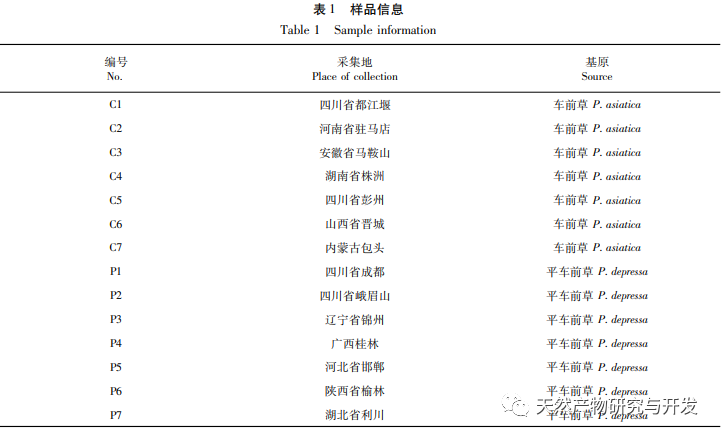

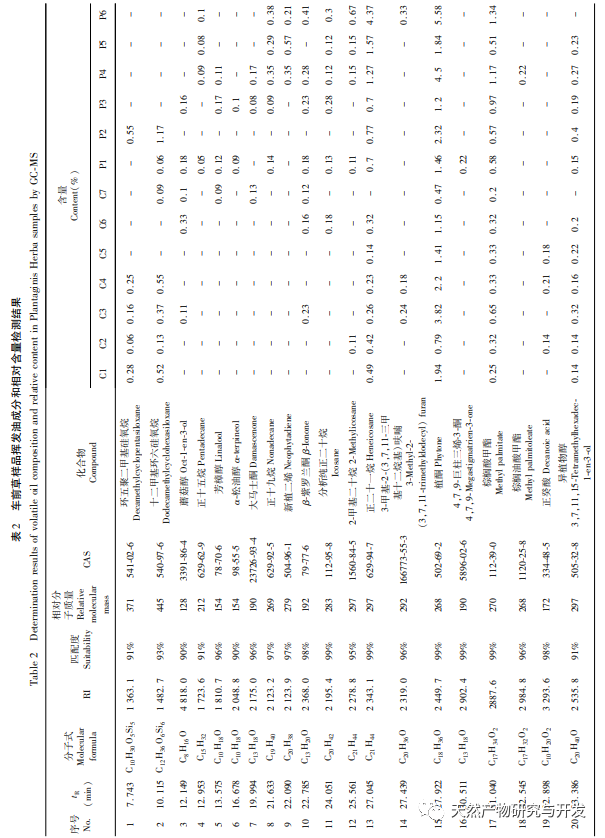
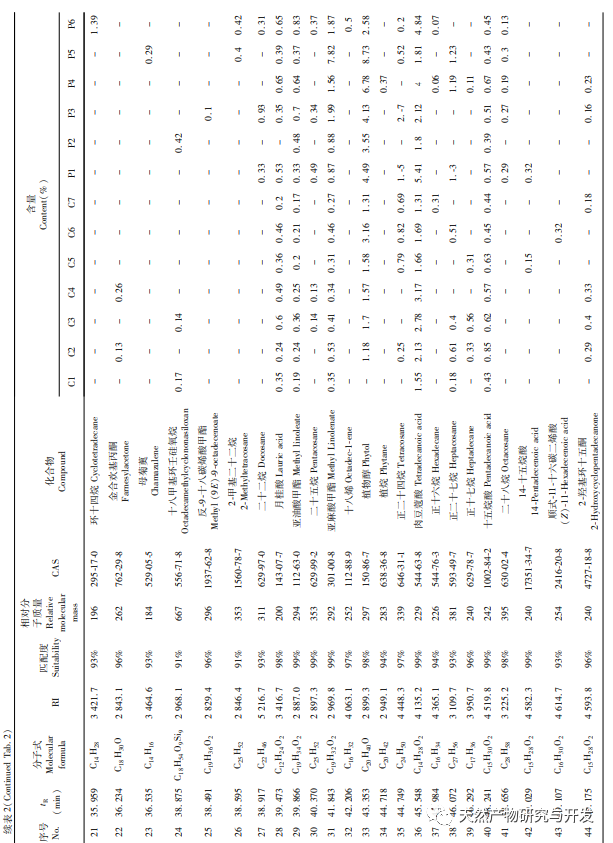
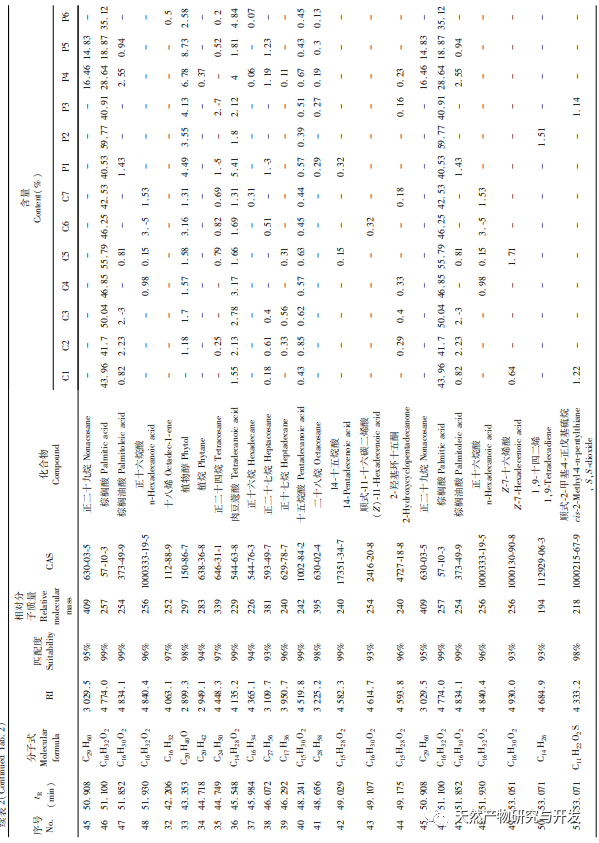
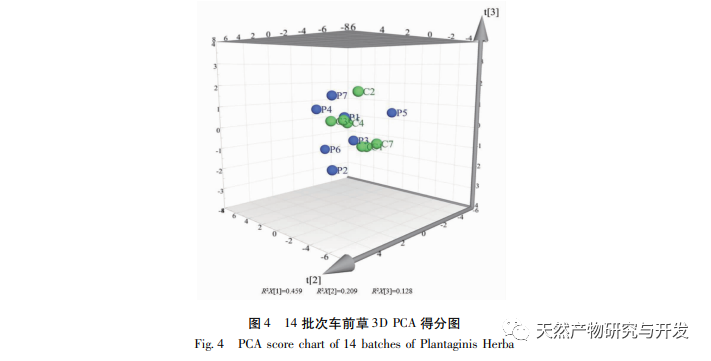
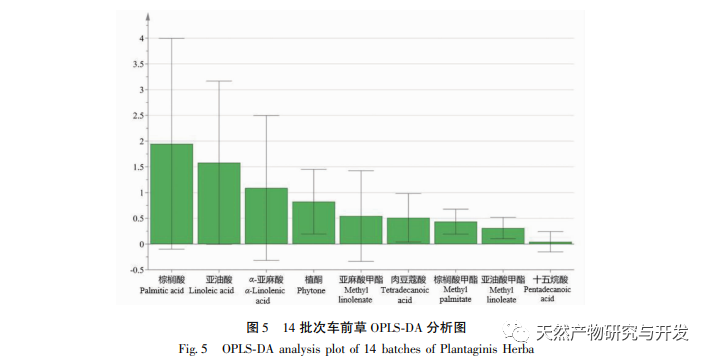
In recent years, gas chromatography-mass spectrometry (GC-MS) technology has been widely used for the identification of volatile components in traditional Chinese medicine, enabling the integration of separation and detection of some complex volatile oil components. However, due to the large size of the measured dataset and its complex features such as high latitude, high noise, high correlation between variables, and high variability, combining chemical stoichiometry to explore the similarities and differences between different samples from the tedious dataset is a popular tool for later data analysis. At present, GC-MS combined with chemometric methods has been widely used in the identification of similar varieties of traditional Chinese medicine.
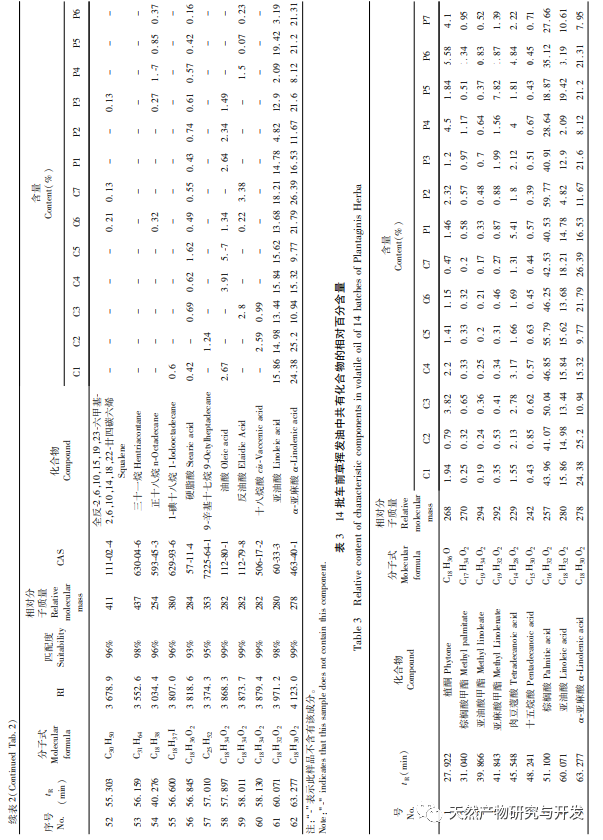
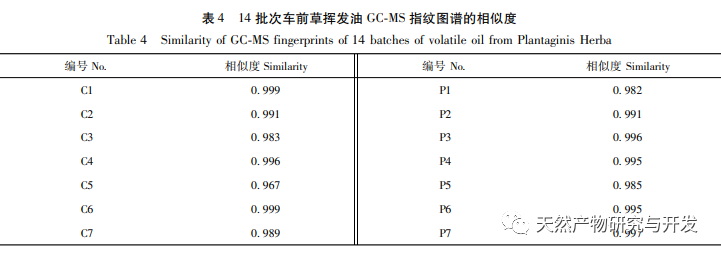
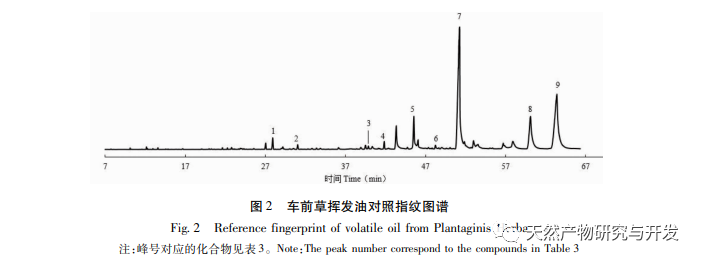
The results of this study showed that a total of 62 chemical components were identified in 7 batches of Plantago asiatica and 7 batches of volatile oil before flatbed transportation, mainly consisting of alkanes and acids. Plantago asiatica has 10 components, while Platycodon grandiflorus has 12 components. Among them, the chemical components with relatively high average relative content in Plantago asiatica and Platycodon grandiflorus are mainly palmitic acid, linoleic acid, and alpha linolenic acid, accounting for 46.4%, 15.38%, 19.11%, and 35.93%, 9.69%, and 15.48%, respectively. This conclusion is similar to the findings of Al Mazroa et al. that the volatile oil of Plantago asiatica contains the main component palmitic acid. Hui et al. found that the volatile oil components of Plantago asiatica had the highest content of 2,6-di-tert-butyl-p-cresol, suggesting that the differences in research may be related to inconsistent extraction methods of Plantago asiatica.
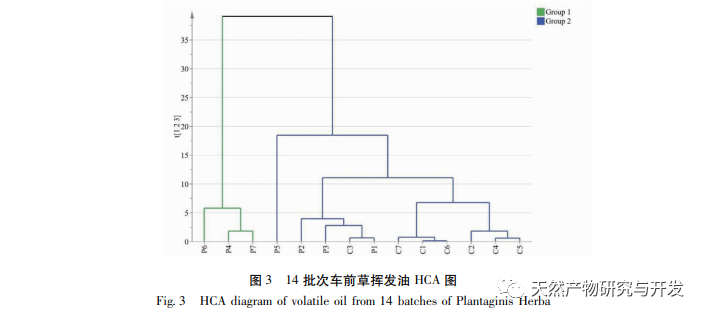
The equivalence of multi origin traditional Chinese medicine is an important aspect of evaluating the quality of Chinese medicine. Our research group has previously used GC-MS technology combined with chemometrics to compare and study the volatile components of Yangchun sand kernel, green shell sand kernel, Sichuan Gaoben, and Liao Gaoben. Based on the results of HCA and PCA, Yangchun sand kernel and green shell sand kernel, as well as Chuangaoben and Liaogaoben, can be completely separated. However, this study showed that there were 9 common components between the 7 batches of Plantago asiatica and the 7 batches of Platycodon grandiflorus, with relative percentages accounting for more than 80%, and the content was higher in palmitic acid, linoleic acid, and alpha linolenic acid; From the similarity analysis results, the similarity of all batches is above 0.967, indicating a high overall similarity; From the HCA and 3D PCA classification results, it can be seen that all 14 batches of Plantago asiatica cannot be completely distinguished by variety. By using the OPLS-DA model with VIP values greater than 1, the components that contribute significantly to the above classification were identified as palmitic acid, linoleic acid, and alpha linolenic acid. In summary, the volatile oil components in front of the car and the flatbed are highly similar, so there is a certain scientific basis for both to be used as the same medicinal herb. It is worth further studying whether their non-volatile components have the same characteristics.
In summary, this study is the first to use GC-MS technology combined with chemical models to compare the volatile oil components of Plantago asiatica and Plantago asiatica, and found that the volatile oil components of the two are highly similar. This lays the foundation for elucidating the scientific connotation of the Chinese medicinal herb Plantago asiatica’s “one medicine, multiple sources”.

 English
  Danish
  German
  Hungarian
  French
  Russian
  Spanish
  Turkish