
Analysis of Multivariate Active Components in Different Parts of Three Leaf Cliff Climbing Vine Using UFLC-QTRAP-MS/MS Technology
San Ye Qing is the root or whole plant of Tetrastigma hemsleyanum Diels et Gilg (THDG) in the grape family. It has a long history of medicinal use and is one of the “New Zhejiang Eight Flavors”. It has the effects of clearing heat and detoxifying, promoting blood circulation and dispelling wind. It is mainly used for high fever convulsions, pneumonia, asthma, hepatitis, rheumatism, scrofula, and injuries caused by falls. Modern pharmacological research has shown that San Ye Qing has pharmacological effects such as anti-tumor, antioxidant, anti-inflammatory, antibacterial, antipyretic, analgesic, and immune regulation.
The Three Leaf Cliff Climbing Vine mainly grows in the southern region of the Yangtze River and has a long history of medicinal use in folk areas of Zhejiang. Its whole plant and root can be used. In recent years, studies have found significant differences in chemical composition and pharmacological activity among its different medicinal parts. For example, the antioxidant activity of the above ground extract is significantly higher than that of the underground extract, while the hydroxyl radical scavenging activity of the underground extract is significantly higher than that of the above ground extract. Due to the fact that San Ye Qing is currently only included in local traditional Chinese medicine standards and specifications, its indicator components are not clearly defined. In recent years, research has shown that in addition to flavonoids, phenolic acids, polyphenols, polysaccharides, and other active ingredients of San Ye Qing, tannins, amino acids, and nucleosides also have potential physiological activities. Among them, tannin components such as anthocyanins B2 have inhibitory effects on gastric cancer, amino acid components have good therapeutic effects on liver injury, and nucleoside components have good antibacterial and antiviral effects. At present, research on the active ingredients of different parts of the Three Leaf Cliff Climbing Vine mainly focuses on total flavonoids, total phenolic acids, and total polysaccharides, with few simultaneous content determinations of multiple active ingredient categories. The analysis methods for quality assessment and control of different parts mainly include high-performance liquid chromatography, gas chromatography-mass spectrometry, and liquid chromatography-mass spectrometry technology. Therefore, in order to provide reference data for quality control and rational resource utilization of different parts of the Three Leaf Cliff Climbing Vine, it is necessary to establish a rapid method for determining the content of active ingredients in different parts and conducting quality evaluation.
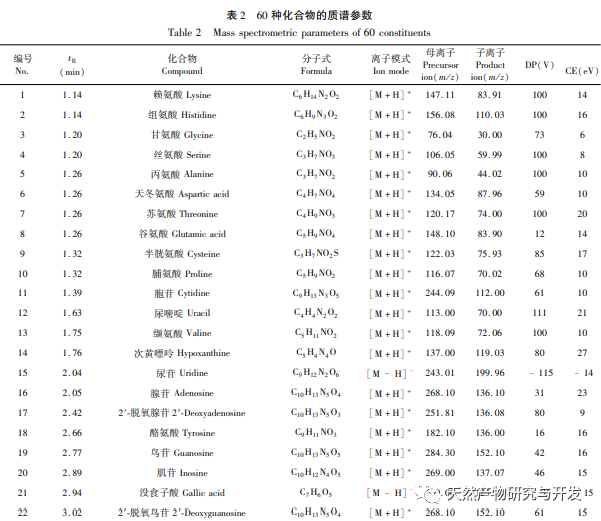
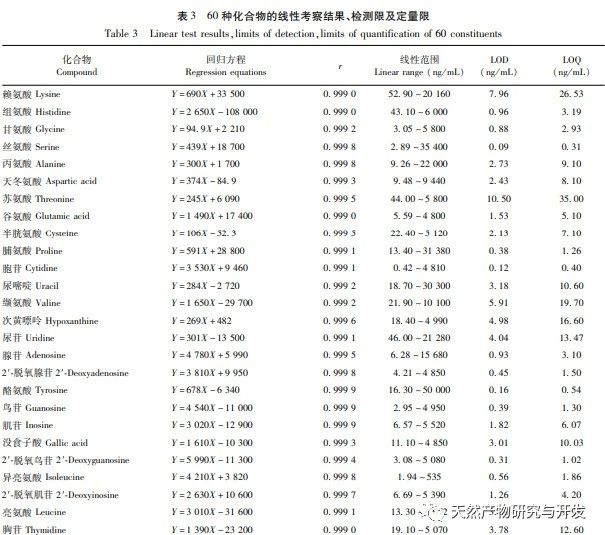
The ultra fast high-performance liquid chromatography triple quadrupole linear ion trap mass spectrometry (UFLC-QTRAP-MS/MS) technology has high separation, high selectivity, and high sensitivity, and can quickly separate and identify mixed compounds. It is suitable for the separation and analysis of multi-component complex systems of Trifolium repens. Therefore, this study used the roots, stems, and leaves of the Three Leaf Cliff Climbing Vine as experimental objects, and simultaneously determined 60 active ingredients through UFLC-QTRAP-MS/MS technology. Multivariate statistical analysis methods such as principal component analysis (PCA), partial least squares regression analysis (PLS-DA), and analysis of variance were used to distinguish and reveal the differences in active ingredients between different parts, and grey relational analysis (GRA) was applied to evaluate the quality of different parts. The results of this study can provide methodological references for the rapid quantification and quality control of various active ingredients in different medicinal parts of the Three Leaf Cliff Climbing Vine, and lay the foundation for the rational development and utilization of its resources.
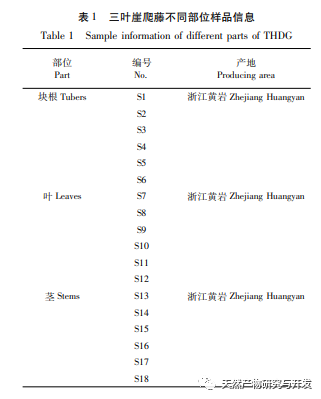
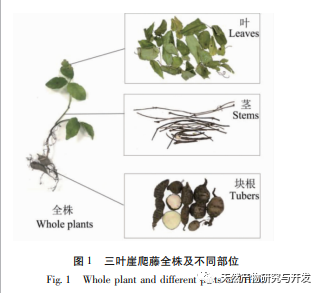





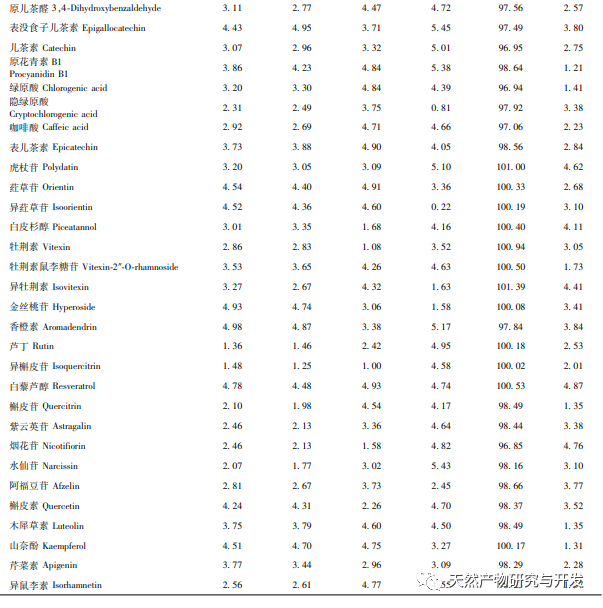
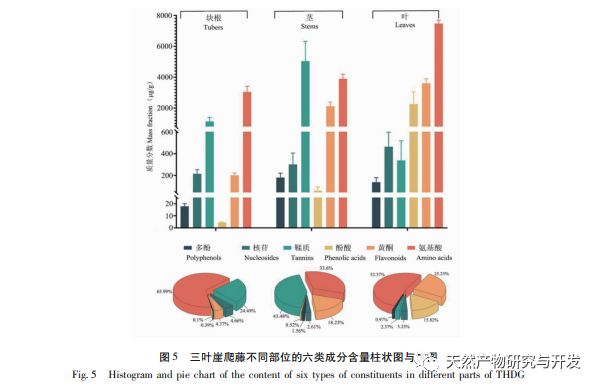
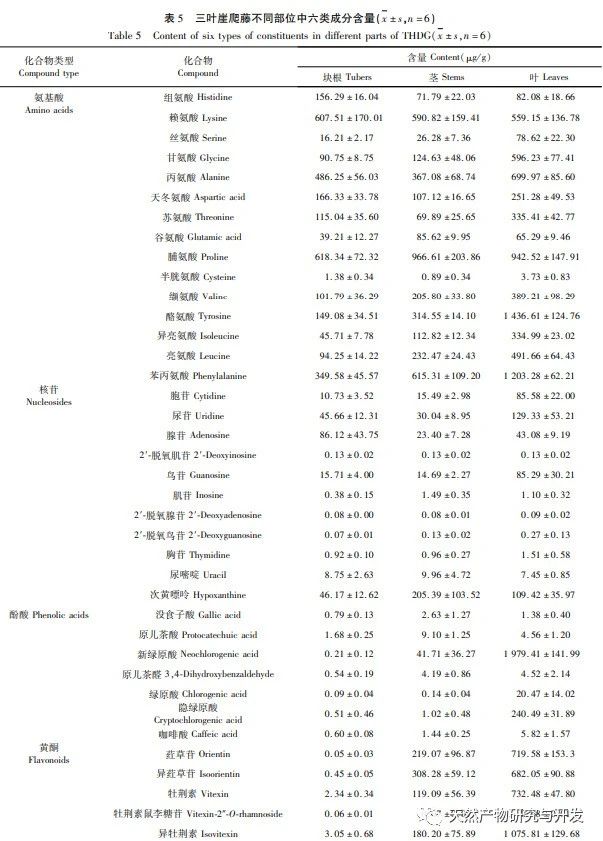
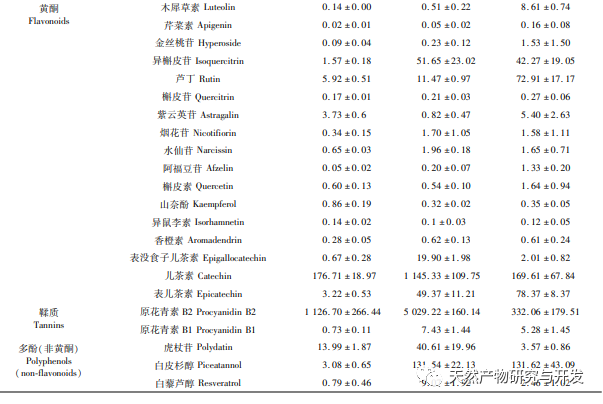

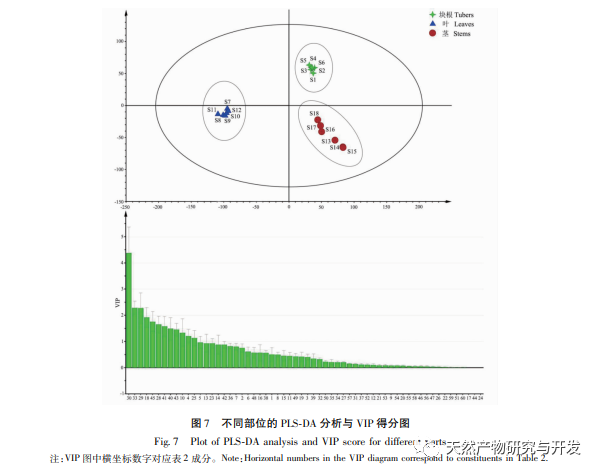
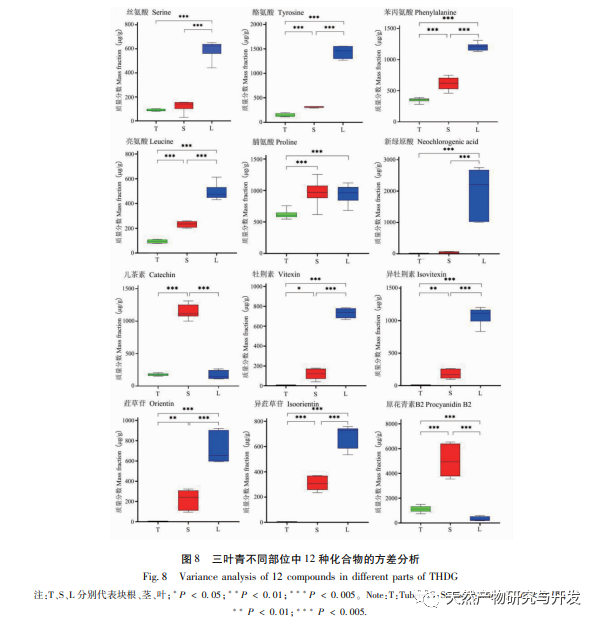
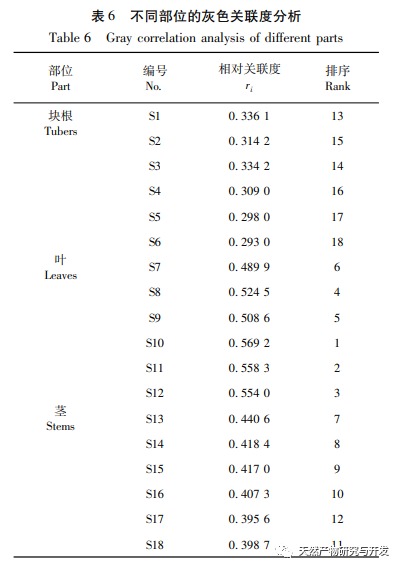
The research results indicate that there are significant differences in the quality of the roots, stems, and leaves of the Three Leaf Cliff Climbing Vine, and there are significant differences in the content of some components. Eight compounds were selected through PLS-DA, VIP value, and analysis of variance as active ingredient markers to distinguish different parts. Among them, vitexin, isovitexin, paeoniflorin, and isopaeoniflorin showed a high to low trend in content in leaves, stems, and tubers, and were all flavonoid carbon glycoside compounds. Due to the strong DPPH radical scavenging ability of flavonoid carbon glycosides, the results of this experiment can also provide data reference for the conclusion that the antioxidant activity of the aboveground part of the Three Leaf Cliff Climbing Vine is higher than that of the underground part. In addition, the content of proanthocyanidin B2 in stems is as high as 5029.22 μ g/g, which is 4 times and 15 times higher than that in roots and leaves, respectively. It also has significant antioxidant and anti-tumor activities, indicating that proanthocyanidin components may play an important role in metabolic activities in different parts of the plant. The relative correlation (ri) value in grey relational analysis can be used to rank the quality grades of root, stem, and leaf samples. The final results show that leaf samples (S7-S12) rank higher, indicating that their quality is better than that of stem and root samples.
In summary, this study established a method using ultra fast high-performance liquid chromatography triple quadrupole linear ion trap mass spectrometry (UFLC-QTRAP-MS/MS) to simultaneously determine 60 active ingredients in different parts of the Three Leaf Cliff Climbing Vine, and compared and evaluated different parts using multivariate statistical analysis. The content determination results indicate that there are abundant types of active ingredients in various parts, among which the total content of multiple active ingredients in the leaves is higher than that in the stems and tubers. In addition, multivariate statistical analysis such as principal component analysis showed significant differences in the active ingredients of different parts of the Three Leaf Cliff Climbing Vine, and revealed eight significantly different components, namely vitexin, isovitexin, icariin, isoicariin, proanthocyanidin B2, tyrosine, phenylalanine, and leucine. Grey correlation analysis indicates that the quality of leaf parts is relatively better, followed by stems and tubers. The results of this study provide a methodological reference for the determination and quality control of active ingredients in different parts of the Three Leaf Cliff Climbing Vine, and lay the foundation for the rational development and utilization of its resources.

 English
  Danish
  German
  Hungarian
  French
  Russian
  Spanish
  Turkish