
Research progress on chemical composition, pharmacology, toxicity, and quality marker prediction analysis of betel nut
Areca Semen is a commonly used natural medicine and is the mature seed of Areca catechu L., a plant in the palm family. The names of traditional Chinese medicine include betel nut, Qingzai, betel nut jade, etc., which are mainly used to drive away parasites and aid digestion; The Mongolian medicine is called Gaoyou and Bata, mainly used to treat kidney diseases such as chronic kidney disease, tapeworm disease, dental caries, and toothache; The Dai medicine is called Ge Ma and Mai Gang, mainly used to treat insect accumulation, food stagnation, abdominal distension and pain, malaria, athlete’s foot, phlegm addiction, etc; Hani medicine is called “Lao Xi” and is used to drive away tapeworms and roundworms; Li medicine is called Zhilong and Yilong, used to treat tapeworm disease, and its water decoction is made into eye drops to treat glaucoma. The name of the Wei medicine is Fu Fei Li, which is used to treat tapeworm, roundworm, ginger leaf worm disease, abdominal pain caused by worm accumulation, diarrhea caused by stagnation, damp heat periodontitis, tooth bleeding, excessive vaginal discharge, premature ejaculation and nocturnal emissions, poor urination, blocked meridians, bleeding, forgetfulness, etc; The Tibetan medicine is called Guoyu, which is used to treat kidney diseases, toothache, food accumulation and bloating, drive tapeworms, dysentery, etc; The name of Zhuang medicine is Mangbing Bing, which is used for eliminating malaria, clearing valleys, and repelling insects. The chemical components of betel nut include polyphenols, alkaloids, fatty acids, etc. It is generally believed that alkaloids and polyphenols are its main medicinal ingredients. Betel nut has various pharmacological effects such as promoting digestion and anti depression, as well as toxic effects such as oral cancer and reproductive toxicity. Based on the review of relevant literature on the research progress of betel nut, this article uses the theory of traditional Chinese medicine quality marker (Q-Marker) to predict and analyze the components of betel nut Q-Marker from the aspects of unique chemical components, measurable chemical components, traditional medicinal efficacy, processing effects on components, blood components, and prediction. This provides a theoretical basis for clarifying betel nut Q-Marker and formulating scientific quality standards.

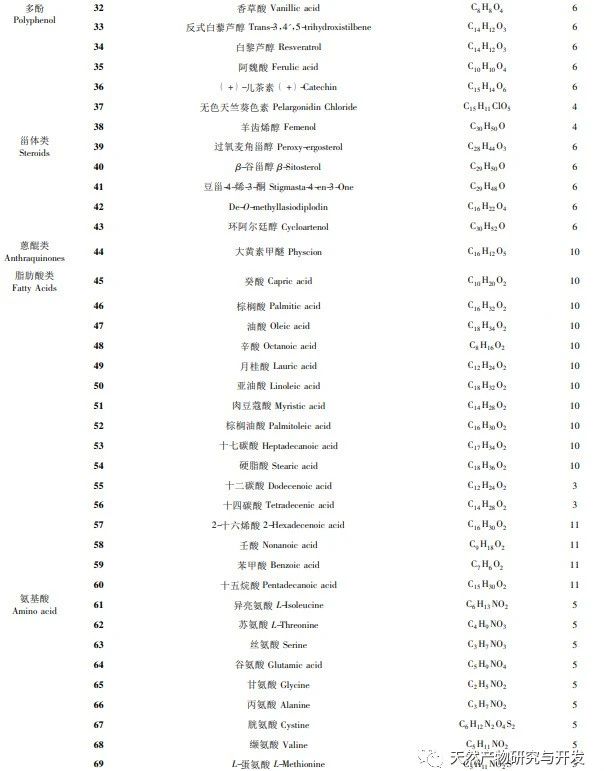

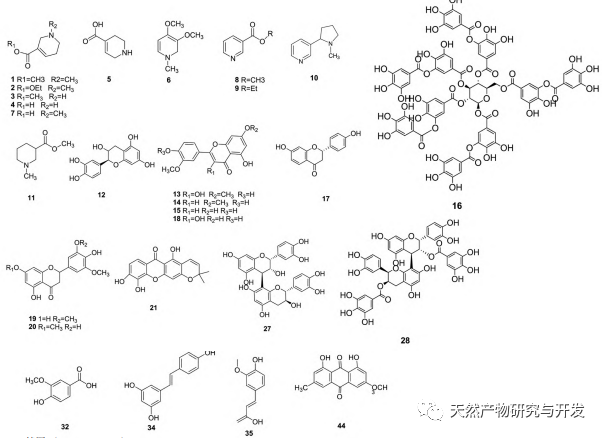
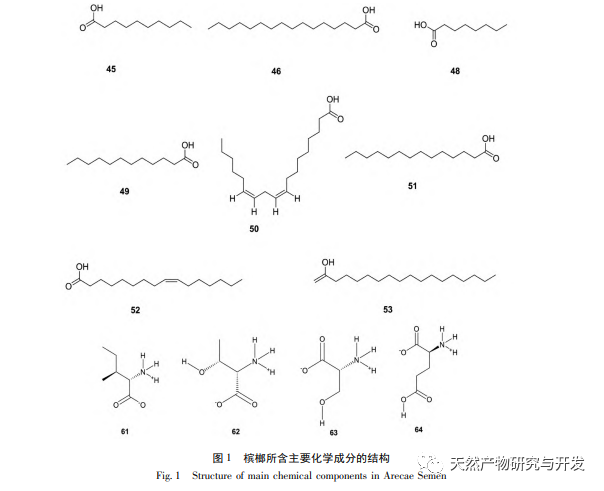

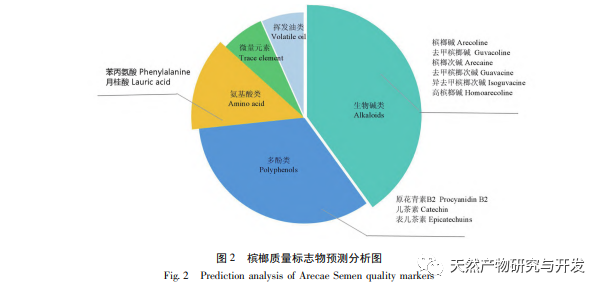
Betel nut, as a traditional Chinese medicine (ethnic medicine), has a long history of application, wide efficacy, and good clinical effects. At present, scholars at home and abroad have achieved a series of research results in the chemical composition, pharmacological effects, and quality evaluation of betel nut. On the basis of a review of the chemical composition, pharmacological effects, and toxic effects of betel nut, this article conducts literature analysis and speculation on the possible candidate Q-Marker of betel nut based on its unique chemical composition, measurable chemical composition, traditional medicinal efficacy, compatibility of drugs, the influence of processing on chemical composition, and blood components. Import the speculated candidate components that can be used as Q-markers for betel nut into an Excel spreadsheet, and plot the results based on their frequency of occurrence as shown in Figure 2. From the figure, it can be seen that the candidate components of Betel Nut Q-Marker include alkaloids, polyphenols, amino acids, volatile oils, and trace elements, among which alkaloids and phenols are the most critical. Among the alkaloids, there are six components: arecoline, demethylated arecoline, arecoline, demethylated arecoline, isodemethylated arecoline, and high arecoline; Polyphenolic components include three types: anthocyanins B2, catechins, and epicatechins; Amino acid compounds, including phenylalanine and lauric acid, are the most critical components.
In summary, it is recommended to use alkaloids and phenols as the preferred substances for betel nut quality markers, and amino acids as alternative substances. Among them, alkaloids such as arecoline, demethylated arecoline, arecoline, and demethylated arecoline can be used as key candidate Q-markers for areca nut. This study has preliminarily identified reference compounds for betel nut quality markers, providing reference for the establishment of its quality standard system and scientific basis for promoting the comprehensive development and clinical application of betel nut.

 English
  Danish
  German
  Hungarian
  French
  Russian
  Spanish
  Turkish