
Study on the anti-tumor activity of phenylspirodriane compounds in Stachybotrys sp. CPCC401591, a fungus belonging to the grape ear mold genus
Stachybotrys, a fungus belonging to the Stachybotryaceae family, is a saprophytic or weakly parasitic species that is widely present in soil, plants, and humid indoor environments. The secondary metabolites produced by this genus of fungi have a rich variety of structural types, including trichothecenes, diterpenes, phenylspiradrianes (PSM), polyketones, anthraquinones, cyclic peptides, and alachalasins. These compounds have significant biological activities in anti-tumor, antibacterial, anti malaria, antiviral, cholesterol esterase inhibition, and anti-inflammatory aspects. In recent years, novel active compound molecules derived from the genus Botrytis have been continuously isolated and reported. Li et al. isolated and identified monotrichothecenes from S. chartarum WGC-25C-6 isolated from sponges. Among them, compounds such as mytoxin A and satrotoxin G exhibit significant anti-tumor activity against HCT-116, HepG2, BGC-823 and other cell lines, with IC50<0.01 μ mol/L. Yang et al. identified six diterpenoid compounds from the marine derived paper grape fungus J403-SS6. Atranone Q showed significant inhibitory effects on pathogenic bacteria including Candida albicans and Enterococcus faecalis, with MIC values of 8 and 16 μ g/mL, respectively.
The PSM compound family is vast, and since 1980, Miyazaki et al. have been studying grape ear mold S K-76, a complement inhibitor, was isolated from complementi, and nearly 120 PSM class compound molecules have been identified and isolated. Ma et al. from S Eleven PSM class monomeric compounds were isolated from chartarum MXH-X73. Studies have shown that stacky botrin D can inhibit wild-type HIV-1 and non nucleoside reverse transcriptase inhibitors (NNRTIs) tolerant HIV (such as HIV-1 RT-K103N), with EC50 values ranging from 6.2 to 23.8 μ mol/L. Liu et al. from S Eleven PSM class dimer molecules (bistachibotyrosins L~V) were isolated from Chartarum CGMCC 3.5365. Among them, compound bistachibotyrosin L exhibited significant antitumor activity against HepG2, HCT-116, NCI-H460 and other cell lines, with IC50 values ranging from 1.8 to 3.5 μ mol/L.
This study selected the endophytic fungus Stachybotrys sp. CPCC 401591 for in-depth research. Combining OSMAC technology, LC-MS/MS molecular network analysis, and PSM compound UV absorption characteristics, the ethyl acetate phase separation and purification of rice solid fermentation products from strain CPCC 401591 were studied. At the same time, combined with tumor cell screening models such as the human liver cancer cell line HepG2, we aim to extract and isolate anti-tumor active molecules from this strain. Research has shown that the grape ear mold fungus CPCC 401591 can produce PSM compounds and is a resource bacterium worthy of further investigation.


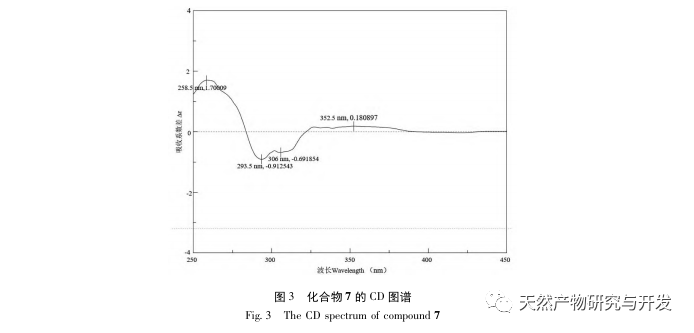
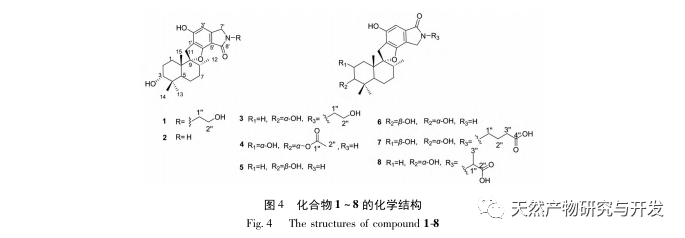

This study utilized OSMAC technology and LC-MS/MS molecular network analysis strategy, combined with various chromatographic and modern spectroscopic methods, to isolate 8 PSM compounds from grape ear fungus Stachybotrys sp. CPCC 401591. In recent years, mining and analyzing genomic data of filamentous fungi have found that most fungi typically contain 40-60 biosynthetic gene clusters (BGCs) related to natural product biosynthesis. However, the currently isolated and identified metabolites are still the “tip of the iceberg”. Most BGCs in the genome of filamentous fungi are silent or concealed, and the possible encoded ‘dark matter’ has not yet been identified. OS-MAC technology does not target the activation of specific silenced gene clusters, but rather the systematic modification of easily operable culture parameters (including medium composition, pH value, and culture temperature) to obtain structurally novel bioactive molecules. This makes OSMAC technology a low-cost, efficient, versatile, and relatively simple research method for activating microbial secondary metabolism. This study focuses on the strain CPCC 401591 and uses the OSMAC strategy to investigate the effects of PDB, BY, F2, and rice fermentation medium on fungal secondary metabolites. Based on the abundance and yield of secondary metabolites in the strain, rice culture medium was determined to be the optimal fermentation medium, indicating that OSMAC technology significantly improves the efficiency of mining secondary metabolites in this strain. At the same time, this study applied the GNPS molecular network analysis strategy to analyze the ethyl acetate phase of the fermentation extract of strain CPCC 401591. The secondary mass spectrometry data of the analyte was compared with the compound mass spectrometry data in the database to quickly identify the compound categories contained in the analyte sample and further assist in the efficient discovery of bioactive molecules.
PSM compounds are currently only isolated from fungi of the genera Botrytis and Umeda, making them characteristic molecules of these two types of fungi. The compound stackybotrin D exhibits significant anti HIV activity, with EC50 values ranging from 6.2 to 23.8 μ M against HIV-1 wt, HIV-1 RT-K103N and other mutant strains. Jia et al. found that the IC50 values of bistachybotrysin K on tumor cell lines such as HCT116 and NCI-H460 ranged from 1.1 to 4.7 μ M. This study investigated the secondary metabolites in the strain Stachybotrys sp. CPCC 401591. By combining the characteristic UV absorption of the compounds (230, 285, 330nm) and utilizing various chromatographic and modern spectroscopic techniques, the structures of eight PSM compounds were isolated and determined. Further combined with GNPS analysis, it was found that the fermentation extract of the strain still contained multiple monomers and PSM class dimer compound molecules, but the monomer compounds could not be obtained due to the low content. Therefore, more PSM molecules can be found by further increasing the fermentation yield, optimizing the fermentation conditions, and combining HPLC-UV-MS technology. At present, we have completed the whole genome sequencing of the strain Stachybotrys sp. CPCC 401591, and located two possible biosynthetic gene clusters psd1 and psd2 of PSM compounds through genome mining methods. Both gene clusters contain genes encoding polyketide synthase and sesquiterpene synthase, while this gene cluster encodes abundant post modifying enzymes (including oxidase P450s, short chain dehydrogenase, and acetyltransferase, etc.). This lays the foundation for our future research on using gene knockout strategies to elucidate the biosynthesis pathways of PSM compounds and identify the functions of key biological enzymes. Therefore, this study indicates that the grape ear fungus Stachybotrys sp. CPCC 401591 can produce PSM compounds, enriching the structural diversity of its secondary metabolites. It is an important resource bacterium worthy of further research.

 English
  Danish
  German
  Hungarian
  French
  Russian
  Spanish
  Turkish