
Sericulture is one of the earliest agricultural activities in China, and in ancient times, there were sayings that “Fuxi transformed the silkworm” and “Rayon started the silkworm”, and the silkworm also became one of the most important economic insects in ancient China.
Silk and silkworm pupae are the main economic value of silkworms, silk as a textile raw material used very early in China to silk production of silk is one of the important features of Chinese civilization, the Silk Road has become a connection between ancient China and Asia, Europe, Africa’s economic corridor; pupa development and utilization of silkworms at the time of the time than the silk a lot later, and the degree of its use is not high, the early development of the performance of the main to eat.
China’s sericulture volume ranks first in the world, the number of silkworm pupae is considerable, if we can fully develop and utilize the nutrition and active ingredients in silkworm pupae and on this basis, the extensive use of silkworm pupae resources, not only can save resources, waste into treasure, but also improve the added value of silkworms and to extend the industry chain of the sericulture industry, so as to achieve the high-quality development of sericulture industry and significant economic benefits.
Nutrition and active ingredients in silkworm pupa composition
1.1 Nutritional composition of silkworm pupa
The human body needs to obtain nutrients from food, mainly including protein, fat, vitamins and so on. Silkworm pupae are very rich in nutrients, Bai Hao et al. detected that the crude protein content of silkworm pupae 65.5%, crude fat content of 23.8%, total sugar content of 1.2%, according to some other studies show that silkworm pupae also contain Ca, P, Fe and other minerals and vitamins, hormones and other components.
Protein content of silkworm pupae accounted for the proportion of dry mass content reached more than 50%, and silkworm pupa protein structure composition is similar to human proteins, easy to be absorbed by the human body, and its absorption rate of up to 90% or more.
Silkworm pupa protein consists of 18 kinds of amino acids, Liang Guiqiu et al. 4 different varieties of silkworm pupa research, its amino acid content is different, but glutamic acid, aspartic acid, glycine, valine, leucine, alanine, lysine, and arginine and other content of the total amino acid content of the proportion of the proportion of the difference is not large, and accounted for a very high proportion of the 8 kinds of essential amino acids nutritional ratios in line with the FAO/ WHO (Food and Agriculture Organization of the United Nations and the World Food and Agriculture Organization), the proportion of essential amino acids, the proportion of the body is in accordance with the human body. WHO (Food and Agriculture Organization of the United Nations and World Health Organization) requirements. The oil of silkworm pupa accounts for 25-30% of the dry mass, of which unsaturated fatty acids account for more than 70% of the total oil of silkworm pupa.
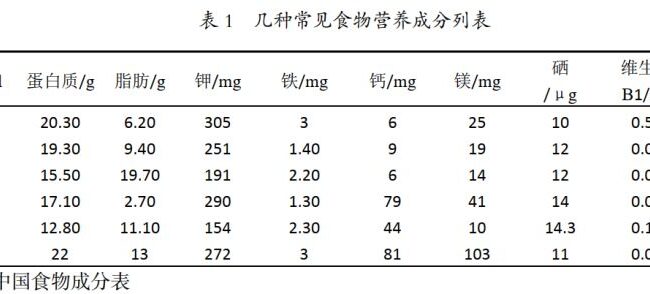
Through the comparison of the contents of silkworm pupae and several commonly used foods in Table 1, it can be seen that silkworm pupae are not only rich in protein, fat, iron, calcium, magnesium, vitamin B2, but also potassium, selenium, vitamin B1, niacin and other contents are also very high.
1.2 Active ingredients of silkworm pupa
Biologically active substances are biologically active compounds contained in plants and animals, which can cause various biological effects after interacting with the organism, including sugars, lipids, proteins, peptides, sterols, alkaloids, glycosides, volatile oils and other types of substances. Silkworms through the consumption of mulberry leaves to the active ingredients for effective enrichment, silkworms in the process of metamorphosis and development of its active ingredients effectively preserved in the pupa, making the pupa rich in highly active substances.
The extractable chitin in the silkworm pupa is up to 50% or more, while the extractable chitin in the crab is only 20~25%, and the useful chitin in the silkworm pupa is twice as much as that in the crab. In Jin Chao’s study, it was shown that the DNJ content in the 5th instar larvae of 70 species of domestic silkworms ranged between 0.03-0.39%, the total flavonoid content ranged between 0.38-1.40%, and the total alkaloid content ranged between 0.87-1.55 %. In addition, silkworm pupa also contains phospholipids, polysaccharides, ergosterol, adrenaline, adenine, hypoxanthine, choline and a variety of protein hormones and other active ingredients.
Progress of research on the application of nutritional and active substances of silkworm pupae
2.1 Application research in the food industry
Silkworm pupa has great utilization value in the food industry.
Firstly, it is directly used as food, through frying, steaming, deep-frying and other cooking treatments, and can be eaten after sufficiently heated to maturity, which is a kind of food with high nutritional value and delicious taste.
Secondly, it is used as food additives, due to the selective permeability of chitosan to O2, CO2, C2H4, it can be used as food preservation and antiseptic.
Third, it is used as diet food, the fatty acids in silkworm pupa are mostly unsaturated fatty acids, of which α-linolenic acid has the effect of lowering blood lipids, scavenging free radicals and antioxidant, which is a new type of fat source with great potential.
Fourth, as a health food (functional food), Mu Lixia et al. studied the silkworm pupa protein (SPP) enzyme products on the proliferation of tumor cells MGC-803 cells in vitro has a strong inhibitory effect of alkaloids have anti-tumor, anti-cancer, lowering glucose and other efficacy, DNJ has insulin sensitization, improve the role of insulin resistance.
2.2 Application research in medicine
In addition to its high food value, silkworm chrysalis is also of high value in medicine. The medical efficacy of silkworm chrysalis has been recorded in the Compendium of Materia Medica and the Compendium of Medical Sciences, which respectively say that it can “cure children’s noma and emaciation, grow muscle, reduce fever, and remove roundworms” and “harmonize the spleen and stomach, dispel wind-dampness, and grow yang qi”.
The protein peptide of silkworm chrysalis extracted by modern genetic engineering and enzymatic technology has good effect in the prevention and treatment of diabetes, arteriosclerosis, hypertension, cirrhosis and coronary heart disease, and it can be used in the treatment of leukopenia, as well as acute and chronic, toxic hepatitis and physiological decline and other diseases.
Chitosan can be used as a hemostatic agent by cross-linking with the surface of erythrocytes to produce erythrocyte adhesion, or undergoing some kind of re-polymerization reaction in the bloodstream, causing erythrocyte aggregation for the purpose of hemostasis.
DNJ is highly effective in inhibiting the activity of small intestinal glycosidase, and has been used in the treatment of type II diabetes mellitus. Arginine has obvious curative effects on leukopenia, chronic hepatitis, cardiovascular and cerebrovascular diseases and malnutrition, etc. It also has the effect of improving sexual function because it is an important raw material of male sperm protein. In addition, silkworm pupa has inhibitory effect on Escherichia coli, Pseudomonas aeruginosa and Staphylococcus aureus, and the rich chitin in silkworm pupa has the function of improving immunity and strengthening liver.

 English
  Danish
  German
  Hungarian
  French
  Russian
  Spanish
  Turkish