
Study on the antioxidant and anti-inflammatory effects of ethyl acetate in hibiscus leaves and UPLC-Q-Orbitrap HRMS analysis
Hibiscus mutabilis leaves are dried leaves of Hibiscus mutabilis L., a plant in the Malvaceae family. They are included in the 2020 edition of the Chinese Pharmacopoeia and are mainly produced in Sichuan, Hunan, Guangdong, Yunnan, and other regions of China. Qi is mild, the taste is pungent and flat, and it has the effects of cooling blood, detoxification, reducing swelling, and relieving pain. The “Shennong Bencao Jing” records: “With the qi of late summer and early autumn, it has a pungent taste and belongs to the category of Jin Hua, which can clear the lungs. Its qi is calm and cool, which can cool the blood, dissipate heat, detoxify, and treat all kinds of carbuncles, swelling, toxins, and ulcers, as well as relieve pus and pain, and children’s malnutrition.” Modern pharmacological research has shown that Mufu Rong Ye has good antibacterial, anti infective, and antiviral effects, and has a protective effect on renal ischemia-reperfusion injury and chronic liver injury. The main chemical components in hibiscus leaves include flavonoids, organic acids, phenols, amino acids, tannins, sugars, steroids, and volatile oils.
The research team has preliminarily determined that the ethyl acetate fraction of hibiscus leaves has good antioxidant activity based on their scavenging rates against DPPH and ABTS free radicals. Flavonoids may be one of the pharmacological substances of hibiscus leaves. However, in vitro chemical methods cannot accurately reflect the true role of active substances in organisms. Therefore, this study constructed an H2O2 induced oxidative stress damage model in HaCaT cells, measured the production of reactive oxygen species (ROS), explored the protective effect of different polar parts of Hibiscus leaves on oxidative stress damage in HaCaT cells, established an LPS induced RAW 264.7 cell inflammation model, measured the degree of inhibition of cell inflammatory factor expression by the ethyl acetate part, and further studied its antioxidant and anti-inflammatory effects at the cellular level. Based on UPLC-Q-Orbitrap HRMS technology, the chemical composition of the ethyl acetate part of Hibiscus leaves was identified, and the precise analysis of the active parts revealed that the main components of the ethyl acetate part were flavonoids and their glycosides. This study aims to comprehensively explain the pharmacological substance basis of Hibiscus leaves. Provide scientific basis for its development and utilization.
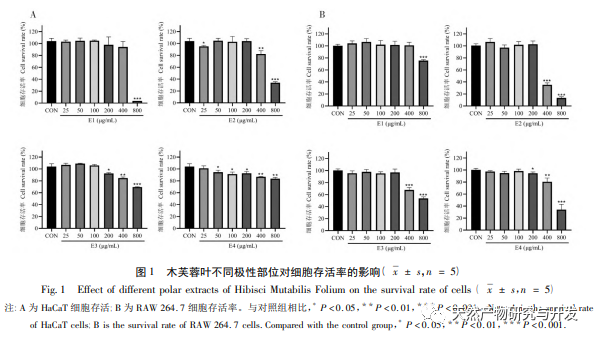

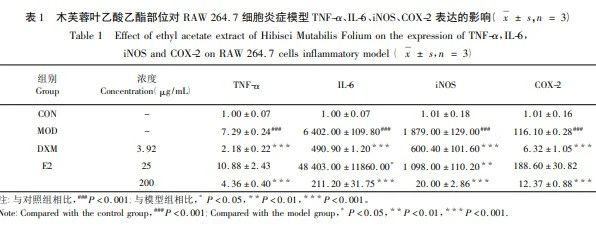
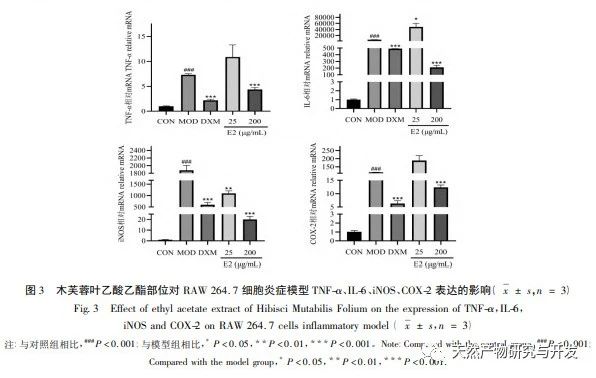

ROS is a product of cellular oxidative metabolism, and excessive increase or sustained presence can cause cellular oxidative damage. H2O2 can induce the production of excessive ROS, making it an ideal inducer in oxidative stress injury models. HaCaT cells are easy to obtain, adaptable, and stable. The use of H2O2 to induce HaCaT cell oxidative stress injury models is a common cell model for evaluating antioxidant activity. TNF – α, IL-6, iNOS, and COX-2 are typical inflammatory factors, LPS is a common pro-inflammatory factor, and macrophages are important participants in the inflammatory response, mediating the development of various immunopathological processes during inflammation. The use of LPS to induce RAW 264.7 cells is a classic cell model for studying inflammatory factors. At present, these two methods have been recognized as evidence supporting the naming of cosmetics for their anti wrinkle and soothing effects in the published group standards. This study established a HaCaT cell oxidative damage model and found that the ethyl acetate fraction in different polar parts of hibiscus leaves had strong antioxidant activity. Within the concentration range of 25-200 μ g/mL, the ethyl acetate fraction in hibiscus leaves significantly reduced ROS (P<0.001) content, alleviated oxidative stress, and had a good protective effect on the cell oxidative damage model; Further exploration of the anti-inflammatory effect of ethyl acetate extract from Hibiscus syringae leaves was conducted, and a RAW264.7 cell inflammation model was constructed. When the concentration of ethyl acetate extract was 200 μ g/mL, it significantly inhibited the expression of TNF – α, IL-6, iNOS, and COX-2 mRNA in RAW 264.7 cells (P<0.001), demonstrating good anti-inflammatory activity. This further elucidated the antioxidant and anti-inflammatory active sites of Hibiscus syringae leaves, providing a theoretical basis for further research on pharmacological activity and cosmetic application development.
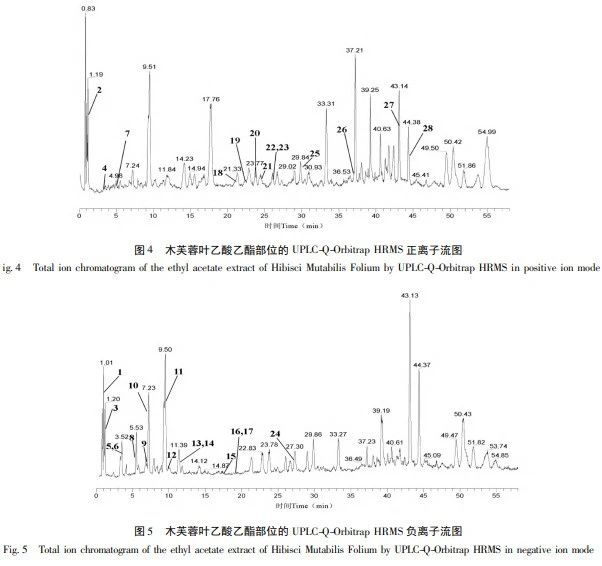
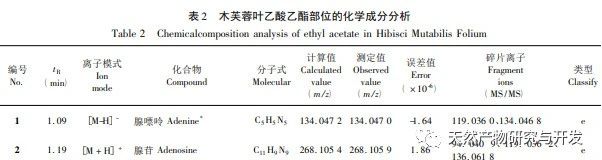
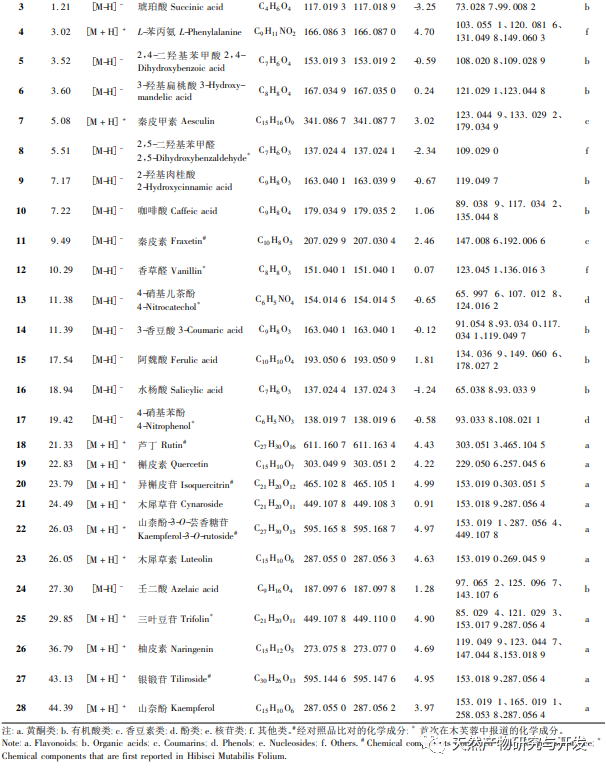
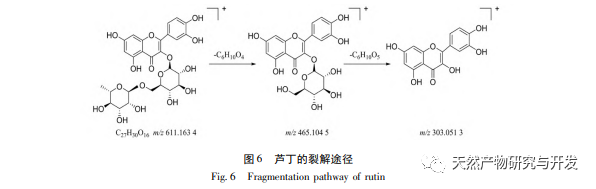
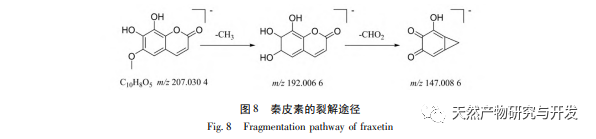
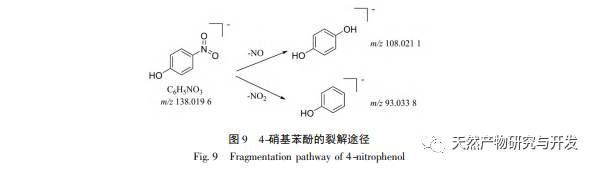
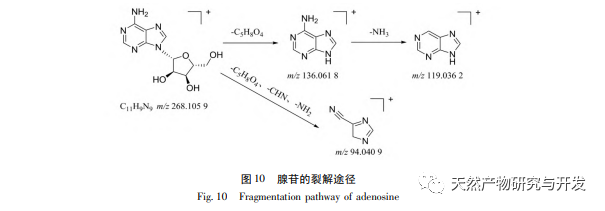
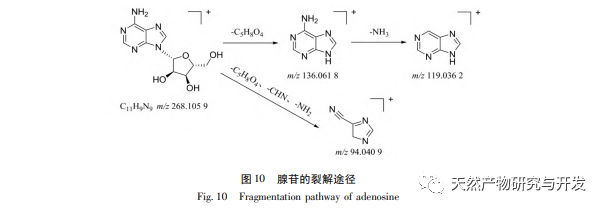
The ultra-high performance liquid chromatography quadrupole electrostatic field orbital trap high-resolution mass spectrometry technology is suitable for the analysis of complex multi-component systems in traditional Chinese medicine, and has the characteristics of high resolution, high quality accuracy, and high detection efficiency. This study, for the first time, used UPLC-Q-Orbitrap HRMS technology to comprehensively qualitatively analyze the complex components in the effective parts of ethyl acetate in hibiscus leaves. 28 chemical components were identified, including 10 flavonoids, mainly rutin, naringin, isoquercitrin, etc; There are 9 organic acid components, mainly including ferulic acid, caffeic acid, salicylic acid, etc; There are also coumarins, phenols, nucleosides, 2 each, and 3 other components, which are consistent with reports that hibiscus leaves are rich in flavonoids and phenolic acids. Flavonoids contain phenolic hydrogen molecules that can act as hydrogen donors, making them strong antioxidants with excellent anti-inflammatory activity. Rutin can increase the activity of catalase (CAT) and superoxide dismutase (SOD) in Parkinson’s disease (PD) models; Silver linden can inhibit the production of prostaglandin E2 (PGE2) and the activation of NF – κ B and MAPK signaling pathways; Quercetin can inhibit ROS mediated liver cancer by upregulating enzymes such as SOD and CAT, as well as non enzymatic antioxidant defense systems such as glutathione (GSH); Isoquercetin can increase SOD and decrease MDA levels, inhibit the MEK/ERK signaling pathway, and suppress oxidative stress response. Except for azelaic acid, all organic acid components are phenolic acids. Numerous studies have shown that phenolic acids have strong reducing properties due to the polyphenolic hydroxyl groups in their molecular structure, making them a typical class of compounds with free radical scavenging effects. For example, ferulic acid can enhance the antioxidant capacity of mouse serum and improve the negative effects of antibiotics on intestinal metabolism and inflammatory response in mice; Salicylic acid can induce the improvement of antioxidant enzyme activity and alleviate the biological oxidation of reactive oxygen species. This study found that these two types of components are the main chemical components of the ethyl acetate part of hibiscus leaves, further revealing that the pharmacological substance basis of hibiscus leaves for antioxidant and anti-inflammatory effects is mainly composed of flavonoids and organic acids. At the same time, the study also discovered a new flavonoid component in the leaves of Hibiscus syringae that has not been reported, which is trifoliate glucoside, two new phenolic components are 4-nitrophenol and 4-nitrocatechol, one new nucleoside component is adenine, and two new aldehyde components are 2,5-dihydroxybenzaldehyde and vanillin, enriching the chemical composition library of Hibiscus syringae leaves.
In summary, the ethyl acetate extract from the leaves of Hibiscus syringae can greatly alleviate cellular oxidative damage, resist oxidative stress response, and inhibit the expression of inflammatory factors. Flavonoids and organic acids may be the basis of its pharmacological substances, providing a theoretical basis for further research on the antioxidant and anti-inflammatory mechanisms of Hibiscus syringae leaves and the development and utilization of natural products.

 English
  Danish
  German
  Hungarian
  French
  Russian
  Spanish
  Turkish