
Exploring the mechanism of frankincense in treating acute kidney injury based on network pharmacology and in vitro cell experiments
Acute kidney injury (AKI) refers to the sudden and continuous decline of renal function caused by a variety of causes and pathogenesis. It is one of the common critical diseases in clinical practice, with a high incidence rate, recurrence rate and mortality. According to statistics, there are approximately 13 million cases of illness worldwide each year, and due to a lack of treatment drugs and strategies, about 1.7 million patients die each year, with 85% of patients in developing countries. Stabilizing blood pressure and increasing effective circulating blood volume are crucial in the prevention and treatment of AKI. Therefore, finding drugs to prevent and treat AKI is of great significance in saving the lives of patients with this disease. Traditional Chinese medicine has the characteristics of multiple components and targets, and has made significant progress in the prevention and treatment of AKI.
Olibanum is derived from the olive family plant Boswellia carterii Birdw and the genus B Bhaw dajiana Birdw. Resin seeping from bark. Warm in nature, pungent and bitter in taste, it has the effect of “promoting blood circulation and relieving pain, reducing swelling and promoting muscle growth”. The main component of frankincense for promoting blood circulation and relieving pain is frankincense acid compounds. Modern research has shown that frankincense has antibacterial, anticancer, anti-inflammatory, antioxidant and other activities. Based on its functional characteristics, further research is needed to investigate the mechanism of frankincense on AKI.
This study screened the active ingredients of frankincense through network pharmacology, constructed a drug active ingredient disease target network, and verified it through in vitro cell experiments. The mechanism of frankincense in preventing and treating AKI was elucidated, providing a reliable theoretical basis for its development as an anti acute kidney injury drug.





Western medicine believes that the occurrence of AKI is closely related to renal ischemia and hypoxia. Currently, there is still a lack of effective treatment methods and intervention measures in clinical practice, mainly through symptomatic treatment to improve the patient’s disease status. Traditional Chinese Medicine categorizes the clinical characteristics of AKI into categories such as “Longbi”, “Guange”, “Edema”, and “Drowning Poison”. Therefore, the basic principles of treatment include clearing heat and detoxifying, promoting blood circulation and removing blood stasis, purging heat and removing water, and promoting the circulation of organs and eliminating turbidity. Frankincense has the effects of promoting muscle growth, stopping bleeding, activating blood circulation, removing blood stasis, reducing swelling, and relieving pain. It is commonly used in clinical practice to treat blood stasis or rheumatism. Therefore, adding blood activating and stasis removing drugs in the early and middle stages of acute kidney injury has important preventive and therapeutic effects on improving patients’ kidney function, reducing clinical manifestations such as hematuria, and slowing down the progression of the disease.
This study systematically analyzed the material basis and mechanism of action of frankincense’s “multi-component multi-target multi pathway” treatment for AKI using network pharmacology methods. Numerous experiments have shown that frankincense acid is considered the most biologically active component in frankincense. The most significant are anti-inflammatory and anti-tumor properties, as well as many other pharmacological activities such as anti ulcer, immune regulation, lipid-lowering, renal protection, antibacterial effects, etc. The research results indicate that AK-BA, α – BA, and other active ingredients are the main active ingredients for treating AKI. There are literature reports that α – BA can inhibit the production of pro-inflammatory cytokines (TNF – α and IL-1 β) stimulated by LPS in U937 macrophages, confirming its anti-inflammatory properties in vitro. The bioactive component of frankincense, pentacyclic triterpenoids, blocks the biosynthesis of leukotrienes through 5-lipoxygenase and exerts its anti-inflammatory effect. Studies have shown that frankincense acid exerts a urinary tract protective effect on cyclophosphamide induced cystitis rats through antioxidant and anti-inflammatory effects.
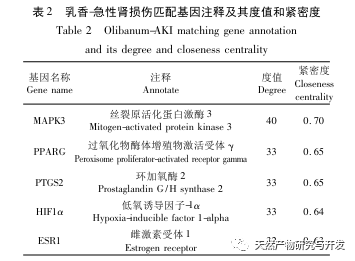
According to the PPI network, MAPK3, PPARG, PTGS2, HIF1 α, and ESR1 are the core targets of frankincense in the treatment of acute kidney injury. MAPK3 belongs to the mitogen activated protein kinase MAPK family. MAPK cascade activation is the center of multiple signaling pathways involved in physiological processes such as cell growth, differentiation, and apoptosis. PPARG belongs to the nuclear transcription factor superfamily. Experiments have proved that the PPARG deficient mice have increased glycosuria and albuminuria. With the growth of age, the mice have renal insufficiency and further aggravation of type 2 diabetes. According to reports, PPARG agonists protect the kidneys from I/R injury by inhibiting diffuse tubular necrosis and acute inflammation induced by I/R injury, and reducing plasma levels of nitric oxide and ED-1+cell infiltration. PPAR agonists have shown considerable potential in the treatment of AKI. PTGS2 is a key enzyme that converts arachidonic acid into the inflammatory mediator prostaglandin, mainly distributed on the nuclear membrane. Its expression is induced by stimuli such as inflammatory factors and tumor growth factors. Research has shown that the extract of Golden Bone Lotus dose dependently downregulates the expression of PTGS2/COX-2 mRNA, thereby exerting anti-inflammatory effects. HIF1 α is the main regulatory factor of adaptive response to hypoxia, and in the AKI model induced by renal ischemia-reperfusion, HIF1 α expression is significantly increased in renal tubules.
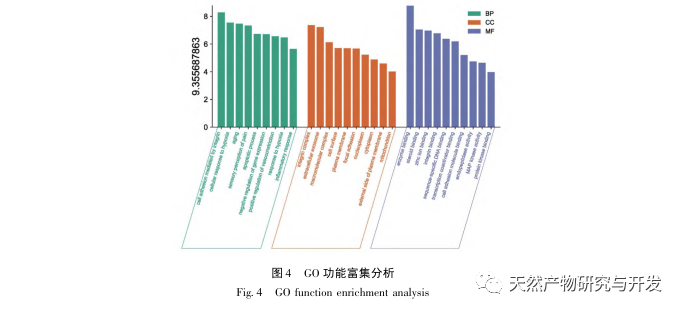
In the process of GO enrichment analysis, it mainly involves biological processes such as response to hypoxia, apoptosis, inflammatory response, molecular functions such as mitochondria, and cellular components such as endopeptidase activity, indicating that the biological pathways of frankincense in treating AKI are rich and complex. According to KEGG pathway enrichment analysis, the signaling pathway of frankincense in treating AKI is related to Toll like receptor signaling pathway, TNF signaling pathway, and NF – κ B signaling pathway. Among them, Toll like receptor (TLR) is a membrane protein receptor, and TLR4 is an important molecule that causes AKI inflammatory response. It can transcribe and release various cytokines and inflammatory mediators, triggering immune inflammatory response. Studies have shown that the severity of acute kidney injury is closely related to serum levels of TLR4 and NF – κ B. Inhibiting the TLR4 NF – κ B signaling pathway can alleviate the severity of acute kidney injury. Tumor necrosis factor (TNF) is a cytokine with a wide range of biological effects. Generally, TNF refers to TNF – α produced by macrophages. After activation, it mainly plays an important role in promoting cell growth, differentiation, apoptosis, and inducing inflammation. AKI activates the TLR4 NF – κ B signaling pathway, inducing the release of pro-inflammatory cytokine TNF – α. Therefore, strengthening the control of TLR4, NF – κ B, and TNF – α levels can alleviate acute kidney injury and promote patient prognosis improvement.
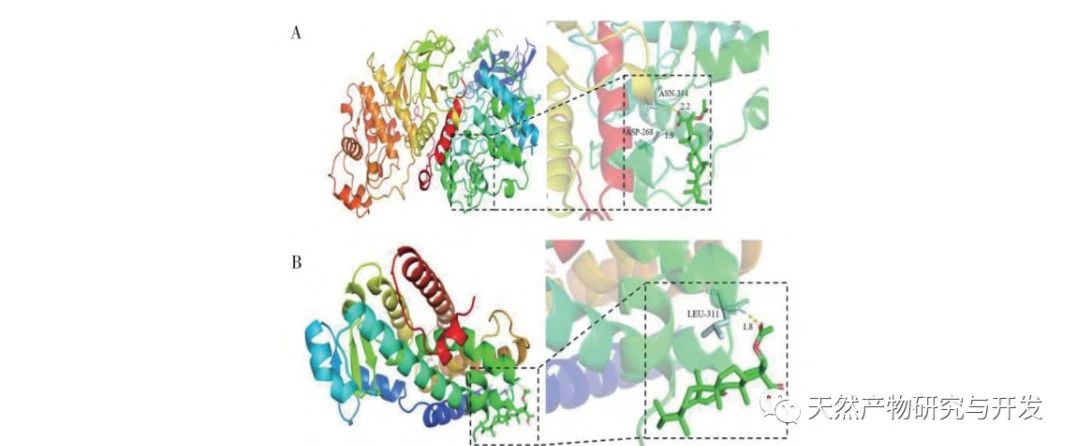
The binding energies of the main active ingredients in frankincense to MAPK3 and PPARG were determined using molecular docking method. The results showed that AKBA and α – BA have good binding abilities to MAPK3 and PPARG.
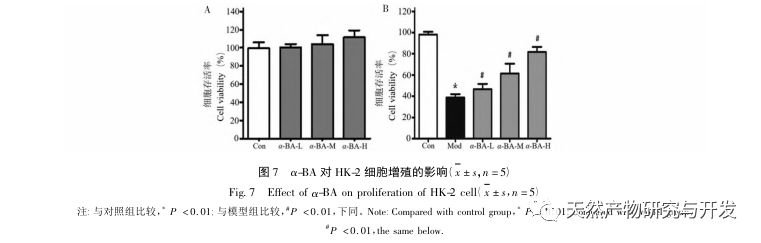
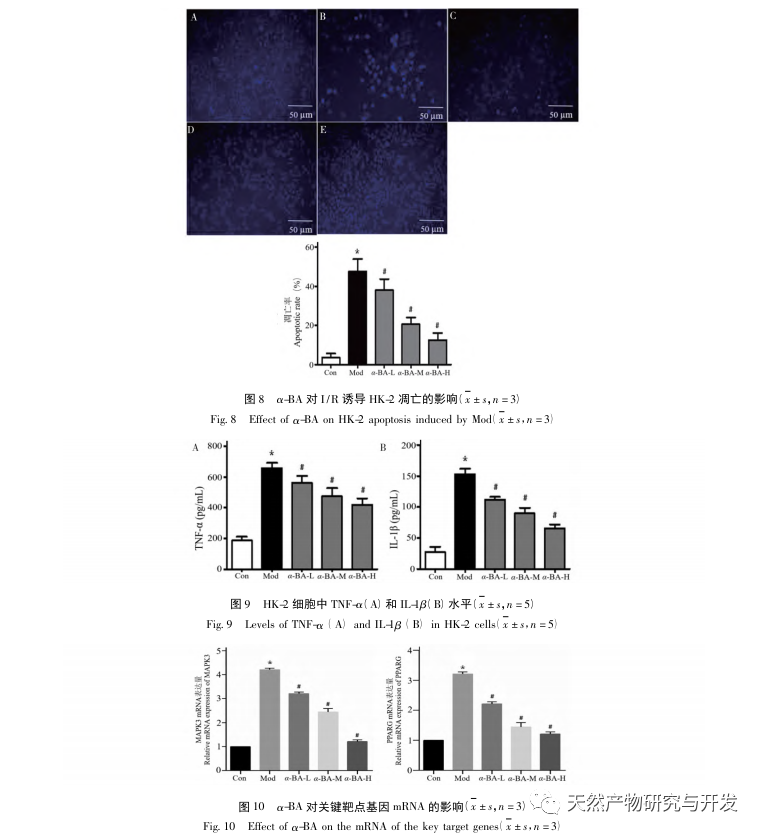
Finally, this study simulated renal I/R injury through cell culture to investigate the mechanism of action of α – BA. The research results indicate that α – BA has no toxic effect on HK-2 cells and dose dependently increases cell viability in the I/R injury model, suggesting a renal protective effect. Ho-echst 33258 staining showed that I/R treatment significantly upregulated the proportion of apoptotic cells, while α – BA significantly reduced its apoptotic cells in a concentration dependent manner. Alpha BA can significantly inhibit the inflammatory factors produced by HK-2 cells induced by I/R. Meanwhile, real-time fluorescence quantitative RT-PCR detection showed that α – BA can downregulate the expression of key targets MAPK3 and PPARG genes in the AKI process, which is consistent with the results predicted by network pharmacology.
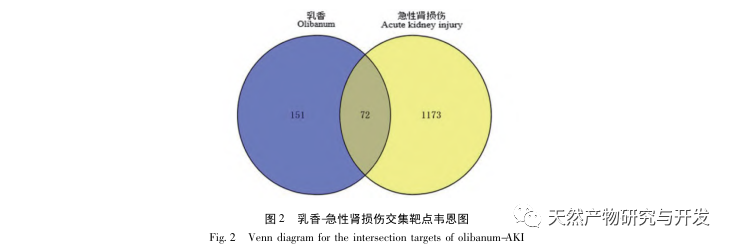
This study used traditional Chinese medicine network pharmacology to search for active ingredients and potential targets of frankincense, as well as related targets of AKI. A total of 72 intersections between active ingredients and disease targets were obtained. GO and KEGG signaling pathway enrichment analysis was then performed on these targets to predict the main active ingredients AKBA, α – BA, etc. The treatment of AKI was mainly achieved by regulating targets such as MAPK3, PPARG, PTGS2, Toll like receptors, TNF, and NF – κ B signaling pathways to alleviate ischemia, hypoxia injury, and regulate cell apoptosis. Meanwhile, in vitro cell experiments have preliminarily confirmed the accuracy and reliability of the prediction, providing a reference basis for subsequent research and clinical promotion of traditional Chinese medicine. But it still has certain limitations and needs further verification through animal experiments.

 English
  Danish
  German
  Hungarian
  French
  Russian
  Spanish
  Turkish