
Physiological effects of a combination of Ginkgo biloba outer seed coat and extracts from Platycodon grandiflorus leaves on diamondback moth and cruciferous crop seedlings
The diamondback moth (Plutella xylostella), as a frequent Lepidoptera agricultural pest worldwide, mainly feeds on the leaves of cruciferous plants such as cabbage, cauliflower, and radish. Effective control of it has significant economic and social value. Plant derived biopesticides have unique advantages in agricultural pest control due to their low resistance, minimal damage to the food chain, and lack of accumulation along the food chain. Ginkgo Bilobasarcotesta (Gbs) and Phytolacca Americana Leaf (Pal), as two easily obtainable and low-cost plant resources, have been proven to have good killing activity against the diamondback moth through their extracts. The combination of the two has a significant potential for development due to its superior efficacy in prevention and control compared to each individual agent in a specific ratio. Biopesticides, especially compound biopesticides, are mixtures of multiple active components, and their killing activity is often the result of the synergistic action of multiple components. Therefore, the mechanism of action is more complex than chemical pesticides. Among them, various pathways such as damaging the intestinal wall tissue of agricultural pests, altering the synthesis of neurotransmitters, causing dysfunction or nerve damage of neurotransmitter receptors, interfering with intracellular substance metabolism, and blocking the body’s detoxification response are common mechanisms for biological pesticides to effectively kill agricultural pests. The combination of Ginkgo biloba outer seed coat and extracts from Platycodon grandiflorus has been proven to effectively kill the diamondback moth, but its mechanism of action is still unclear. On the other hand, when plant-based biopesticides are sprayed onto plant stems, leaves, and other parts, a portion of them may enter the plant body, which may induce varying degrees of physiological responses in the plant and manifest in growth, development, and physiological indicators. Due to the different active ingredients contained in different plant derived biopesticides, the physiological responses induced may be significantly different or even completely opposite. The cruciferous plants are the main targets of the diamondback moth. When spraying a compound of Ginkgo biloba outer seed coat and extracts of Platycodon grandiflorus leaves for diamondback moth control, it is not clear what physiological response the compound will cause in cruciferous plants. Based on this, this study focused on the intestinal tissue structure of the diamondback moth and the changes in the activity of characteristic enzymes closely related to neurotoxicity, chemical detoxification, and antioxidant functions in vivo under the action of a combination of Ginkgo biloba outer seed coat and extracts of Platycodon grandiflorus leaves. The aim was to preliminarily explore the effects of the combination on the physiological functions of the diamondback moth, such as digestion, nervous system, and detoxification. The representative plant of the Brassicaceae family, radish seedlings, was taken as the research object, and the effects of the combination treatment on the growth and physiology of plant seedlings were studied, providing experimental basis for the scientific application of the combination in agricultural production.




 The toxic effect of the compound on the non lethal diamondback moth can continue until the pupal stage. More and more local characteristic plant resources have been proven to have good agricultural pest killing activity and great potential for development in the field of plant-based biopesticides. However, when evaluating the effectiveness of plant-based biopesticides, people often only focus on short-term killing activity. This study found that under the treatment of a combination of Gbs and Pal extracts, some diamondback moth larvae were not killed during the application stage, and continued to complete the subsequent growth and development process and form cocoons; Compared with the control group, the cocoon weight and eclosion rate of the cocoon were significantly reduced, indicating that the toxic effect of the compound agent ingested into the diamondback moth is not limited to the short time window of the larval stage, but spans all stages of the diamondback moth’s life cycle, even the pupal stage. In recent years, leaf extracts from plants such as Centella asiatica, Eucommia ulmoides, and Eucalyptus grandiflorus have also been shown to have significant inhibitory effects on the pupation rate and pupal weight of the diamondback moth. It can be seen that plant-based biopesticides may affect the entire life cycle of diamondback moth and other herbivorous insects from larvae to adults, thus playing a certain role in agricultural pest control during the pupal and adult stages that people did not pay much attention to before. A study has found that the appropriate concentration of Ginkgo biloba outer seed coat extract not only did not inhibit the yield and quality of silkworm cocoons, but also improved these two production indicators of silkworm cocoons. Based on this, we preliminarily speculate that the inhibitory effect of the compound agent on the cocoon weight and eclosion rate of diamondback moth in this study mainly comes from the extract of the leaves of Platycodon grandiflorus or the result of the interaction between the two extracts.
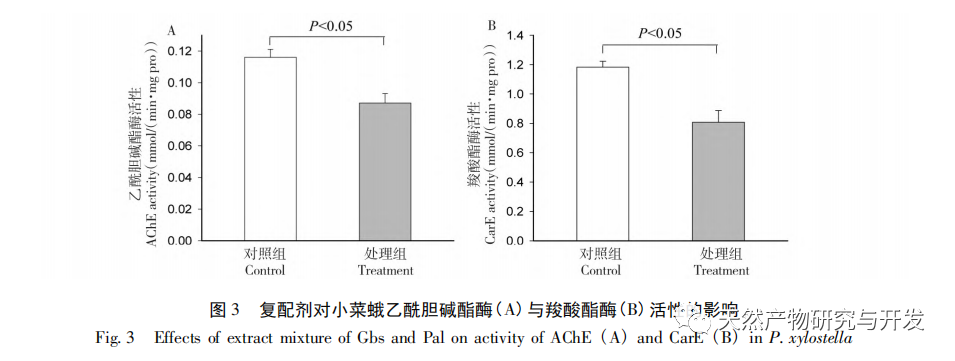
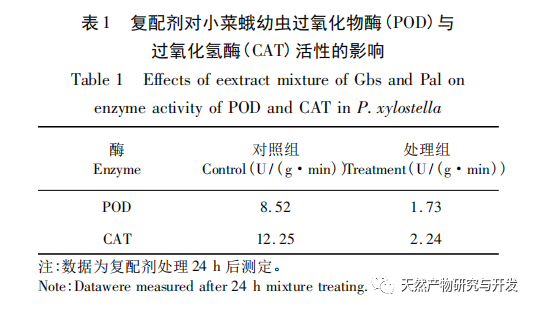
The toxic effect of compound agents on diamondback moth larvae is the result of multiple synergistic mechanisms of action. Plant derived biopesticides contain complex and diverse active ingredients, while mixed formulations based on multiple plant extracts are even more complex. After the active ingredients of the extract are ingested into the bodies of agricultural pests, they may synergistically act on multiple targets rather than a single target, thereby affecting their various physiological functions such as digestion, metabolism, nerves, and circulation, resulting in equivalent effects such as food refusal, anesthesia, and mortality. This study found that after treatment with a combination of Gbs and Pal extracts, there were no significant changes in the shape, color, and structure of the intestinal tract of diamondback moth larvae compared to the control group, indicating that the combination did not have a significant destructive effect on the digestive tract of diamondback moth; However, it significantly reduced the activity of AchE and CarE in the insect body. AchE can catalyze the hydrolysis of acetylcholine, affecting cholinergic nerve signal transmission and regulating nerve tissue development and regeneration. CarE can catalyze the decomposition of fatty carboxylic acid esters, aromatic esters, aromatic amines and other compounds, exerting detoxifying enzyme function and endowing the insect body with insecticide resistance. The decrease in AchE and CarE activity indicates that the active ingredients such as saponins, glycoproteins, phenolic acids, lactones contained in the compound may reduce the expression of the above-mentioned enzyme genes in the diamondback moth, or reduce enzyme activity by binding with AchE and CarE to affect the spatial structure of enzyme molecules, leading to a weakening of diamondback moth nerve signal transmission and detoxification function. Under the treatment of the compound agent, the activities of peroxidase and catalase in the diamondback moth were significantly reduced compared to the control group, indicating that the compound agent may also interfere with the insect’s antioxidant system, causing severe imbalance of the antioxidant system and a large accumulation of free radicals, leading to abnormalities in cell structure and physiological functions. Therefore, the toxic effects of the combination of Gbs and Pal extracts on diamondback moth larvae may not be dependent on a single mechanism, but rather the result of the synergistic action of multiple mechanisms.
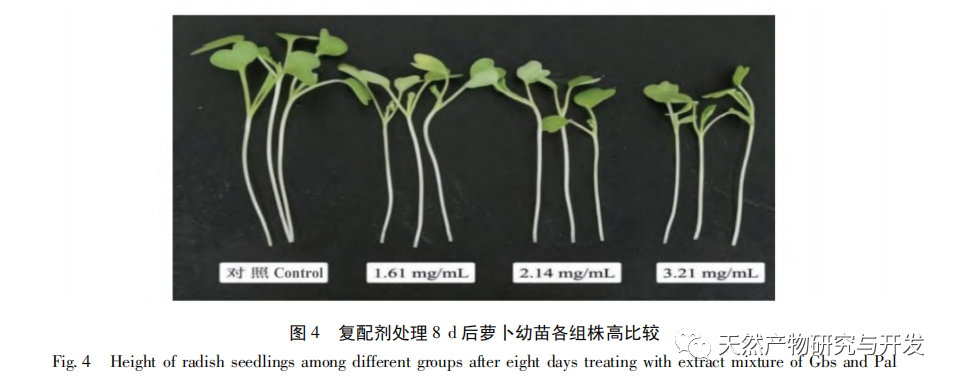
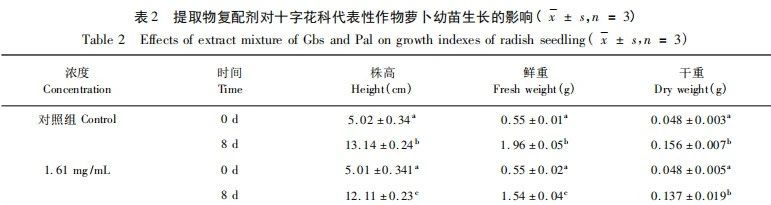
The application of compound agents can induce physiological responses and growth and development of the applied plants. Biological pesticides sprayed on the surface of crops, especially on leaves, may not only kill agricultural pests but also have varying degrees of impact on the growth, development, and physiology of the crops being treated. Research has found that an appropriate concentration of Ginkgo biloba outer seed coat extract can promote the growth of mulberry branches, as well as the germination and seedling growth of grasses and legumes; Extracts from plants such as Asarum can enhance the stress resistance of eggplant seedlings. This study found that the application of compound agents had a certain degree of inhibitory effect on the net photosynthetic rate and plant growth of the representative crop of the Brassicaceae family, radish. Physiological indicators such as SOD activity, POD activity, MDA content, and conductivity in the seedling leaves were significantly higher than those in the control group. This suggests that the spraying of compound agents can induce stress response in radish and other Brassicaceae plant seedlings, and also inhibit leaf photosynthetic rate and plant growth and development to varying degrees. Although the inhibitory effect does not increase linearly with concentration, it also suggests that in practical applications, under the premise of effectively controlling the diamondback moth, the application concentration of compound agents should be reduced as much as possible to avoid their adverse effects on the growth and development of Brassicaceae plant seedlings.

 English
  Danish
  German
  Hungarian
  French
  Russian
  Spanish
  Turkish