
Study on the correlation between the color of Hongqi and carotenoid components
Hedysari Radix is an authentic and specialty medicinal herb in Gansu Province, and is one of the pillar industries for revitalizing the rural economy in southern Gansu. Wudu District, Gansu Province has become the “hometown of Chinese Hedysari”, and the produced Hedysari Radix medicinal herb has formed the “Micang Hongqi” brand. The experimental observation of the research group found that Hongqi exhibits diverse color characteristics such as brownish yellow, reddish brown, reddish brown, and yellow brown.
Color is not only an important component of the theory of color differentiation and quality in traditional Chinese medicine, but also closely related to its intrinsic quality as the most intuitive characteristic of Chinese medicine. Before the Han Dynasty, people began to pay attention to the color of medicines. For example, in the “Shennong Bencao Jing”, there are 68 medicines named after colors such as green, red, yellow, white, and black. The “Compendium of Materia Medica Annotations” records that “the color of Pu Nai is good when it is green and white, yellow harms people, and red kills people”; The “Newly Revised Materia Medica” records that Qin skin “takes water stains from the skin and turns it blue. When looking at the back of a book or paper, blue is the color; The “Original Materia Medica” records that “only white is superior” in Atractylodes macrocephala, “those with bright yellow are superior” in Coptis chinensis, “those with root bark and purple flesh are superior” in Danshen, and “those with green flesh color are superior, followed by those with yellow and white color, and those with black and oily color are inferior” in Muxiang; The Compendium of Materia Medica also records the relationship between the color of medicinal herbs and their place of origin, such as Huangqin’s “Xiqin… color Qian, Beiqin… deep yellow”, indicating a close relationship between color and the name, efficacy, drug identification, quality, and place of origin of traditional Chinese medicine. Moreover, modern research has shown that the color of traditional Chinese medicine is closely related to its medicinal properties and chemical composition, serving as a bridge between the “external excellence” and “internal quality” of medicinal materials. Color can be used to distinguish and evaluate the origin, variety, harvesting period, storage, and processing techniques of medicinal materials. At the same time, color can be used as an evaluation indicator for the quality of medicinal materials. In the 2020 edition of the Pharmacopoeia of the People’s Republic of China (Volume 1), more than 200 medicinal materials also use “color” as one of their quality evaluation indicators. The leaves, flowers, fruits, and roots of higher plants are rich in carotenoids, which are tetraterpene pigments with a structure of yellow, orange red, red, and purple. They are closely related to the color formation of plants and have functions and physiological activities such as antioxidant, photoprotection, coloring, immune enhancement, cancer prevention, and anti-cancer. They have been widely used in industries such as food, health care, skincare and cosmetics, medicine, and animal husbandry.
Based on this, the research group took red astragalus as the research object, and used a precision colorimeter and liquid chromatography tandem mass spectrometry (LC-MS/MS) to study the correlation between red astragalus color and carotenoid components. The correlation between color and carotenoid components was analyzed, and the differences in carotenoid metabolites in different colored red astragalus samples were analyzed, in order to provide reference for the reasons and quality evaluation of red astragalus color diversity.
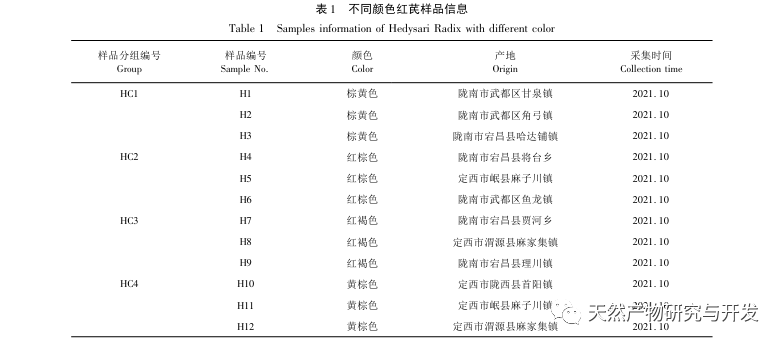

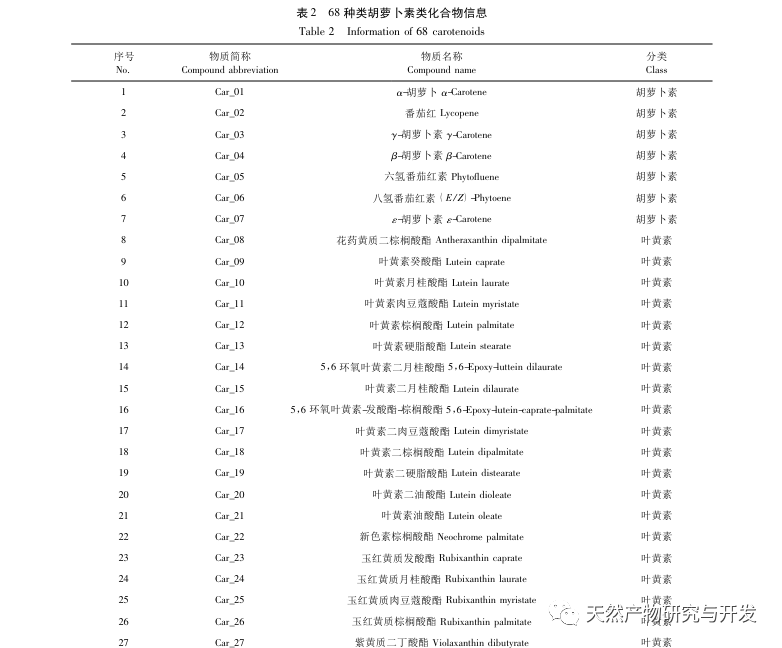
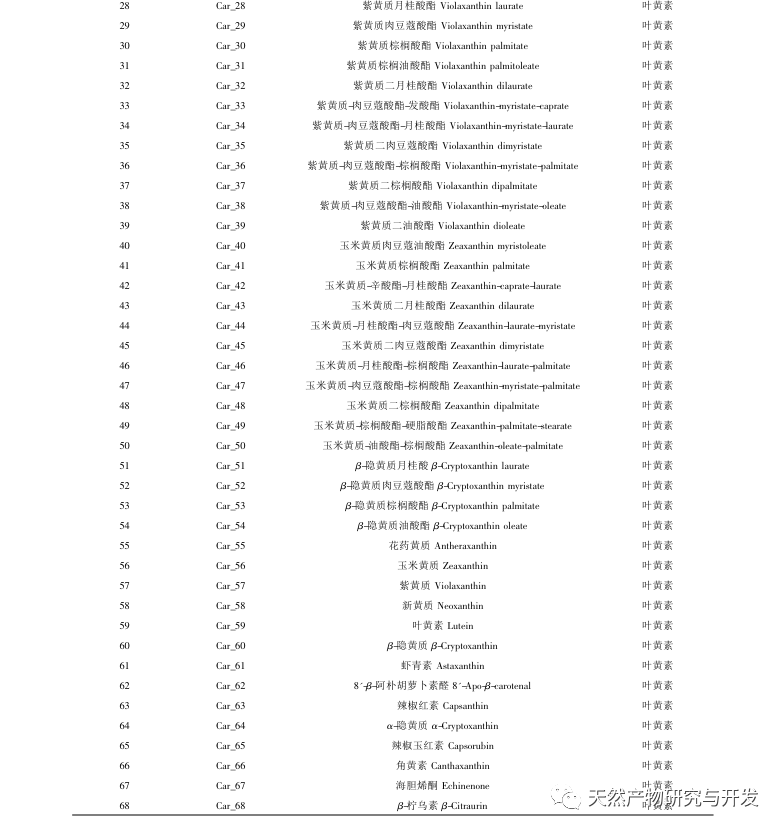
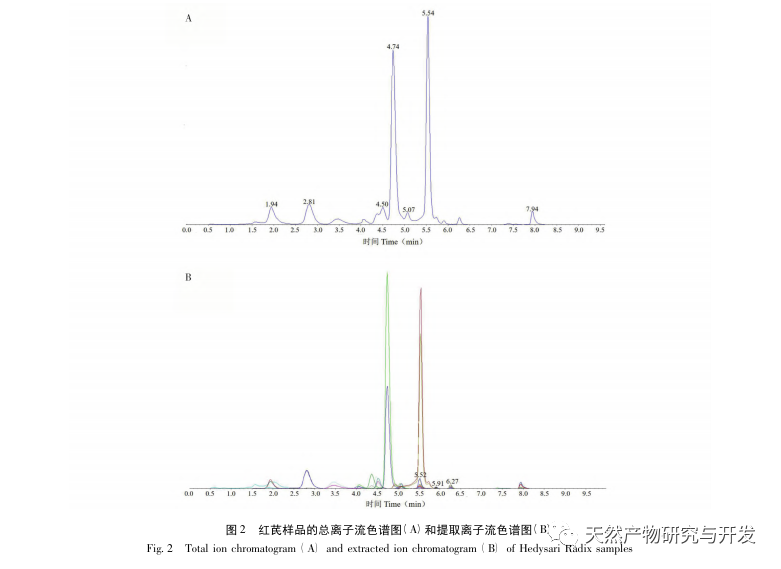


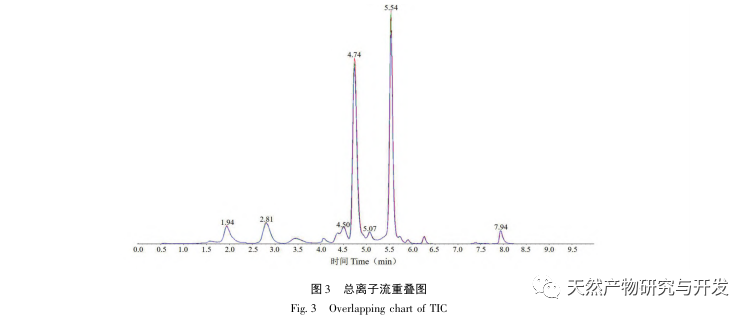
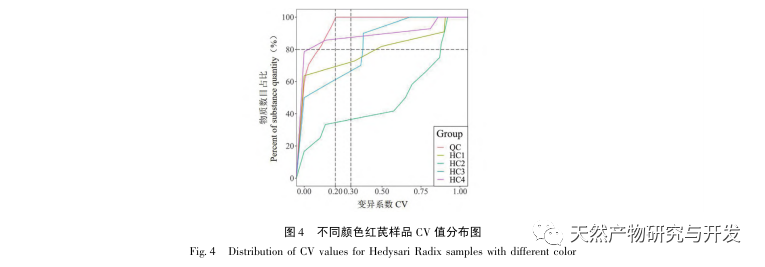
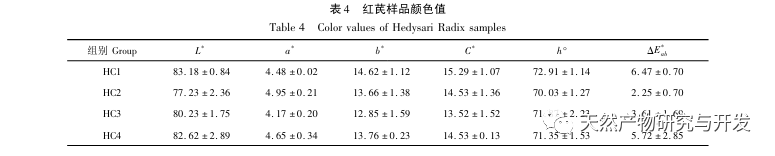
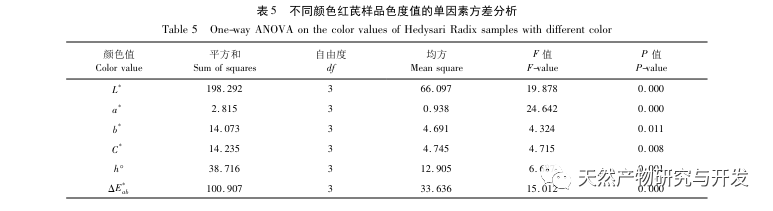

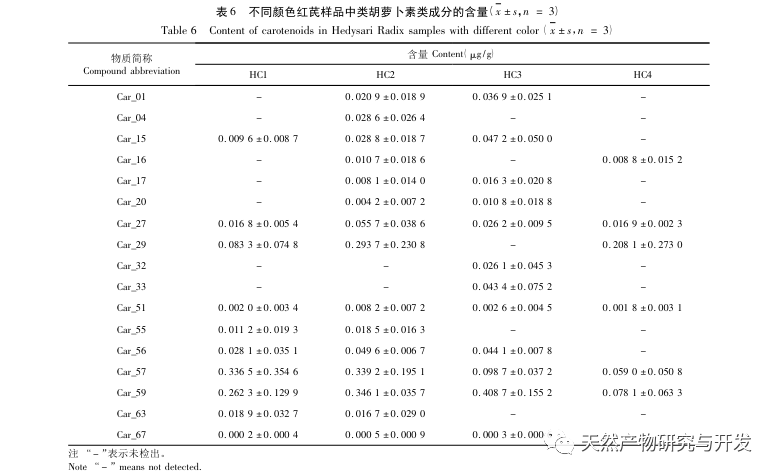
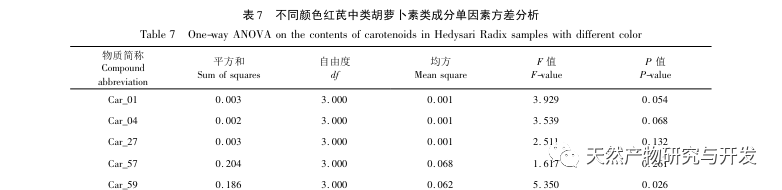
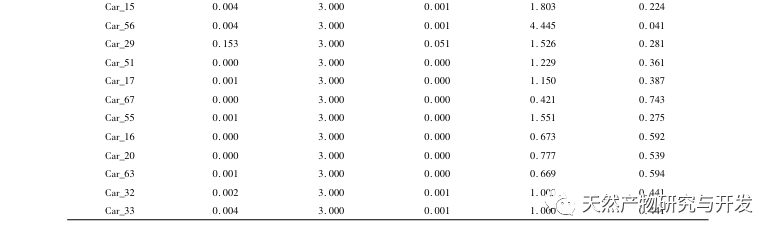
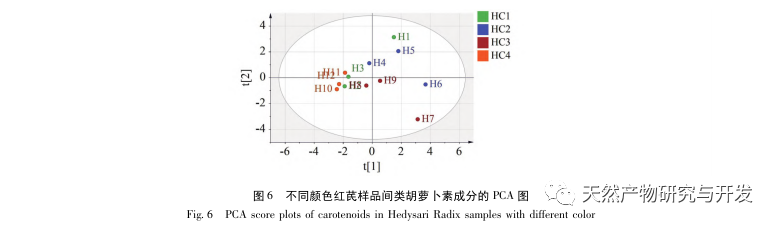
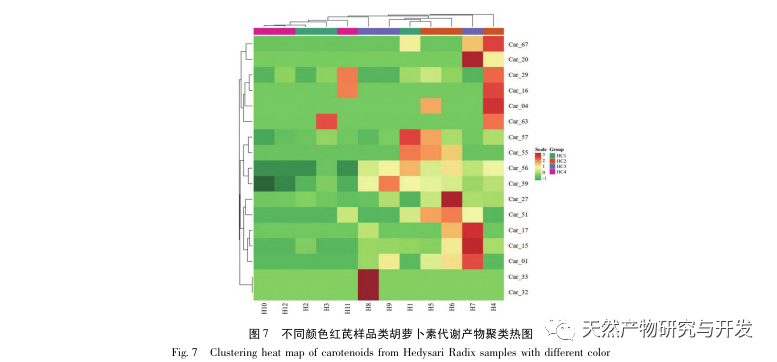
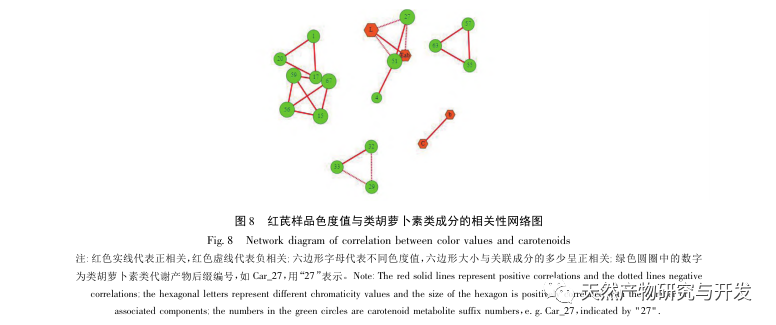
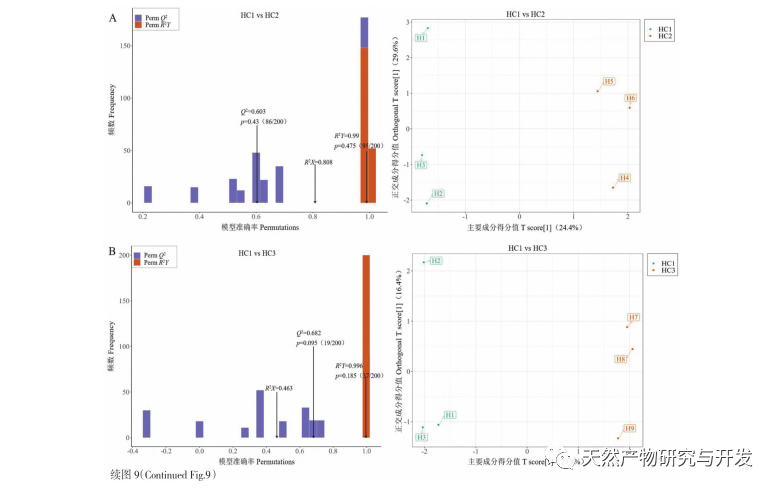


This article takes samples of different colored red astragalus as the research object, and uses precision colorimeter, LC-MS/MS and other detection methods to determine the color values of different colored red astragalus samples and the content of 68 types of carotenoid metabolites (17 types detected). Single factor analysis of variance, PCA analysis, cluster analysis, correlation analysis, OPLS-DA model variable importance projection VIP and difference multiple value methods are applied to study the changes in color values and carotenoid metabolites among different colored red astragalus, and to investigate the correlation between red astragalus color and carotenoid components. The results showed that the L * values of the six color values of brown yellow, reddish brown, reddish brown, and yellow brown red astragalus samples ranged from 75.38 to 85.41, the a * values ranged from 3.95 to 5.16, the b * values ranged from 11.52 to 15.91, the C * values ranged from 12.31 to 16.53, the h ° values ranged from 68.77 to 74.23, and the total color difference Δ E * ab values ranged from 1.58 to 8.49. The L * value, b * value, C * value, h ° value, and total color difference Δ E * ab value of HC1 brownish yellow are the highest among the four colors, HC2 reddish brown has the highest a * value among the four colors, L * value, h ° value, and total color difference Δ E * ab value are the lowest among the four colors, and HC3 reddish brown has the lowest a * value, b * value, and C * value among the four colors. The six color values of HC4 yellow brown are distributed at the intermediate level. There were highly significant differences in L *, a *, C *, h °, and Δ E * ab values among the four groups of red astragalus samples with different colors, and a significant difference in b * values, indicating that the colors subjectively judged by the naked eye are representative and can reflect the color differences between red astragalus samples.
The detection results of carotenoid components showed that a total of 68 types of carotenoid components were detected in samples of different colors of red astragalus. Among them, 17 components were detected, including 2 carotenoids and 15 lutein components. The undetected metabolites may be due to the absence of such components or their content being below the detection limit of the instrument. Further analysis of its content revealed that there were maximum and minimum values in the content of 17 types of carotenoids among the four color samples. The distribution of these components varied among different colored samples of red astragalus, with significant differences (P<0.05) in lutein and zeaxanthin among the four color samples. The differences in the other 15 components were not significant. The synthesis of carotenoids and other components in medicinal herbs is influenced by light, harvesting, processing in the production area, and processing, so the formation of differences may be related to the comprehensive effects of these factors.
The PCA research results show that there is a coexistence of cross information and common information in the distribution of carotenoid components among the four color red astragalus samples. The color change characteristics of Hongqi medicinal materials are related to carotenoid metabolites, and carotenoid components contribute to the formation of the color of Hongqi medicinal materials. The HCA results showed that the consistency between subjective color classification and carotenoid metabolite classification was not high, and the clustering was not strictly based on the four colors. The types of carotenoid metabolites among samples of different colors had a certain degree of similarity. There were differences in carotenoid metabolite content among samples of the same color of Hongqi medicinal herb, and there was a certain relationship between color and carotenoid metabolite content. Different colored Hongqi samples had differential metabolites, which were similar to the results obtained by PCA.
The correlation analysis results showed that there was a correlation between the color value of red astragalus and the content of carotenoid metabolites. There were two carotenoid metabolites with a significant negative correlation in the color value L * of red astragalus, namely β – cryptoauric acid and purple yellow butyrate, and one carotenoid metabolite with a significant negative correlation in the total color difference Δ E * ab value, namely purple yellow butyrate. The correlation with other carotenoid components was not significant; There is a significant positive correlation between L * and the total color difference Δ E * ab value, and a significant positive correlation between the color value b * and C *; There is a significant positive or negative correlation between some carotenoid components, indicating that there is correlation information in the biosynthesis pathway of carotenoid components during the growth process of Hongqi. The above results confirm the analysis results of one-way ANOVA, PCA, and HCA.
The method of combining variable importance projection VIP and difference multiple values in the OPLS-DA model was used to screen different colored red astragalus for carotenoid metabolites. The results showed that there were 6, 4, 4, 5, 6, and 6 differential carotenoid metabolites involved in HC1 brown and HC2 red brown, HC1 brown and HC3 red brown, HC1 brown and HC4 yellow brown, HC2 red brown and HC3 red brown, HC2 red brown and HC4 yellow brown, HC2 red brown and HC4 yellow brown, HC3 red brown and HC4 yellow brown, respectively. The differential metabolites involved in the four colors were mainly 10, including alpha carotene, beta carotene, and lutein. Lauric acid ester, lutein dimeric acid ester, purple yellow isobutyrate ester, purple yellow myristic acid ester, anther yellow, zeaxanthin, purple yellow, lutein.
Based on other analysis results, the two components that have a significant relationship with color values are β – cryptoxanthin lauric acid and purple yellow butyrate. Among the samples of different colors of red astragalus, there are two components with significant differences in carotenoid components, lutein and zeaxanthin, in one-way ANOVA. Therefore, there are mainly 11 components that are related to the color of red astragalus, namely α – carotene, β – carotene, lutein dilaurate, lutein dimeric acid ester, purple yellow butyrate, purple yellow nutmeg ester, anther yellow, zeaxanthin, purple yellow, lutein, and β – cryptoxanthin lauric acid, which can be divided into two categories: carotenoids and lutein. Due to the multi-level regulation of synthesis, degradation, and storage of carotenoid metabolites in plant cells, as well as the influence of processes such as “planting, harvesting, processing, and use” in the production of medicinal materials, the overall content of carotenoids in medicinal materials is not only related to internal factors in the biosynthesis pathway, but also regulated by external factors. The comprehensive effect makes the content and types of carotenoid components in different commercial medicinal materials different, resulting in different colors of plants.
Color is a psychological sensation produced by electromagnetic radiation or light acting on the human visual organs, influenced by both physical properties and psychological sensations. Its essence is a continuous physical spectrum. The coloring mechanism of medicinal materials is closely related to the conjugated system structure of their coloring substances. The π→π * transition in the molecular conjugated system and the n →π * or n →σ * transition in the p →π conjugated system of unsaturated organic compounds containing heteroatoms are the main reasons for their coloring. The carotenoid components in different colored red astragalus samples belong to isoprene compounds and are one of the chromogenic components of red astragalus. They all contain many conjugated double bonds. Brown yellow, yellow brown, reddish brown, and reddish brown red astragalus may be colored due to the absorption of their complementary purple and green light bands by the “ground state electrons” of their chromogenic components (carotenoid metabolites). In addition, when light radiation encounters scattering particles during propagation, scattering particles of different lineages produce different types of scattering, refraction, interference, and diffraction. Therefore, the generation of brown yellow, yellow brown, reddish brown, and reddish brown red astragalus samples may be related to the electron transitions and light propagation of conjugated double bonds of carotenoid components. The physical phenomena such as scattering, refraction, interference, and diffraction that occur when dealing with medicinal herbs are related.
In summary, there are significant differences in the color values of brownish yellow, reddish brown, reddish brown, and yellow brown red astragalus samples. There is a correlation between the color value and the content of carotenoid metabolites. Among the four color samples, there are 17 types of carotenoid components with maximum and minimum values, and the content distribution is different; The differential metabolites involved in the four colors include two categories of carotenoids and 11 types of lutein, namely α – carotene, β – carotene, lutein dilaurate, lutein dimeric acid ester, purple yellow butyrate, purple yellow nutmeg ester, anther yellow, zeaxanthin, purple yellow, lutein, and β – cryptoxanthin lauric acid. It is one of the coloring substances that produce color in red astragalus. The coloration of brownish yellow, reddish brown, reddish brown, and yellow brown red astragalus samples may be related to the content and types of carotenoid metabolites mentioned above.

 English
  Danish
  German
  Hungarian
  French
  Russian
  Spanish
  Turkish