
Comparative study on rhizosphere microorganisms of Dendrobium nobile with different epiphytic substrates
Dendrobium was first recorded in the “Shennong Bencao Jing” and has a long history of medicinal use. Dendrobium nobile Lindl was first recorded in the “Compendium of Materia Medica”, and the currently used Dendrobium nobile is described in the “Compendium of Materia Medica” as “Dendrobium clusters on rocks. Its roots are tangled and dense, and its stems and leaves are white and soft. Its stems and leaves are all green, and its stems and leaves are yellow, with red flowers… Dendrobium is short and solid, while Dendrobium is long and weak, making it easy to distinguish. It is found everywhere, and the one from Sichuan is the best. As one of the sources of Dendrobium officinale in the 2020 edition of the Chinese Pharmacopoeia, it is used as medicine with fresh or dried stems and has the effects of nourishing the stomach, generating saliva, nourishing yin, and clearing heat. The “Newly Revised Materia Medica” records: “The one that grows on the stone (Dendrobium officinale) wins. The “Compendium of Materia Medica” records that “there are also those that grow on oak trees, called dendrobium, which are useless”. It can be seen that the epiphytic substrates of Dendrobium officinale carried by traditional Chinese herbs throughout history mainly consist of two types: rocky substrates and woody substrates, with those with thick stems, short nodes, and those grown on rocks being of better quality.
Dendrobium officinale mainly contains alkaloids, polysaccharides, phenols, flavonoids and other compounds, which have pharmacological effects such as antioxidant, anti-tumor, and anti cataract. The reproduction ability of Dendrobium chrysotoxum is low under natural conditions, and its growth is slow. The overexploitation and destruction of wild Dendrobium chrysotoxum have almost depleted its natural resources. In recent years, with the promotion of artificial cultivation techniques, greenhouse cultivation (with attached substrates such as segmental wood, coarse sandstone, coarse wood chips, etc.) and understory simulated wild cultivation (with attached substrates such as understory stones and trees) have become the main cultivation modes for Dendrobium officinale. Studies on Dendrobium nobile with different attached substrates have shown that the quality of attached stones is better than that of attached trees. Our research group reported the differences in metabolic products and antioxidant activity between two epiphytic substrates of Dendrobium chrysotoxum. The number and relative content of metabolic products in Dendrobium chrysotoxum cultivated with epiphytic substrates were significantly higher than those in Dendrobium chrysotoxum cultivated with epiphytic substrates; The antioxidant capacity of Dendrobium nobile cultivated with attached stones is higher than that cultivated with attached trees. However, due to the lack of in-depth research on the correlation between the quality of attached substrates and medicinal materials, and the good appearance and ornamental value of woody substrates such as Dendrobium officinale flowers and stems, a large number of “Dendrobium officinale” are circulating in the market, which affects the clinical efficacy.
Microorganisms are closely related to the cultivation and quality of traditional Chinese medicine. Rhizosphere microbiota is a microbial community that colonizes around the roots of plants and serves as an important medium for material exchange between plants and the environment. The diversity of rhizosphere microbiota is correlated with the growth environment of plants. There is a certain correlation between the tree diversity and rhizosphere microbial diversity of the population where the Beijing beaked orchid is located. The study of fungi in the rhizosphere and rhizosphere of Magnolia grandiflorus found that there are differences in fungal composition, structure, and relative abundance between different parts and regions, which are closely related to the growth environment such as humidity and nutritional conditions. Previous studies have shown that the root microorganisms (rhizosphere microorganisms and mycorrhizal fungi) of orchids are closely related to their growth, such as seed germination, component accumulation, disease and stress resistance. Research on mycorrhizal fungi of traditional Chinese medicine Dendrobium species such as Huoshan Dendrobium, Tiepi Dendrobium, and Jinchai Dendrobium has found that they are widely distributed in their roots, including Ascomycota and Basidiomycota fungi; There is a certain correlation between the composition of mycorrhizal fungi in different Dendrobium species and the host cultivation environment. Research on endophytic bacteria in medicinal plants of the Dendrobium genus, such as Dendrobium officinale and Dendrobium nobile, has shown that the number and types of endophytic bacteria vary depending on the habitat and are closely related to the degree of colonization of mycorrhizal fungi. However, there have been no reports on the comparative study of the diversity and differences of rhizosphere microorganisms in different epiphytic substrates of Dendrobium officinale, nor on the correlation between rhizosphere microorganisms and mycorrhizal fungi in Dendrobium officinale.
This article uses high-throughput sequencing technology to compare the diversity and differences of rhizosphere microorganisms in 5 types of attached substrates (stone and wood) of Dendrobium chrysotoxum, in order to clarify the distribution characteristics of rhizosphere microorganisms in different attached substrates of Dendrobium chrysotoxum. This lays the foundation for the study of the correlation between Dendrobium chrysotoxum as substrate, rhizosphere microorganisms, and mycorrhizal fungi, as well as their growth and development, and accumulation of secondary metabolites. It provides a basis for the rational selection of attached substrates for Dendrobium chrysotoxum and the promotion of “those who grow on stones win”.
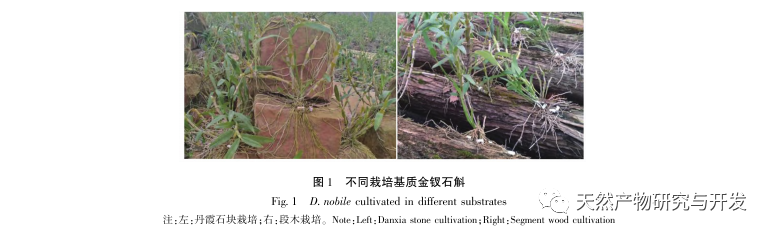
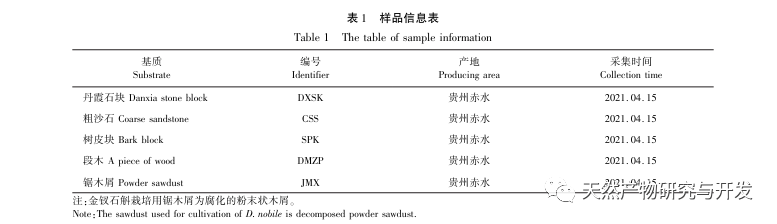
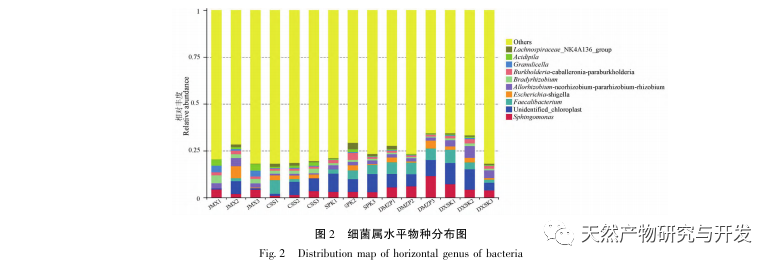
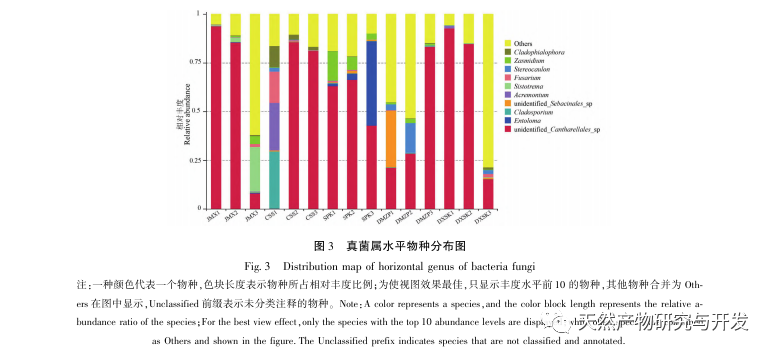
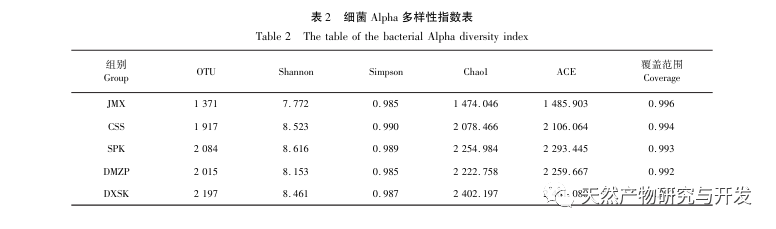
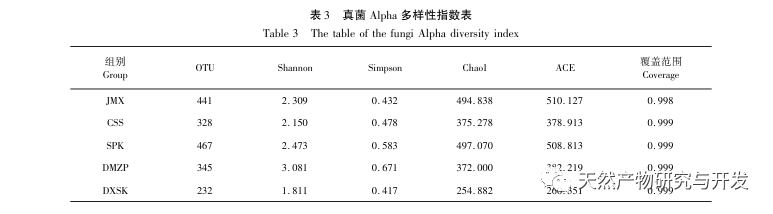
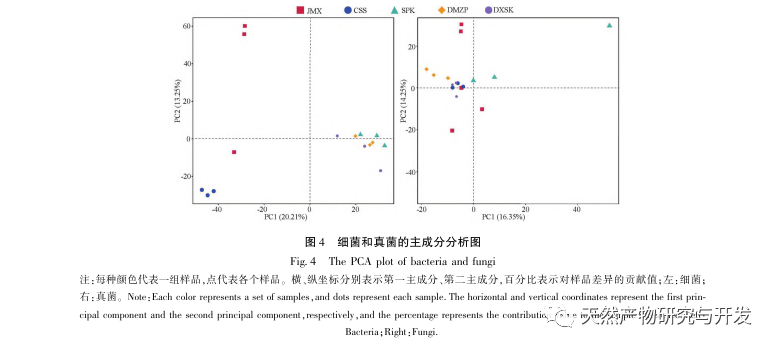
 This study found that the composition of rhizosphere microbial communities varies among different epiphytic substrates, indicating that epiphytic substrates are a factor affecting the species diversity and relative abundance of rhizosphere microorganisms in Dendrobium nobile. At the phylum level, the dominant bacteria are Proteobacteria, Firmicutes, Bacteroidetes, and Actinobacteria; The dominant fungi are mainly Basidiomycota and Ascomycota, which is consistent with the research results of mycorrhizal fungi such as Li and Liu, indicating that Basidiomycota and Ascomycota are closely related to the growth and development of Dendrobium plants. At the genus level, the dominant genera of rocky matrix fungi are unidentified_Antharellales_stp, while the dominant genera of bacteria are Sphingomonas, Fecal, and unidentified_Chloroplast; The dominant genera of woody matrix fungi are unidentified_Cantharellales_stp and powdery fungi, while the dominant genus of bacteria is Fecal bacteria.
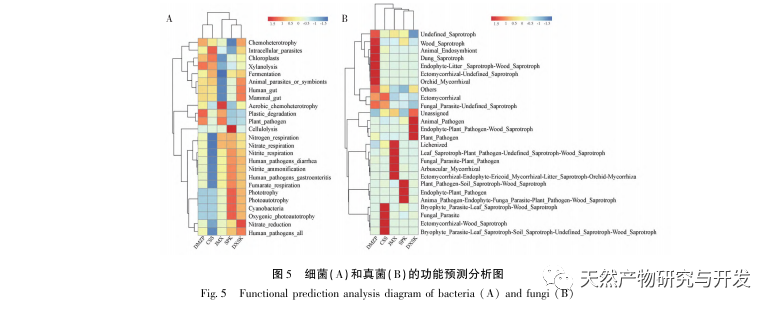
This study reports for the first time that the dominant fungal genera in the rhizosphere of Dendrobium nobile are more pronounced on rocky substrates (CSS, DXSK), which may be related to environmental stress. The epiphytic matrix is an important medium for the root system of epiphytic plants to absorb nutrients and water. Its growth and development are influenced by the physicochemical properties of the epiphytic matrix, such as nutritional conditions, water content, pH, etc; Compared to woody substrates, rocky substrates have more adverse nutritional and water conditions, leading to a gradual increase in the relative abundance of bacterial genera with strong stress resistance, light autotrophic ability, or symbiotic ability with hosts, forming dominant bacterial genera. The growth environment of plants is related to microbial composition. For example, the rhizosphere microbial composition of three plants, including desert rose, drunken butterfly flower, and aloe vera, showed a high degree of consistency in arid environments, which is similar to the results of this study; Research on the microbiome of rice rhizosphere, root surface, and root interior revealed that microorganisms that were not colonized in the rhizosphere were also not colonized in the root interior; Indicating that the composition of rhizosphere microorganisms can affect the species and abundance of endophytic bacteria in plants. The differences in rhizosphere fungi of different epiphytic substrates may affect the formation of mycorrhizal fungi, which in turn affects the growth and development of Dendrobium officinale, the accumulation of secondary metabolites, and the quality differences of Dendrobium officinale. However, the correlation between the three needs further research. The results of functional prediction analysis indicate that there are differences in the relative abundance of functional genes of bacteria and fungi in different epiphytic substrates. Wood substrates are enriched with more pathogenic and parasitic functional genes that are harmful to plants, while stone substrates are enriched with more photoautotrophic and symbiotic functional genes. This indicates that the epiphytic matrix is a key factor affecting the function of the rhizosphere microbial community in Dendrobium nobile. The research results indicate that the effect of epiphytic matrix on rhizosphere fungi is more significant.
This study is based on high-throughput sequencing technology to compare the composition, distribution, and other characteristics of rhizosphere microorganisms in Dendrobium officinale with different epiphytic substrates. It investigates the reasons for the differences in quality of Dendrobium officinale with different epiphytic substrates from a perspective other than mycorrhizal fungi, proving that there are differences in the relative abundance of rhizosphere fungi on different epiphytic substrates, filling the gap in the research of rhizosphere microorganisms in Dendrobium officinale, and laying the foundation for the study of the relationship between rhizosphere fungi and mycorrhizal fungi in Dendrobium officinale, and providing a basis for the mechanism of quality differences in Dendrobium officinale and the rational selection of epiphytic substrates in actual production.

 English
  Danish
  German
  Hungarian
  French
  Russian
  Spanish
  Turkish